

The Hidden Cost of Coffee: What Your Daily Cup Is Doing to Your Body
World Coffee Day is celebrated on 1 October 2026, prompting us to question the effects that coffee has on our health and finances.
To listen to the audio recording of this article, go to: https://youtu.be/GVxyl4oJm-w
The fact that this is now a scheduled date on the calendar demonstrates how much the system wants you to consume this product, and the motivation is not for your health; it is for profit. Profit from the sales of takeaway coffee from their popular high-street outlets, and from the medical interventions that unhealthy people require from the industrial medical complex. In particular, antidepressants for anxiety, sleeping tablets, statins, and ADHD medication.
In the 1980s, people in England predominantly drank tea, in the form of loose black tea, usually at home, at work, or in an independent cafe. Although a small number of specialist coffee shops already existed, the branded coffee-shop culture that we recognise today had not yet taken over the English high street.
That began to change rapidly during the mid-to-late 1990s. Costa, which had opened its first London coffee shop in 1981, was acquired by Whitbread in 1995 and subsequently expanded. Caffè Nero was established in London in 1997 and began expanding outside the capital in 1999, while Starbucks opened its first UK shop in London in September 1998. By 2000, Starbucks already had 156 UK stores, demonstrating just how rapidly the new coffee-shop culture was spreading.
Over the past 30 years, coffee has consequently become embedded in our culture, with branded corporate coffee shops on high streets across England and familiar programmed scripts around ‘meeting for a coffee’ or needing coffee to wake up in the morning. Yet behind this everyday habit is a powerful psychoactive substance that affects the nervous, hormonal, cardiovascular, and digestive systems. These effects raise questions about what a daily coffee habit is actually doing to the body.
Coffee can:
- inhibit iron absorption;
- affect levels of some B vitamins;
- lower natural energy levels;
- contribute to anxiety and depression;
- stimulate the body’s stress response;
- raise cortisol levels;
- affect concentration;
- disrupt sleep;
- cause physical dependence;
- affect the cardiovascular system;
- affect the digestive system; and
- contribute to prolonged adrenal stimulation and the state commonly known as adrenal fatigue or ‘burnout’.
Adrenal Fatigue
By far the most harmful effect of coffee consumption is the way caffeine stresses the adrenal glands, which over the long term will cause adrenal dysfunction.
The adrenals release hormones directly into the bloodstream, including cortisol, which regulates our sleep/wake cycle. It is released during times of stress to give your body an energy boost. The adrenal glands also release adrenaline and noradrenaline during stressful situations, initiating the fight-or-flight response.
Human experiments have measured increased circulating adrenaline following caffeine. In one study, intravenous caffeine increased plasma adrenaline by 114%.
A placebo-controlled human experiment using caffeine equivalent to approximately two or three cups of coffee found that caffeine increased cortisol by about 30%. A recent review confirms these effects and notes that the cortisol response becomes blunted and can sometimes disappear with chronic caffeine consumption. Other controlled experiments have confirmed that caffeine can increase cortisol even while people are resting.
If we spike these hormones by regularly drinking caffeinated beverages, we will eventually cause adrenal fatigue, where the adrenal glands stop functioning correctly.
There are signs of adrenal dysfunction that are easy to spot:
- Low cortisol in the morning: waking up having had a full night’s sleep only to feel exhausted, causing us to reach for a caffeine hit to get us going;
- High cortisol at night: we feel tired but experience insomnia.
Other symptoms can be headaches, dizziness, general fatigue, and palpitations.
Are you tired all the time and lacking energy? Do you automatically reach for a caffeine hit to get you through the day? Contrary to popular belief, drinking coffee doesn’t give you energy; it simply appears to energise you by overstimulating your adrenal glands, causing a rush of adrenaline and cortisol.
Sleep Disruption
Coffee can significantly impair sleep. This is one of the clearest causal effects. A 2023 systematic review and meta-analysis of 24 studies found that caffeine reduced total sleep time by about 45 minutes, reduced sleep efficiency by about 7%, delayed falling asleep by about 9 minutes, increased wakefulness after sleep onset, and reduced deep sleep. The authors calculated that a coffee containing about 107 mg caffeine could affect total sleep time if consumed within approximately 8.8 hours of bedtime. A newer meta-analysis of controlled crossover trials reached essentially the same conclusion.
This is primarily a caffeine effect and would therefore also apply to black tea, hot chocolate, and cola drinks.
Increased Anxiety
Coffee contains caffeine, which promotes nervousness, sleeplessness, and ‘the jitters’.
Caffeine can increase anxiety, particularly at higher doses. Controlled studies establish an anxiogenic effect. A 2024 study found increased anxiety in healthy people, with a substantially stronger effect at doses above about 400 mg caffeine. A 2026 systematic review of 27 studies similarly concluded that the evidence predominantly supports a dose-dependent increase in anxiety symptoms.
People with panic disorder are particularly sensitive. In placebo-controlled caffeine-challenge studies using roughly 400–750 mg, about 51% of participants with panic disorder experienced a panic attack, compared with almost none after placebo.
Caffeine Dependency
Regular caffeine use can produce physical dependence and withdrawal. This is very well established experimentally. Abrupt withdrawal can cause headache, fatigue, drowsiness, reduced alertness, difficulty concentrating, irritability, depressed mood, nausea, and flu-like symptoms. A major review found headache in about 50% of subjects undergoing experimental withdrawal and clinically significant impairment in about 13%. Symptoms typically begin 12–24 hours after stopping, peak around 20–51 hours, and can persist for 2–9 days. Withdrawal has been demonstrated following habitual intakes as low as around 100 mg of caffeine per day.
Caffeine withdrawal is not merely an association: it has been demonstrated under controlled conditions.
Heart Problems
Caffeinated coffee can increase extra or early heartbeats, which feel like a flutter, thump, skipped beat, or palpitation. In a CRAVE randomised trial, in which people alternated between coffee-consumption days and caffeine-avoidance days, extra beats occurred more frequently on days when people drank coffee, increasing from an average of 102 to 154 per day.
Interestingly, the same experiment recorded about 36 minutes less sleep on coffee days, reinforcing the controlled sleep evidence.
Raised Blood Pressure
Coffee can acutely raise blood pressure. A meta-analysis of randomised trials found caffeine supplementation increased systolic blood pressure by about 1.9 mmHg and diastolic pressure by about 1.7 mmHg overall. In people with hypertension, doses of 200–300 mg caffeine produced considerably larger acute increases — around 8.1 mmHg systolic and 5.7 mmHg diastolic — lasting for three hours or more.
Raised LDL Cholesterol
Unfiltered coffee can raise LDL cholesterol. This is another particularly strong causal finding because it has been demonstrated in randomised trials. The important substances are the coffee diterpenes cafestol and kahweol, which remain in coffee prepared without effective paper filtration.
A meta-analysis of randomised trials found coffee consumption increased total cholesterol, LDL cholesterol, and triglycerides, with substantially greater effects from unfiltered coffee. An earlier meta-analysis specifically found that unfiltered coffee increased total and LDL cholesterol, whereas filtered coffee produced very little increase.
Purified cafestol has also been experimentally administered to humans. It produced sizeable increases in total cholesterol, LDL, and triglycerides, establishing that the diterpene itself can cause the effect.
This distinction matters enormously. Cafetière/French-press, boiled Scandinavian coffee, and Turkish-style coffee contain substantially more diterpenes than paper-filtered coffee.
Reduced Iron Absorption
Coffee inhibits the absorption of non-haem iron when consumed with meals. This has been demonstrated directly in human absorption experiments. In one controlled study, drinking coffee with a meal reduced non-haem iron absorption by 39%. With another test meal, absorption fell from 5.88% without coffee to 1.64% with drip coffee and 0.97% with instant coffee. Stronger coffee caused still greater inhibition.
Timing mattered: coffee taken an hour before the meal did not impair absorption, whereas coffee taken with the meal or an hour afterwards did.
This is therefore a genuine nutritional disadvantage, particularly relevant to people who depend heavily on plant-derived iron or who have marginal iron stores.
Reduced B-Vitamin Levels
High coffee consumption has been associated with lower blood concentrations of some B vitamins. A particularly useful study examined 10,601 healthy adults and measured their coffee consumption alongside circulating B vitamins. Compared with people who did not drink coffee, those drinking four or more cups per day had:
- 11.7% lower folate (vitamin B9);
- 14.1% lower pyridoxal phosphate (the active form of vitamin B6); and
- 5.5% lower riboflavin (vitamin B2).
Low B-Vitamin levels contribute to increased anxiety and depression.
Their homocysteine was also 6.8% higher.
High Homocysteine
B vitamins are important in recycling and converting homocysteine. Folate (B9) and vitamin B12 help convert homocysteine back into methionine. Vitamin B6 helps convert homocysteine along another pathway into cysteine and other substances.
It isn’t just low B vitamins that increase homocysteine; coffee itself is capable of altering homocysteine metabolism independently of simply lowering circulating B-vitamin concentrations.
In one randomised crossover trial, people drank one litre of strong paper-filtered coffee every day for four weeks. Their average homocysteine increased from 8.1 to 9.6 μmol/L — an 18% increase. Coffee increased homocysteine in 24 of the 26 participants.
Another randomised trial using one litre of unfiltered cafetière coffee daily found an increase of about 10% after two weeks.
More importantly, another study looked at quantities closer to normal consumption. People accustomed to drinking about four cups of filtered coffee per day who stopped drinking coffee for six weeks experienced an average reduction in homocysteine of 1.08 μmol/L.
High homocysteine is associated with vascular disease and increased blood clots or DVT. Clots are associated with stroke, and blocked arteries, which can cause coronary heart disease and lung problems.
Coffee and Gut Acidity
Coffee is acidic and contributes to acidity in the gut, which may create an environment for cancer cells, which thrive in high acidity. Brewed coffee typically has a pH of 4.8 to 5.1, compared with natural water at pH 7, and stomach acid around pH 1 to 3.
Coffee naturally contains acids including chlorogenic, citric, malic, and quinic acids. Coffee can stimulate gastrin and gastric secretion, affect oesophageal function, stimulate colonic motor activity, and prompt bowel movements. Someone with reflux, dyspepsia, gastritis, or a particularly sensitive digestive system may find coffee aggravating.
Coffee stimulates gastric acid secretion and gastrin. This is directly demonstrated physiologically in controlled human experiments, which have repeatedly shown that both ordinary and decaffeinated coffee can stimulate gastric acid secretion and gastrin release. Remarkably, in some experiments, decaffeinated coffee stimulated more gastric acid secretion than caffeine alone.
That tells us something important: caffeine is not the only gastrointestinal stimulant in coffee. Other coffee constituents are involved.
Different coffees also produce different effects. One human study comparing roasts found that a dark roast stimulated gastric acid secretion less strongly than a medium roast containing considerably more chlorogenic acids and other compounds.
Increased acid secretion may contribute to gut health problems such as gastritis, stomach ulcers, or intestinal damage.
Acid Reflux
Coffee can exacerbate gastro-oesophageal reflux in some people. The newest comprehensive meta-analysis, published in 2026 and covering 40 studies and 122,074 people, found GERD more common among coffee drinkers. Coffee stimulates gastric physiology and can provoke heartburn in susceptible individuals.
Increased Urination
Caffeine can worsen urinary urgency and frequency. A systematic review including seven randomised controlled trials found that reducing caffeine improved urinary urgency, frequency, nocturia, and some measures of urinary incontinence in people with overactive bladder.
This means caffeine is a genuine bladder stimulant in susceptible people rather than the association being purely anecdotal.
Bone Fracture Risk
An increased fracture risk in women remains unresolved rather than proven. Meta-analyses have found a dose-dependent association between higher coffee consumption and fracture risk in women. One reported a relative risk of 1.14 when comparing the highest with the lowest consumption groups, while finding the opposite association in men. The major BMJ umbrella review also identified fracture risk in women as one of the few consistently unfavourable associations.
Effects During Pregnancy
Pregnancy is the clearest situation in which coffee/caffeine intake is associated with potentially serious harm. Higher maternal caffeine exposure has repeatedly been associated with pregnancy loss, lower birth weight, small-for-gestational-age babies, and stillbirth. A dose-response meta-analysis found that increasing caffeine consumption was associated with progressively greater risks, although most of this evidence is observational and therefore cannot establish causality as securely as the sleep or cholesterol experiments can.
Heavy Metal Toxicity
Coffee is a source of nickel, which can cause kidney problems.
The Financial Cost of Coffee
There is also a considerable financial incentive to kick the daily coffee habit. In September 2026, the average price of a latte across four of the major UK high-street coffee chains — Costa, Starbucks, Caffè Nero, and Pret — is approximately £4.03. Buying just one takeaway coffee every day therefore costs around £28.21 a week, £122.57 a month, or £1,470.95 a year. Someone buying two coffees a day could be spending almost £3,000 a year. Giving up the daily takeaway coffee could therefore leave an extra £1,471 in your pocket each year — as well as removing a regular source of caffeine from your diet.
Conclusion
Rather than automatically celebrating World Coffee Day on 1 October, perhaps we should use the occasion to question why coffee has become such an established part of our daily culture. For many people, reaching for coffee first thing in the morning, during the working day, or when meeting friends has become an automatic habit rather than a conscious choice.
Coffee affects the body in numerous ways, from stimulating the stress response and disrupting sleep to affecting digestion, cardiovascular function, and the absorption of nutrients. Regular consumption can also create physical dependence, leaving people reaching for another cup simply to avoid the fatigue, headache, and lack of concentration associated with withdrawal.
World Coffee Day therefore provides an opportunity to question the habit rather than simply celebrate it. Why do we drink coffee? How does it make us feel without the temporary stimulation of caffeine? What effect is it having upon our health, sleep, energy, and finances? And, perhaps most importantly, do we actually need it?
About Rose
Rose is a Shamanic Practitioner offering in-person and distance Shamanic Healing Sessions and Shamanic Life Coaching, specialising in narcissistic abuse.
Rose works without hallucinogenic or psychedelic plant medicines. Instead, she uses an ancient drumming method to access this altered state of consciousness. A session may include a tailored combination of Power Animal Retrieval, Divination, Soul Retrieval, Energy Body Healing, Psychopomp, and Extraction to remove negative energy and blockages.
Each session with me includes Shamanic Subconscious Repatterning. A powerful system that changes the subconscious programmes that drive unwanted behaviour. This method heals trauma at its source, removes the self-limiting programme, and then rewrites a new way of being.
Shamanic Healing can be accessed face-to-face in the Rose Healing Room, Petersfield, East Hampshire or remotely through Distance Healing Sessions. Because the work is carried out in the Spirit Realm with the support of Rose’s Spirit Guides, the client does not need to be physically present in the same room. Distance sessions are narrated in real time, and clients receive an audio recording by email afterwards.
For further information about Shamanic Healing, go to: https://www.roseautumn.com/shamanic-healing/


Autumn Equinox: A Shamanic Journey into the Dark
To listen to this article on YouTube go here: https://youtu.be/wxg658c81Rw
On 23 September, we reach the Autumn Equinox: a turning point in the year when day and night come close to balance and the long, expansive days of summer begin to give way to the darker months.
There is something unmistakable about this time of year. The quality of the light changes, mornings become cooler, fruits ripen, and leaves begin to change colour and fall from the trees. The natural world starts withdrawing its energy from outward growth.
To modern eyes, autumn can sometimes appear to be a season of decline. Yet nature does not treat autumn as a failure. It is simply another part of the cycle.
In the shamanic tradition in which I work, the Medicine Wheel offers a way of understanding these cycles, not only in nature but within our own lives. The wheel teaches us that there is a time for birth, a time for growth, a time for harvest and release, and a time for rest and renewal.
The Autumn Equinox brings us particularly into the medicine of the West: the place of harvest, sunset, pruning, release and preparation for winter.
But there is another aspect of the Medicine Wheel that I find especially helpful. We are not necessarily in the same season in every part of our lives.
The Medicine Wheel and the Seasons of Life
The Medicine Wheel is a symbolic representation of the cycles through which life continually moves. In the tradition I was taught, the East corresponds with spring, sunrise, birth, planting seeds, setting intentions and new beginnings. It is the place of potential, when something new is brought into being and needs our care and attention.
The South corresponds with summer and growth towards maturity. The seed has germinated, and the plant is growing, flowering and producing buds and unripe fruit. This is the expansive part of the cycle, but discernment is still needed. Just as we weed a garden, we decide what deserves our continued energy and what needs to be removed so that something else can flourish.
The West corresponds with autumn and sunset. Here we reap what we have sown, gather what is valuable, store our reserves and begin pruning back what is no longer required. It is simultaneously a time of harvest and celebration and a time of preparing ourselves for winter.
Finally, the North corresponds with winter. This is the place of hibernation, healing, rest, rejuvenation and going within. Although there may appear to be stillness externally, internally another kind of growth is taking place. The ground is being prepared for the next spring.
We can see this wheel turning continuously in nature, but the same pattern also appears in our relationships, careers, creative work, personal healing and spiritual development.
What Season Are You In?
One of the most useful things about the Medicine Wheel is that it allows us to ask a different question about our lives. Instead of immediately asking, What is wrong?, we can ask, What season am I in?
We can then go further and ask what season we are experiencing within each particular aspect of our lives, because our lives rarely move around the Medicine Wheel as a single unit.
We might be experiencing spring in our work because we have just begun a new project. At the same time, a relationship may be in summer: flourishing, deepening and asking to be nurtured. Another aspect of our lives might already have entered autumn, where we are beginning to recognise that something has given us everything it can and we need to decide what we wish to take from the experience before releasing it.
Somewhere else we might be in winter, requiring solitude, healing and rest. We can therefore be standing in several different places on the Medicine Wheel at the same time.
Recognising the season can change how we respond to what is happening. Many difficulties arise because we try to force something to remain in a season that has already passed. We try to keep harvesting from soil that needs to rest, attempt to make something flower before its roots are established, cling to autumn leaves when they are ready to fall, or immediately plant something new because we are frightened of the stillness of winter.
Nature does not make these mistakes. The tree does not demand that January resemble June.
The Medicine of the West
Autumn belongs to the West on the Medicine Wheel, and its medicine is not simply about endings. It begins with harvest.
Before we decide what needs to leave our lives, the West invites us to recognise what has already been created. What have we grown this year? What has reached maturity? What have we learnt? Which relationships have nourished us? What challenges have revealed something important about ourselves? What have we achieved that we have barely paused to acknowledge?
In our culture, we can become so focused upon the next goal that we forget to harvest the one we have already reached. Autumn reminds us to stop and gather.
Autumn is both a time of celebration and feast and a time of preparation for the winter ahead. We take what nourishes us forward, and then we begin to prune.
Look at a tree in autumn. It does not attempt to save every leaf. The leaves have performed their purpose. Their work is complete. As the tree withdraws its energy, they change colour and eventually return to the earth. The tree remains.
There are times when healing asks us to do something similar. We may need to release an old agreement about ourselves, recognise that a pattern of behaviour which once protected us is now restricting us, or accept that a relationship has completed its cycle. An identity we once needed may no longer fit the person we are becoming. Sometimes we are simply carrying too much.
There is an important difference between rejecting the past and releasing it. The Medicine Wheel suggests that we first take the harvest. We gather the wisdom from an experience before deciding what we no longer need to carry.
Then we let the leaves fall.
Autumn, Healing and Letting Go
In shamanic healing, I work with the deeper energetic and spiritual patterns underlying our experiences. This can include restoring lost life-force energy, clearing blockages and working with agreements and belief patterns that may continue to influence our behaviour long after the circumstances in which they developed have passed.
The Medicine Wheel can therefore offer a useful way of understanding healing itself. Sometimes healing requires the medicine of the East because something new needs to be born. At other times it requires the South because something new needs to be nurtured and strengthened. Sometimes we need the West because something must be harvested, understood and released. And sometimes we need the North because there is nothing more to do. We need to rest, integrate and allow healing to take place.
This can be particularly revealing when we consider our relationships. Some relationships are in spring: new, tentative and full of possibility. Others have reached summer and are growing into something deeper. But sometimes a relationship enters autumn.
That does not necessarily mean it must end. Autumn may simply mean that something within the relationship needs to be harvested, reassessed or pruned. Old ways of relating may need to change, agreements may need to be reconsidered, and boundaries may need to become clearer. Sometimes, however, the relationship itself has completed its natural cycle.
After a relationship has ended, there can be value in allowing ourselves to consider what worked, what did not and what our own behaviour contributed before planting the seeds of another relationship.
There is wisdom in not rushing straight back to spring.
A Journey into the Dark
The Autumn Equinox does not yet bring us fully into winter. It points towards it. Autumn is preparation.
The nights become longer, activity in the natural world begins to contract and energy moves away from outward growth. We begin travelling towards the medicine of the North.
Winter, in the Medicine Wheel, is associated with rest, healing, rejuvenation and going within. I particularly like to think of this as stillness on the outside with movement on the inside.
This is why I do not see our journey into the darker months as something inherently negative. Darkness has its own medicine. Seeds germinate beneath the soil, roots deepen underground, animals hibernate, and human beings dream. Things happen in darkness that cannot happen in full sunlight.
Stillness also has an important place within the Medicine Wheel. Stillness and balance work together. Through stillness we can find our centre, while greater balance allows us to become still.
The journey into darkness can therefore also be a journey towards ourselves.
One of my favourite images within the Medicine Wheel is what happens to the things we release. The fallen leaves eventually become compost, returning their nutrients to the earth and helping to create the fertile ground from which new life will emerge.
The ending becomes nourishment. Nothing needs to be wasted.
Even difficult periods of our lives can eventually become part of the soil from which something new emerges. The relationship that ended may teach us what we truly need from love. The career that collapsed may lead us towards work that is more aligned with who we have become. The boundary we finally learnt to establish may transform every relationship that follows.
The person we once were does not have to be erased. That person becomes part of the soil.
An Autumn Equinox Medicine Wheel Practice
Around the Autumn Equinox, find somewhere quiet where you can sit undisturbed. If possible, go outside and spend some time with the land. You might light a candle, smudge your space, drum or simply sit quietly.
Draw a circle and divide it into four sections representing the four directions of the Medicine Wheel. In the East, consider what is beginning in your life and the seeds you are planting. In the South, consider what is already growing and deserves your continued care and energy.
When you reach the West, spend some time considering your harvest. What has this year given you? What wisdom can you take from your experiences? What has reached maturity? What needs pruning, and what are you ready to release?
Finally, turn to the North. Ask yourself what needs to rest. Where do you need healing, quietness or contemplation? Is there anything you are trying to solve immediately that might instead need time?
Then look at the whole wheel. You may discover that different areas of your life sit in completely different places. Allow that to be so.
Ask yourself one final question: Where am I trying to force something into a season that it is no longer in?
Do not rush to answer. Sometimes the most valuable part of the practice is simply becoming still enough to hear what we already know.
Moving with the Wheel
The Autumn Equinox reminds us that balance does not mean remaining unchanged. Nature’s balance is found through movement. Light becomes darkness and darkness eventually becomes light again. Spring becomes summer, summer becomes autumn, autumn becomes winter, and winter eventually returns us to spring.
Shamanism teaches us to recognise these natural rhythms and to bring ourselves back into right relationship with them. There will be times to plant and times to grow. There will be times to celebrate what we have created and times to prune and release. There will also be times when the wisest thing we can do is become quiet.
The tree does not mourn every falling leaf or mistake its bare branches for failure. It withdraws, rests and trusts the cycle.
Perhaps the invitation of the Autumn Equinox is to do the same: to recognise where we are on our own Medicine Wheel, honour the medicine of the season we have entered, and trust that the darkness is not the end of the journey.
It is part of the wheel.
Shamanic Healing
If you are presently experiencing an ending, or feel that something in your life is ready to fall away, Shamanic Healing can support you through this period of transition.
Sometimes we know that an old relationship, behaviour, belief, agreement or way of being no longer serves us, yet we find it difficult to release the energetic patterns that keep us connected to it.
Through Shamanic Healing, we can work with what is ready to be cleared or released, restore lost life-force energy and create space for the next part of your cycle to emerge. Like the autumn tree, we do not need to know exactly what the next spring will bring before we allow the old leaves to fall.
If you feel that you have reached such a turning point in your own life, you can find out more about how I work and the Shamanic Healing sessions I offer here: https://www.roseautumn.com/shamanic-healing/


Synthetic Fragrances: Effects on Our Health
Watch an audio version of this article here: https://youtu.be/VdAkK6uxtHc
I became aware of the adverse health effects of personal-care products twenty-five years ago. Since eliminating all synthetic fragrances from my home, I have become much more aware of the physical reactions I experience when exposed to other people’s perfumes and fragranced products.
When workmen attend my property for maintenance, I sometimes find the combination of body spray and aftershave so overwhelming that it causes me to sneeze. The same thing can happen when I am out walking my dog and pass women wearing heavy perfume. These experiences prompted me to look more closely at what synthetic fragrances contain, how we are exposed to them, and the effects they may have upon our health.
Fragrance has become so embedded in everyday life that we may barely notice how frequently we encounter it. Perfume and aftershave are obvious sources, but synthetic fragrances are also found in shampoos, conditioners, shower gels, deodorants, moisturisers, cosmetics, soaps, household cleaners, washing powders, fabric softeners, candles, and air fresheners.
Today, it is seemingly no longer enough for our homes, clothes, and bodies simply to be clean: they are expected to smell clean as well. Fragrance has consequently become an important selling point for an enormous range of household and personal-care products.
This means that our exposure to fragrance does not begin and end with perfume. When all these different sources are considered together, our daily exposure to the chemicals used to manufacture artificial fragrances can become considerable.
What Is Synthetic Fragrance?
Almost without exception, modern perfumes are manufactured entirely from petrochemicals. More disturbingly, many of these chemicals are considered to be hazardous waste. Over 5,000 chemicals are used in fragrance manufacture, and 95 per cent are made from petroleum. These include benzene derivatives, aldehydes, and many other known toxins and sensitisers capable of causing cancer, birth defects, central nervous system disorders, and allergic reactions.
The word “fragrance” can therefore be misleading. It sounds as though it describes a smell, but on an ingredients label it can represent a mixture of dozens of individual substances.
The terms “fragrance”, “parfum”, or “perfume” may consequently tell the consumer very little about the individual chemicals creating the scent.
What Happens When We Smell a Fragrance?
The nose is a chemical receptor. When we inhale a fragrance, we are breathing in the chemicals that make up that particular smell, and it is the combination of these chemicals that causes the physiological, emotional, and psychological reactions associated with fragrance.
The sense of smell has a more direct connection to the brain than any other sense. Fragrances, no matter what their source, are able to breach the blood-brain barrier, gaining direct access to the limbic system, which is, among other functions, the emotional switchboard of the brain.
We are therefore not simply “smelling” perfume. We are physically encountering and inhaling the chemicals that create it.
Synthetic fragrances can therefore contribute to indoor air pollution, particularly when numerous fragranced products are being used in an enclosed environment.
Fragrance Is Also Absorbed Through the Skin
Inhalation is not our only source of exposure. Fragrance chemicals can also be absorbed through the skin. The greater the emollient quality of the product you are using, such as a skin cream, the greater the absorbency.
When fragrance chemicals penetrate the skin, they can affect other organs. Some have been shown to cause discolouration of internal organs; others are toxic to the liver and kidneys. Still others accumulate in fatty tissue and are passed on to children through breast milk.
This is particularly relevant to products designed to remain on the body, including perfume, deodorant, moisturiser, body lotion, cosmetics, and hair products.
A person using several fragranced products every morning may therefore encounter fragrance chemicals from numerous sources before even leaving the house.
Synthetic Fragrance and Indoor Air
The air inside our homes can contain pollutants from paints, solvents, glues, furniture, pressed woods, cleaning products, cosmetics, air fresheners, and other household products. Some of these substances release volatile organic compounds, or VOCs, into the surrounding air.
Air fresheners deserve particular attention because their purpose is specifically to release fragrance into the indoor environment. Plug-in air fresheners, sprays, fragranced candles, diffusers, and other scented products can continually or repeatedly introduce volatile substances into the air.
Rather than actually making air “clean”, an artificial fragrance usually changes how the air smells while introducing additional chemicals into it.
One of the simplest ways of reducing concentrations of indoor pollutants is ventilation. Opening windows and allowing fresh air to circulate can help whisk away VOC chemicals from paints, formaldehyde from kitchens and furniture, and chemicals released from glues, carpets, and other household materials.
Toluene and Fragrance
One chemical that has attracted particular concern in discussions about perfume is toluene.
Toluene is one of the most common chemicals used in the preparation of perfumes and is also found in solvents. In a 1991 report by America’s Environmental Protection Agency (EPA), toluene was found in every single fragrance sample collected by the agency. According to the report, the chemical was “most abundant in car parts retailers as well as the fragrance section of the department store”.
Toluene has been shown to cause cancer and nervous system damage and is designated as hazardous waste by the EPA.
Fragrance and the Respiratory System
One of the principal areas of concern surrounding fragranced products is their effect upon the respiratory system. Much of the research into the adverse effects of fragrances centres around asthma, and perfume has long been known to be an environmental risk factor for asthma.
There is copious evidence that toluene can not only trigger asthma attacks but can cause asthma in previously healthy people. Some 72 per cent of asthma patients in one study had adverse reactions to perfume; their lung function dropped between 18 and 58 per cent below baseline measurements.
One Russian study concluded that childhood asthma was higher in areas where homes were situated near, among other places, perfume factories and busy roads, again pointing to the link between petroleum by-products of all varieties and damaged health.
Fragrance and the Nervous System
We have learned from research into glue sniffing that constantly inhaling volatile substances can cause permanent neurological and psychiatric damage. Children who inhale glue and solvents can become listless or violent, have poor concentration, and experience convulsions and even coma. One of the main ingredients of these solvents is toluene. This begs the question: what is the difference between wearing perfume and sniffing glue?
The Problem With the Word “Fragrance”
One of the difficulties facing consumers is discovering precisely what a fragrance contains. All cosmetics and personal-care products are required to have a list of ingredients placed in order of their relative quantity. However, ingredients used in fragrances or mixtures that are considered trade secrets are exempt from these requirements.
Consequently, an ingredients list may identify a complex mixture simply as “fragrance” or “parfum”, rather than naming every constituent of that mixture. This makes apparently straightforward advice such as “read the label” considerably more complicated. A consumer may carefully inspect a product and still be unable to identify every substance contained within its fragrance mixture.
Phthalates in Fragranced Products
Phthalates are frequently components of fragrance, which often contains dozens of chemicals. The entire mixture simply appears as “fragrance” or “parfum” on the ingredients list. Thus, reading labels cannot assure us that there are no phthalates in a product.
Phthalates are endocrine-disrupting chemicals which affect our hormonal system.
In May 2002, a coalition of US environmental and public-health organisations contracted with a major national laboratory to test 72 brand-name, off-the-shelf beauty products for the presence of phthalates. The majority of the products tested contained phthalates, yet none of them included phthalates on their ingredients list.
This illustrates the broader problem created when a fragrance is treated as a mixture rather than fully disclosed as a collection of individual chemicals.
Parabens and Fragranced Toiletries
Parabens are not themselves fragrances, but they frequently arise in the wider discussion about exposure to chemicals through cosmetics and toiletries because they are mainly used as preservatives.
Parabens are skin and eye irritants. They have also been found to mimic the female hormone oestrogen and have even been found in human breast tumours. This has led to suggestions that parabens are linked to breast cancer.
Our exposure to these substances needs to be considered alongside our exposure to fragrance because the toiletries and cosmetics we use frequently contain numerous chemicals simultaneously.
“Natural” Fragrance
You might think you are safe choosing products that advertise “natural” fragrances. Unfortunately, the difference between synthetic and natural is very limited, and all claims about “natural” fragrances should be viewed with suspicion.
Marketing language does not necessarily tell us what chemicals are contained within a product. It is therefore more useful to examine the ingredients and question why fragrance is necessary in the first place.
The Cumulative Exposure Question
Perhaps the most important issue is not any single bottle of perfume. A person might wake in bedding washed with fragranced detergent and fabric conditioner, shower using fragranced shampoo and body wash, apply fragranced moisturiser and deodorant, spray perfume, clean the house with fragranced products, sit in a room containing a plug-in air freshener, and then encounter other people’s perfumes and fragranced cleaning products at work, in shops, or on public transport.
Each exposure may appear insignificant when considered separately. Together, they illustrate how synthetic fragrance has become a persistent part of the modern chemical environment.
Our bodies detox a certain amount daily, but for most people this may not be enough. The theory is that toxic residue is a key feature, alongside stress, in acute and chronic illness.
Our exposure to fragrance therefore needs to be considered as part of the total toxic load upon the body rather than looking at each fragranced product in isolation.
How to Reduce Exposure to Synthetic Fragrance
Reducing exposure does not require eliminating every chemical from our environment. Many exposures are outside our control, but those inside the home are often easier to change.
Avoid perfumes and synthetic fragrances. Hundreds of chemicals are used in perfume, and 95 per cent of chemicals used in fragrances are synthetic compounds derived from petroleum. They include benzene derivatives, aldehydes, and many other known toxins and sensitisers capable of causing cancer, birth defects, central nervous system disorders, and allergic reactions.
Perfume and aftershave can be reduced or avoided. Fragrance-free shampoo, soap, deodorant, moisturiser, cosmetics, washing products, and household cleaners can replace fragranced versions. Air fresheners can simply be removed because of their propellants and chemicals.
Minimise exposure to petrol fumes, solvents, glues, paints, varnishes, paint strippers, nail varnish, and nail-varnish removers, and avoid dry cleaning where possible.
Opening windows regularly can improve ventilation and reduce the accumulation of volatile chemicals indoors. When decorating, non-toxic or low-VOC paints and finishes can also reduce the chemical burden within the home.
When buying toiletries and cosmetics, examine the ingredients for terms such as “fragrance” and “parfum”, while remembering that these words may represent mixtures rather than individual ingredients.
Most importantly, consider the number of fragranced products you use every day. Shampoo, conditioner, shower gel, soap, deodorant, moisturiser, cosmetics, washing detergent, fabric conditioner, cleaning spray, air freshener, and perfume can all contribute to our overall exposure.
Do We Really Need Everything to Smell?
Perhaps the most useful change is also the simplest: reconsider the assumption that cleanliness should have a smell.
Clean clothes do not naturally smell of “spring meadow”. A clean house does not naturally smell of synthetic flowers, vanilla, or “ocean breeze”. Clean skin does not need to retain an artificial fragrance throughout the day.
These scents have become so familiar that an absence of fragrance can initially seem unusual.
Research into toxic toiletries tells us what we do not want to know, which may be why governments, manufacturers of personal-care products, and consumers have stubbornly ignored the facts. For years, shelves full of makeup and toiletries have been our salvation, our ticket to eternal youth and glamour. But not only do most of the products we use damage hair, skin, and nails, making them look older and less healthy, they may actually be putting us on the fast track to chronic illness.
Synthetic fragrance is one of the environmental exposures over which we have considerable personal control. We cannot remove every pollutant from the world around us, but we can decide whether to continually spray, wash, diffuse, and apply artificial fragrances within our own homes and onto our own bodies.
Sometimes, clean air should simply smell of nothing.
Natural Alternatives to Synthetic Fragrance
Avoiding synthetic fragrance does not mean that we have to give up beautiful smells altogether. Essential oils provide a natural alternative and can be used to fragrance the body and home without relying upon synthetic perfume.
Essential Oils
You can make a simple body oil by adding a few drops of your chosen essential oil to a natural carrier oil, such as organic jojoba, sweet almond, apricot kernel, or coconut oil. Essential oils are highly concentrated and should generally be diluted before being applied to the skin. Different oils can also be blended to create your own personal fragrance using flowers, herbs, woods, resins, and citrus oils. Essential oils are also powerful natural substances and can cause skin irritation or allergic reactions in some people, so always dilute with a carrier oil and do a patch test.
Scented Candles
The same principle can be applied to products used around the home. When buying scented candles, look for products made from natural waxes, such as beeswax, coconut, or soy wax, and scented only with essential oils rather than synthetic “fragrance” or “parfum”. Check the ingredients rather than relying upon descriptions such as “natural”, “botanical”, or “aromatherapy”.
Natural Incense
Natural incense is another alternative, but again it is important to look at what it actually contains. Traditional incense can be made from aromatic woods, herbs, flowers, gums, and natural resins such as frankincense and myrrh. Avoid incense containing artificial perfumes, synthetic fragrance oils, or unnecessary chemical additives. Remember that burning anything produces smoke and airborne particles, so incense and candles should be used in moderation and with good ventilation.
Potpourri and Flower Petals
Potpourri offers another simple way to fragrance the home naturally. Instead of buying commercially fragranced potpourri, which may contain synthetic perfume, you can make your own from dried flower petals, herbs, spices, and other aromatic plant materials. Rose petals, lavender, rosemary, mint, cinnamon sticks, cloves, dried citrus peel, and naturally fragrant woods can be combined in bowls or small fabric bags and placed around the home. A few drops of a favourite essential oil can be added when the natural scent begins to fade. Fresh or dried flower petals can also be placed in bowls to provide a gentle fragrance without filling the room with artificial perfume. Making your own potpourri has the additional advantage that you know exactly what it contains and can change the mixture with the seasons.
By choosing simple products with clearly identified ingredients, or making our own body oils and home fragrances, we can still enjoy scent while considerably reducing our exposure to the complex mixtures of synthetic chemicals found in conventional perfumes and fragranced products.
Shamanic Healing with Rose
Our physical environment is only one aspect of our wellbeing. My work as a shamanic practitioner takes a holistic approach to healing, working with the emotional, energetic, and spiritual aspects of our lives.
I offer traditional shamanic healing sessions from The Rose Healing Room in Hampshire, England, as well as distance healing. Sessions may include energy body healing, shamanic journeying, power animal retrieval, soul retrieval, cord cutting, extraction, changing agreements, and other techniques depending on what arises during the session.
About Rose
Rose is a Shamanic Practitioner offering in-person and distance Shamanic Healing Sessions and Shamanic Life Coaching, specialising in narcissistic abuse.
Rose works without hallucinogenic or psychedelic plant medicines. Instead, she uses an ancient drumming method to access this altered state of consciousness. A session may include a tailored combination of Power Animal Retrieval, Divination, Soul Retrieval, Energy Body Healing, Psychopomp, and Extraction to remove negative energy and blockages.
Each session with me includes Shamanic Subconscious Repatterning. A powerful system that changes the subconscious programmes that drive unwanted behaviour. This method heals trauma at its source, removes the self-limiting programme, and then rewrites a new way of being.
Shamanic Healing can be accessed face-to-face in the Rose Healing Room, Hampshire, England or remotely through Distance Healing Sessions. Because the work is carried out in the Spirit Realm with the support of Rose’s Spirit Guides, the client does not need to be physically present in the same room. Distance sessions are narrated in real time, and clients receive an audio recording by email afterwards.
For further information about Shamanic Healing, go to: https://www.roseautumn.com/shamanic-healing/
To book a session, visit: www.roseautumn.com/bookings/
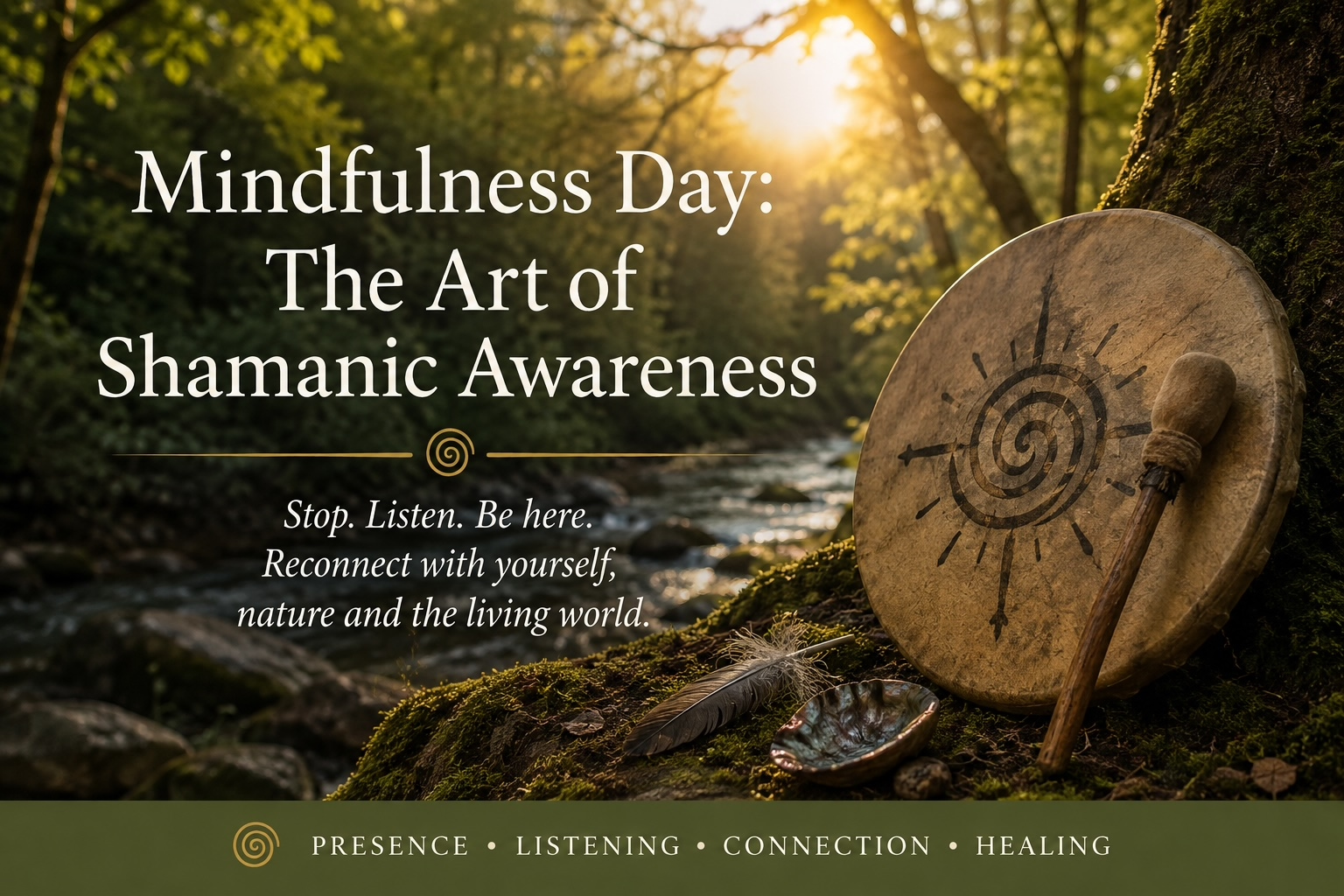

Mindfulness Day: The Art of Shamanic Awareness
Every year on 12 September, Mindfulness Day invites us to stop for a moment and pay attention to the present. It sounds remarkably simple, yet how often are we truly present? We can be walking while thinking about where we are going, eating while looking at a screen, or listening to somebody while already preparing what we are going to say next. We can spend our mornings thinking about the afternoon and our evenings replaying something that happened years ago.
Our body may be here, but our awareness is somewhere else. Mindfulness is the practice of bringing ourselves back. From a shamanic perspective, however, I believe we can take this further. Becoming present is not simply about becoming more aware of ourselves. It can also be about becoming aware of the living world around us and remembering that we are part of the Web of Life.
Mindfulness and Shamanic Awareness
The modern mindfulness movement has become associated with meditation, breathing exercises, stress reduction and wellbeing, but its roots are much older. The English word mindfulness has been used to translate the Buddhist concept of sati, although the meaning of the original term is richer and has been interpreted in different ways. It can encompass remembrance, attentiveness and a lucid awareness of present experience. Within Buddhist traditions, mindfulness forms part of a much wider spiritual and ethical practice rather than existing simply as a technique for relaxation.
At its simplest, mindfulness asks us to notice our breathing, our body and our thoughts without immediately becoming carried away by them. It also asks us to notice what is happening around us. There is something profoundly valuable in this simple act of paying attention, and it is here that mindfulness begins to overlap with something fundamental to shamanic practice: awareness.
Shamanism is rooted in an animistic understanding of the world. Animism recognises that we do not exist separately from nature. We are participants within a living world containing animals, plants, trees, rivers, mountains, stones, weather, landscape and spirit.
From this perspective, walking through a wood is not simply walking through scenery. The wood is alive around us. When we become quiet enough, our relationship with our surroundings begins to change. We hear the different layers of birdsong and notice the wind moving through the leaves. We feel changes in temperature as we move between sunlight and shade, and become conscious of the smell of damp earth, the texture of bark, the movement of insects and the changing shape of clouds. Things that were always there suddenly become visible because we have become present enough to notice them.
There is, however, an important difference between simply observing nature and approaching the natural world through an animistic consciousness. Modern mindfulness might invite us to sit beneath a tree and notice its bark, its leaves, the movement of its branches and the sensations arising within our own body. Shamanic awareness can invite us to go further, connecting with the tree’s spirit.
Instead of nature becoming the background against which we practise mindfulness, we begin to recognise ourselves as part of a relationship. The question changes from What can I get from spending time in nature? to What is here with me? It is a subtle but important shift. We stop placing ourselves at the centre of the experience and begin to listen.
Remembering How to Listen
Our modern lives are filled with noise. Phones ring, messages arrive, and notifications appear. Televisions, computers and radios fill quiet spaces, and even when the external noise stops, the internal conversation often continues. We think about what we need to do tomorrow, what somebody meant by something they said yesterday, what we should have done differently, or what might happen next.
Our attention moves continually between memory, anticipation and distraction. One of the gifts of mindfulness is the recognition that we do not have to follow every thought that passes through the mind. We can notice the thought, allow it to pass and return our attention to the breath, the body, the ground beneath our feet, the sounds around us and the present moment. The more we practise returning, the more we begin to discover how rarely we were completely present in the first place.
The body is one of the simplest ways of returning ourselves to the present. You cannot breathe yesterday’s breath or feel tomorrow’s ground beneath your feet. The physical body exists here and now, which is why becoming conscious of physical sensation can provide such a powerful anchor.
We can feel our feet upon the earth, notice where our body touches the chair, become aware of our breathing without trying to control it and observe where we are holding tension. Rather than attempting to force the mind to become empty, we can simply allow our awareness to settle into the body. For me, this kind of embodied presence also has an important place within shamanic healing. Before we journey elsewhere, it is valuable to know where we are.
The Shamanic Drum and Altered Awareness
People sometimes imagine that meditation must take place in silence, but shamanic practice offers another possibility. The repetitive beat of the drum can become a focus for awareness. Instead of the mind jumping continually from thought to thought, our attention can begin to settle into the rhythm.
The drum occupies a particularly important place within my own shamanic practice. I use drumming as part of shamanic journeying, where the repetitive rhythm supports a movement away from ordinary everyday awareness and into another state of consciousness. This creates an interesting relationship between mindfulness and shamanic journeying.
Mindfulness can begin by bringing us completely into the present moment, while shamanic journeying can then involve intentionally directing awareness beyond our ordinary experience of that moment. The two practices are not the same, but presence can provide a powerful foundation for journeying. Before travelling, we become still. Before asking questions, we listen. Before seeking an answer, we make space in which an answer might be heard.
There is another reason why mindfulness interests me as a shamanic practitioner. Our awareness can become extraordinarily scattered. Part of us may be thinking about something that happened yesterday while another part is worrying about next week. We may be answering messages while eating, watching television while scrolling through our phones and mentally rehearsing tomorrow’s conversation at the same time. We can become everywhere except where we actually are.
Difficult experiences can also leave us feeling disconnected from ourselves. Within different shamanic traditions, there are teachings concerning fragmentation, loss and restoration, including practices commonly described today as soul retrieval. These traditions have their own spiritual understanding and should not simply be reduced to modern psychological terminology.
There is nevertheless an interesting resonance between the two approaches. Mindfulness repeatedly asks us to notice where our awareness is now. Shamanic practice can take us towards the deeper question of what it might mean to become fully present within ourselves again.
The Sacred Art of Paying Attention
We live in a culture that places enormous value upon doing. We are encouraged to achieve something, fix something, buy something, improve something or become something. Even spiritual practice can become another task on the list: ten minutes of meditation completed before moving on to the next job.
Perhaps mindfulness does not always need to become another thing that we do. Sometimes it may be about what happens when we stop doing. There is a wonderful simplicity in sitting outside without needing the experience to achieve anything. We do not need the tree to heal us, the birds to give us a message or the universe to provide an answer. We can simply be there and listen. Paradoxically, it is often when we stop demanding answers that we become quiet enough to hear.
For Mindfulness Day, I invite you to spend five or ten minutes outside. You do not need a special or sacred place. A garden, woodland, park, field or quiet place beneath a tree is enough. Leave your telephone behind if you can, then stand or sit comfortably and become aware of the ground supporting you. Do not deliberately change your breathing. Simply notice it.
Gradually expand your awareness to what is happening around you. Listen to the sounds. Rather than simply identifying ‘birds’, listen more closely. How many different birds can you hear? Which sounds are nearby and which are far away? Notice the temperature of the air against your skin, the ground beneath your feet and the movement of the breeze. Become aware of scents such as earth, rain, leaves, flowers, wood or grass.
Then begin to notice what you can see. You might try noticing movement before objects: leaves stirring in the wind, clouds crossing the sky, grasses moving or insects passing through your field of vision. Allow yourself gradually to become still.
Instead of asking what you can gain from the experience, quietly ask yourself: What is here with me? Then listen. Do not force anything to happen and do not worry if nothing unusual occurs. Simply practise being present. That is enough.
Coming Home to Ourselves
Mindfulness does not necessarily require a meditation cushion, an app or an hour of silence. It can happen while walking, washing dishes, sitting beneath a tree or listening properly to somebody we love. It happens whenever we suddenly remember: I am here.
Shamanic awareness adds another dimension to that recognition. I am here, but I am not here alone. I exist within an extraordinary living web of relationships: with the earth beneath me, the air entering my lungs, the plants and animals around me, the people whose lives intersect with mine and, within the shamanic understanding of reality, the unseen world of spirit.
Perhaps that is one of the deeper gifts of becoming present. We begin by paying attention to ourselves. As our awareness expands, we notice the world around us. Eventually, we may remember that the separation between ourselves and the living world was never as absolute as we imagined.
This process of slowing down, listening and reconnecting is also woven through my shamanic healing practice. A shamanic healing session creates a space away from the continual demands and distractions of everyday life. My work can incorporate intention setting, energy body healing, shamanic drumming and journeying, alongside other shamanic healing practices according to the needs of the individual.
At its heart, however, there is something very simple. We create space, we listen, and we allow ourselves the opportunity to reconnect. So, on Mindfulness Day this year, perhaps give yourself a few minutes in which there is nowhere else you need to be. Put down the telephone, go outside, feel your feet upon the earth and listen. Notice what is around you and, for a little while, simply be here.
Shamanic Life Coaching
If you would like to develop mindfulness and meditation as part of your everyday life, I can support you through my Shamanic Life Coaching sessions. I work individually with clients to help them develop greater awareness, become more grounded and present, and establish mindfulness and meditation practices that feel natural and sustainable rather than becoming another task to complete. Drawing upon my experience of shamanic practice, meditation and working with altered states of awareness, I can also help you explore ways of quietening the continual activity of the mind, strengthening your connection with your body and intuition, and developing a deeper relationship with yourself and the natural world. You can find out more about my Shamanic Life Coaching and how I work here: https://www.roseautumn.com/shamanic-coaching/
Shamanic Healing: Ancient Traditions & Modern Practice
To listen to the audio recording of this article, go here: https://youtu.be/56VWfE9qMco
Shamanic practices are among the oldest known forms of spiritual practice and healing.[1] Long before the development of modern medicine or organised systems of psychotherapy, people sought healing through their relationships with nature, ceremony, altered states of consciousness, ancestors, and the spirit realm.
Shamanic traditions have developed among peoples in widely separated parts of Mother Earth, while the practices themselves have been transmitted through generations in many different cultural forms. Rather than representing a single religion or uniform system of belief, shamanic practice encompasses diverse traditions connected by recurring relationships between healing, the natural environment, altered states of consciousness, and the spirit realm.
Shamanic Healing as it is practised today has nevertheless changed considerably. Understanding where these practices came from, and how they have developed, is important not only for practitioners, but also for anyone considering Shamanic Healing.
Where Did Shamanic Healing Originate?
Shamanic Healing did not begin with a single historical moment, nor was there originally one universal system called shamanism.
The word “shaman” most probably derives from the Tungus-speaking Evenki people of northern Siberia. The Evenki term saman referred to a particular spiritual practitioner within the community.[2] The much broader application of the terms “shaman” and “shamanism” to comparable spiritual practitioners and practices in cultures across Mother Earth developed subsequently.
Practices that scholars have described as shamanic have been identified within numerous cultures. These traditions have taken different forms, reflecting the beliefs, environment, ancestors, and spiritual understanding of individual peoples.
Despite these differences, certain practices and characteristics recur across a number of traditions. These can include altered states of consciousness, communication with spirits, healing, divination, ceremony, and relationships with the natural and spiritual realms.[2]
It is therefore important not to treat the many indigenous traditions now described collectively as “shamanism” as though they constituted a single historical religion or spiritual system.
The Traditional Role of the Shaman
Traditionally, shamanic practitioners were usually embedded within their communities. Their responsibilities could extend considerably beyond anything we would now recognise as the role of a therapist.
Depending upon the particular culture, the practitioner might undertake healing, divination, ceremony, communication with ancestors or spirits, guidance for the community, and the identification of spiritual causes of illness or misfortune.[2]
Shamanic practice was therefore not simply a collection of healing techniques. It formed part of a wider relationship between the individual, the community, the natural environment, and the spirit realm.
This distinction becomes particularly important when considering how Shamanic Healing has developed in the modern Western world.
The Development of Modern Shamanic Practice
During the twentieth century, the work of anthropologists, researchers, and writers brought greater awareness of indigenous shamanic traditions to Western audiences.
One particularly influential writer was the historian of religions Mircea Eliade. His Shamanism: Archaic Techniques of Ecstasy, first published in French in 1951 and translated into English in 1964, had a major influence upon both academic and popular understandings of shamanism. Eliade placed particular emphasis upon ecstatic states and the spiritual journeys undertaken by shamans.[3]
Another particularly influential figure was the American anthropologist Michael Harner. Harner began studying indigenous cultures during the 1950s and subsequently undertook fieldwork among the Shuar of Ecuador and the Conibo of the Peruvian Amazon. He began teaching shamanic methods to small groups in the United States during the early 1970s.[4]
Harner eventually developed what became known as Core Shamanism. Rather than attempting to reproduce one particular indigenous tradition, he sought to identify what he regarded as universal, near-universal, or commonly occurring elements within shamanic traditions. These included the shamanic journey and the use of repetitive drumming to facilitate an altered state of consciousness.[5]
In 1979, Harner established the Centre for Shamanic Studies. His influential book The Way of the Shaman appeared in 1980, and the Foundation for Shamanic Studies subsequently developed from his work.[4][6][7]
This approach had an enormous influence upon the development of contemporary Western shamanic practice.
Shamanic techniques consequently became accessible to people who had not inherited them through membership of a traditional shamanic culture. Contemporary Shamanic Healing may now be encountered through individual healing sessions, workshops, training courses, retreats, shamanic circles, and other forms of spiritual practice.
Shamanic Healing in the Twenty-First Century
The development of contemporary Shamanic Healing has also created important questions about how these practices should be approached.
There is an important distinction between indigenous shamanic traditions and contemporary Western shamanic practice. A traditional practitioner exists within the particular spiritual, cultural, and social context of a community. A contemporary Western practitioner may learn and work with shamanic techniques without possessing that inherited cultural role. For this reason, I describe myself as a Shamanic Practitioner rather than claiming the traditional cultural role of a Shaman.
Understanding the history of these practices encourages me to approach Shamanic Healing with respect, humility, and an awareness that the techniques I practise have a much longer history than the contemporary therapeutic environment in which I offer them.
It also raises important questions about cultural appropriation. Contemporary practitioners need to consider where particular teachings, ceremonies, terminology, and objects originate, and whether adopting culturally specific practices without their original context is appropriate.
Core Shamanism represents one response to this problem. Harner deliberately sought to distinguish what he considered the underlying methods of shamanism from ceremonies and cultural practices specific to individual indigenous peoples.[5]
Whatever approach a practitioner follows, understanding the provenance of a practice is an important part of practising responsibly.
Ancient Principles in a Modern Practice
Respecting the origins of shamanic traditions does not mean that Shamanic Healing must remain unchanged.
Spiritual traditions have always existed within particular communities and environments. As circumstances change, how people encounter and practise spiritual healing can change as well.
In my own practice, I work with principles and techniques including shamanic journeying, drumming, spiritual connection, intention, ceremony, energy healing, and relationship with Mother Earth. My Shamanic Healing work may also include Power Animal Retrieval, Soul Retrieval, Cord Cutting, Shamanic Extraction, Changing Agreements, Psychopomp, and Spiritual Parasite or Entity Removal.
At the same time, I believe it is important to distinguish between working with shamanic principles and simply reproducing ceremonies belonging to cultures other than my own.
This allows contemporary Shamanic Healing to develop while maintaining respect for the traditions from which much of our knowledge has emerged.
Continuing to Learn
Training as a Shamanic Practitioner is not the end of the learning process.
My practice continues to develop through research, personal spiritual practice, experience of working with clients, reflection upon the provenance of particular practices and terminology, and continued exploration of different shamanic traditions.
For me, understanding the history of Shamanic Healing is therefore not simply an academic exercise: it influences how I practise.
The further we explore the history and cultural context of shamanic practices, the better equipped we are to distinguish between ancient traditions, modern interpretations, and our own direct spiritual experience.
Shamanic Healing continues to evolve. My intention is to allow my own practice to evolve with it, while maintaining respect for its history, its cultural significance, and the relationship between human beings, the spirit realm, and Mother Earth.
About Rose
Rose is a Shamanic Practitioner offering in-person and distance Shamanic Healing Sessions and Shamanic Life Coaching, specialising in narcissistic abuse.
Rose works without hallucinogenic or psychedelic plant medicines. Instead, she uses an ancient drumming method to access this altered state of consciousness. A session may include a tailored combination of Power Animal Retrieval, Divination, Soul Retrieval, Energy Body Healing, Psychopomp, and Extraction to remove negative energy and blockages.
Each session with me includes Shamanic Subconscious Repatterning. A powerful system that changes the subconscious programmes that drive unwanted behaviour. This method heals trauma at its source, removes the self-limiting programme, and then rewrites a new way of being.
Shamanic Healing can be accessed face-to-face in the Rose Healing Room, Petersfield, East Hampshire or remotely through Distance Healing Sessions. Because the work is carried out in the Spirit Realm with the support of Rose’s Spirit Guides, the client does not need to be physically present in the same room. Distance sessions are narrated in real time, and clients receive an audio recording by email afterwards.
For further information about Shamanic Healing, go to: https://www.roseautumn.com/shamanic-healing/
References
[1] Pollock, Donald, “Shamanism”, Oxford Bibliographies in Anthropology, Oxford University Press, first published 26 October 2015, revised 19 February 2019. Pollock describes shamanism as having been regarded as one of the world’s oldest religions and records evidence associated with shamanic practice in Palaeolithic cave art. See also Manvir Singh, “The Cultural Evolution of Shamanism”, Behavioral and Brain Sciences, vol. 41, 2018, e66, which describes shamanism as an ancient human institution, records its presence among nearly all documented hunter-gatherer societies, and concludes that it probably characterised the religious lives of many ancestral human populations. https://academic.oup.com/reference/62334/reference-article-abstract/554065193 https://pubmed.ncbi.nlm.nih.gov/28679454/
[2] Cox, James L., “Shamanism”, in Adam Possamai and Anthony J. Blasi (eds.), The SAGE Encyclopedia of the Sociology of Religion, SAGE Publications, 2020, pp. 747–748. Cox discusses the probable derivation of the term shaman from the Tungus-speaking Evenki people of northern Siberia, the traditional role of the practitioner, and the subsequent development of the broader concept of shamanism. https://researchers.westernsydney.edu.au/en/publications/shamanism/
[3] Eliade, Mircea, Shamanism: Archaic Techniques of Ecstasy, translated from the French by Willard R. Trask, Bollingen Series LXXVI, Princeton University Press, Princeton, 1964. Originally published in French as Le Chamanisme et les techniques archaïques de l’extase, Payot, Paris, 1951. Eliade’s comparative study placed particular emphasis upon ecstasy and the spiritual journey and became one of the most influential twentieth-century studies of shamanism. https://press.princeton.edu/books/paperback/9780691210667/shamanism
[4] Foundation for Shamanic Studies, “Michael Harner, PhD”. Harner studied with the Shuar in Ecuador and the Conibo of the Peruvian Amazon, began teaching shamanic methods during the early 1970s, founded the Center for Shamanic Studies in 1979, and subsequently established the Foundation for Shamanic Studies. https://www.shamanism.org/michael-harner/
[5] Foundation for Shamanic Studies, “About the Foundation for Shamanic Studies”. The Foundation describes Core Shamanism as Harner’s system based upon what he identified as universal, near-universal, and common features of shamanism, distinguished from the culturally specific ceremonies of individual indigenous peoples. https://www.shamanism.org/about/
[6] Harner, Michael, “The History and Work of the Foundation for Shamanic Studies”, Shamanism, Journal of the Foundation for Shamanic Studies, originally published 1991; revised and republished 2005. Harner describes the development of his practice, his teaching workshops from the early 1970s, the development of Core Shamanism, the establishment of the Center for Shamanic Studies, and the publication of The Way of the Shaman in 1980. https://www.shamanism.org/articles/the-history-and-work-of-the-fss/
[7] Harner, Michael, The Way of the Shaman: A Guide to Power and Healing, Harper & Row, New York, 1980; revised edition, HarperSanFrancisco, 1990.

Alfred’s Tower: The Story Behind a Mysterious Somerset Monument
Listen to the audio recording of this article here:
This blog post is essential reading for anyone interested in the history of the tower on Kingsettle Hill because, surprisingly, very little information is available on the internet.
During the summer, we stayed at the tranquil Kingsettle Campsite in South Brewham, near the charming Somerset town of Bruton.
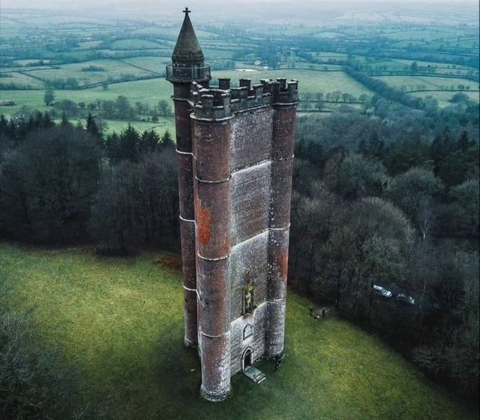
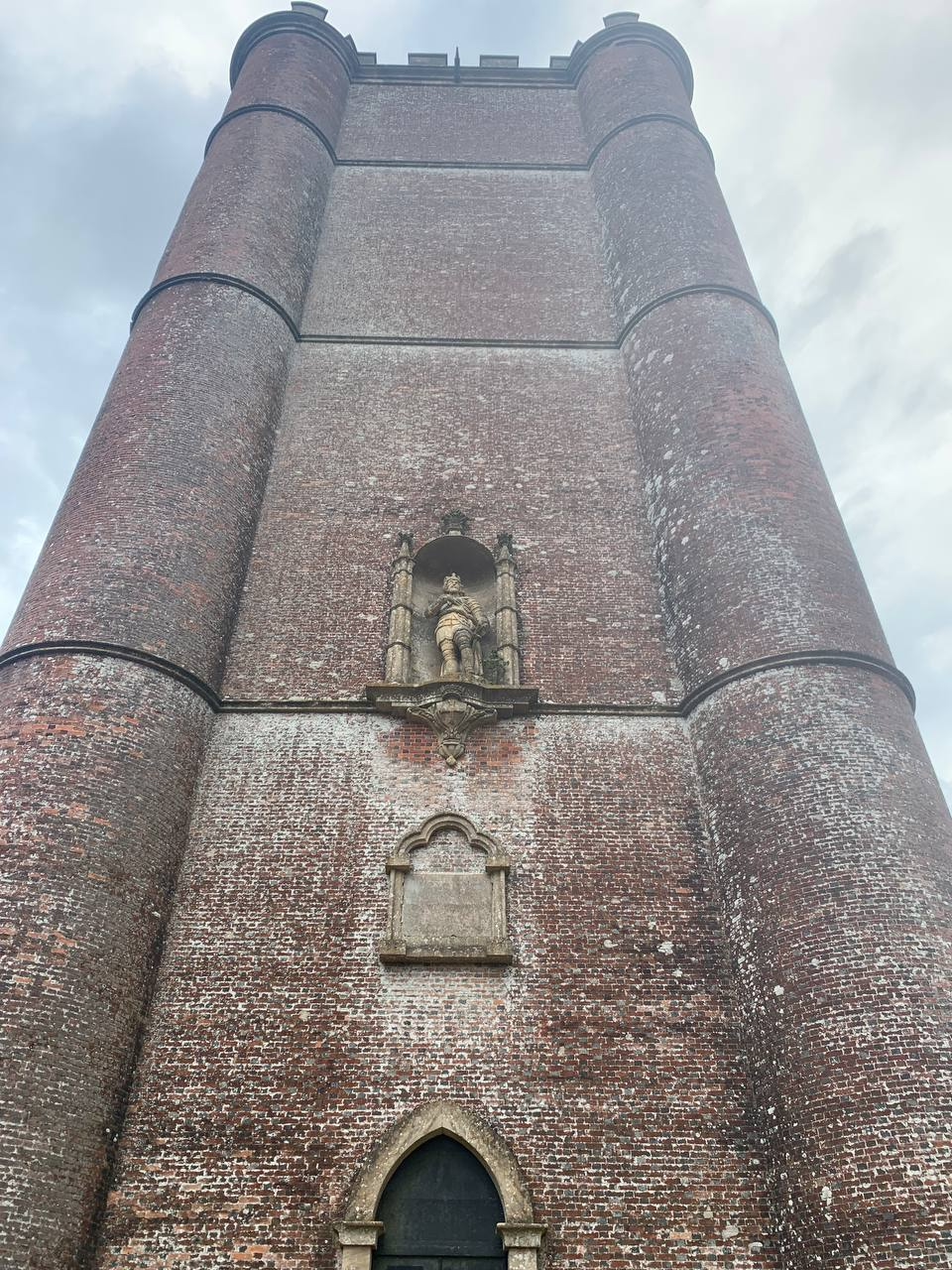
Driving up Kingsettle Hill, we noticed an extraordinary building rising above the landscape. It was far taller than anything I had expected to encounter in the Somerset countryside and, on investigating, I discovered an enormous triangular brick tower.
There is a heavily weathered stone inscription above the entrance, but very little information nearby explaining what the tower was, why it had been built or why such an enormous monument stood on this particular hill.
With some difficulty I managed to decipher enough of the inscription to realise that the tower was dedicated to King Alfred the Great, whom I knew to have been an important early medieval monarch. That discovery led me into a much larger historical investigation.
The tower is triangular in plan, with a round turret at each corner and a spiral staircase climbing through one of them to the roof. Battlements crown the main walls, while a stone statue of Alfred stands in a Gothic niche above the entrance and inscription. At approximately 160 feet high, the structure dominates Kingsettle Hill and can be seen from a considerable distance.[1]
Alfred’s Tower is conventionally described as a landscape “folly”, although in this case the term can be misleading if it suggests a building without serious meaning. My research has concluded that the tower was originally conceived as a deliberate historical monument to Alfred.
King Alfred the Great
Alfred of Wessex was an Anglo-Saxon king who reigned from 871 until 899. He occupies a unique place among England’s native-born rulers in being remembered by the enduring epithet “the Great”. Medieval historian Matthew Firth describes Alfred as “the only native-born English ruler to have gained the byname ‘the Great’.”[2]
Interestingly, Alfred was not known by this title during his lifetime. Firth’s recent research has demonstrated, however, that the tradition is considerably older than was once believed. References to Alfred as “the Great” can be traced into the medieval period and securely to at least the thirteenth century.[2]
Why, then, was an enormous monument to this ninth-century king erected on a Somerset hill almost nine hundred years after his death?

Henry Hoare II and Stourhead
The answer begins with Henry Hoare II (1705–1785), the wealthy banker and landowner responsible for developing the celebrated landscape at nearby Stourhead. Hoare inherited Stourhead from his father in 1725 and transformed its landscape through an ambitious programme of planting, architecture and garden design.[3]
Alfred’s Tower eventually became one of the most dramatic features associated with this landscape, although it stands some distance from Stourhead House itself, on Kingsettle Hill in Somerset. The location was not accidental.
Why Kingsettle Hill?
Henry Hoare believed that Kingsettle Hill was associated with one of the most dramatic episodes in Alfred’s life.
By 878 Alfred’s position was exceptionally precarious. Viking armies had already conquered or profoundly disrupted several of the major Anglo-Saxon kingdoms, and Guthrum’s sudden occupation of Chippenham forced Alfred from his royal centre into the marshlands of Somerset. The events commemorated by Alfred’s Tower therefore belong not simply to another battle in Alfred’s reign, but to the extraordinary recovery by which he rebuilt his forces, defeated Guthrum at Edington and preserved Wessex as an independent kingdom.[4]
In 878 Alfred was fighting for the survival of his kingdom against the Viking army commanded by Guthrum. Driven into the Somerset marshes, Alfred established a stronghold at Athelney, a raised area within the wetlands of the Somerset Levels near the modern village of East Lyng. From this defensible refuge west of Kingsettle Hill, Alfred began the recovery that would culminate in his victory at Edington.[4][5]
He subsequently emerged from Athelney and summoned his forces. The Anglo-Saxon Chronicle records that men from Somerset, Wiltshire and Hampshire gathered around him at a place called Egbert’s Stone before the army advanced towards Edington.[4] Asser, writing during Alfred’s lifetime, gives a closely corresponding account and places Egbert’s Stone in the eastern part of Selwood.[5]
The gathering at Egbert’s Stone was therefore not simply a geographical stopping point on Alfred’s route. It was the place at which the surviving West Saxon forces rallied to their king after one of the most dangerous periods of his reign. Men came to Alfred from Somerset, Wiltshire and part of Hampshire before the restored army moved onwards towards Edington. The identification of Egbert’s Stone was consequently central to Henry Hoare’s interpretation of Kingsettle Hill: if Hoare’s local tradition was correct, the tower stood at the place associated with the moment when Alfred re-emerged from refuge and once again gathered an army around him.[4][5]
There Alfred defeated Guthrum in one of the decisive battles of his reign.
The exact location of Egbert’s Stone has never been established with certainty. Kingsettle Hill is one of the places subsequently associated with Alfred’s muster, and Henry Hoare clearly believed in this identification. That belief explains the location of the tower, even if it cannot prove that Alfred actually stood on the hill.
Voltaire and the Inspiration for Alfred’s Tower
Remarkably, Henry Hoare’s own correspondence allows us to identify the moment at which the idea for Alfred’s Tower emerged. On 23 October 1762 Hoare wrote to his daughter Susanna, Lady Bruce. He had been reading Voltaire’s history and was particularly impressed by the French philosopher’s assessment of Alfred. Voltaire wrote: “I do not know whether there has ever been upon the earth a man more worthy of the respect of posterity than Alfred the Great, who rendered these services to his country.”[6]
The passage can be traced to Voltaire’s Abrégé de l’Histoire universelle depuis Charlemagne jusques à Charlequint, published at The Hague in 1753. It was subsequently incorporated into his Essai sur les mœurs et l’esprit des nations, in the chapter devoted to ninth-century England and Alfred the Great.[6]
Hoare’s response to what he had read was remarkably direct. “Out of gratitude to Him”, he proposed erecting a tower on Kingsettle Hill, at the place where he believed Alfred had raised his standard after emerging from Athelney.[7]
Hoare’s 1762 letter is the earliest surviving evidence for the conception of Alfred’s Tower and identifies Alfred himself as the reason for the monument. The documentary evidence therefore allows us to say something unusually precise about the monument: Alfred’s Tower originated directly from Henry Hoare’s admiration for Alfred the Great, intensified by reading Voltaire’s extraordinary praise of the Anglo-Saxon king.
One question remains unresolved. Voltaire supplied Hoare with the immediate inspiration for the monument, but he did not identify Kingsettle Hill as the place where Alfred had raised his standard. Hoare must therefore have obtained that local identification from another source or tradition. I have not yet been able to establish where it came from. Whether it derived from an earlier antiquarian theory, local tradition or another historical work remains an open question.
Hoare’s First Proposed Inscription
The idea developed rapidly. On 18 November 1762, less than a month after his letter to Lady Bruce, Hoare wrote to his son-in-law Lord Bruce proposing an inscription for the tower.[8]. It began: “In memory of Alfred the Great, The Founder of the English Monarchy” and described Alfred as: “The Giver of most excellent Laws, Jurys, the Bulwark of English Liberty”.[8]. Hoare also praised Alfred’s naval achievements, writing that through his courage and attention to increasing England’s naval force he had protected the country from foreign invasion and extended its trade.[8]
The proposed inscription then made an explicit connection between Alfred’s Britain and Hoare’s own. Hoare wrote that Britons should revere Alfred because, following his example and under Divine Providence, they had defeated their enemies that year by land and sea in Europe, Asia, Africa and America. This was a reference to Britain’s extraordinary military successes during the Seven Years’ War.[8]. Alfred’s Tower was therefore developing into something more complicated than a simple memorial to a dead king. Alfred remained its central inspiration, but Hoare was using him to connect the achievements of Anglo-Saxon England with the Britain of his own age.
Hoare was not converting the tower into a memorial to the Seven Years’ War. Alfred remained its subject. Rather, Hoare was using Alfred’s achievements as a historical parallel through which to interpret Britain’s successes in his own age. The distinction matters because the tower had already been conceived as a monument to Alfred before the war had ended.
Was It Built to Celebrate George III?
Modern descriptions frequently state that Alfred’s Tower commemorated both the end of the Seven Years’ War and the accession of George III in 1760. The surviving correspondence requires a more careful distinction.[1][9] The Seven Years’ War connection can be demonstrated directly from Hoare’s proposed inscription of November 1762.[8]
The initial idea for the tower, however, had already appeared in his letter of 23 October, before the preliminary peace agreement of 3 November 1762. His stated inspiration at that point was Alfred and Voltaire.[7] I have not found an equivalent statement in the correspondence examined in which Hoare says that he conceived Alfred’s Tower specifically to commemorate George III’s accession.
On the evidence presently identified, George III’s accession is therefore a later interpretation, not a documented reason given by Hoare for conceiving the tower. The fact that the claim is repeated in modern heritage accounts does not substitute for contemporary evidence from Hoare himself. The evidence therefore suggests a progression in Hoare’s thinking: admiration for Alfred inspired the tower; Alfred’s supposed association with Kingsettle Hill determined its location; and contemporary British military success was then incorporated into its political meaning.
The Tower Takes Shape
Henry Flitcroft, the architect closely associated with a number of buildings at Stourhead, is credited with the architectural design.[1][9] Construction did not immediately follow Hoare’s first proposal. By 28 April 1770 the tower was still unfinished. Hoare wrote to Lady Bruce: “I hope it will be finished in as happy Times to this Isle as Alfred finished his Life of Glory in then shall I depart in peace.”[10] This is particularly valuable evidence because it places Hoare directly within the story while construction was taking place.
Contemporary evidence allows us to go further than simply saying that the tower existed by 1772. The Annual Register for that year reported that the “finishing stone was laid” on the tower erected by Henry Hoare “in memory of King Alfred”. It described the brick tower, Alfred’s statue and the inscription above its entrance.[11] The report provides valuable near-contemporary confirmation both of the tower’s completion and of the purpose for which contemporaries understood Hoare to have erected it.
The resulting structure was extraordinary: a vast triangular brick tower approximately 160 feet, or 49 metres, high, with Chilmark stone architectural dressings and a statue of Alfred above its entrance.[1]. A contemporary 1772 account described the tower as 155 feet high; modern sources generally give approximately 160 feet (49 metres).[11][12]
The Inscription
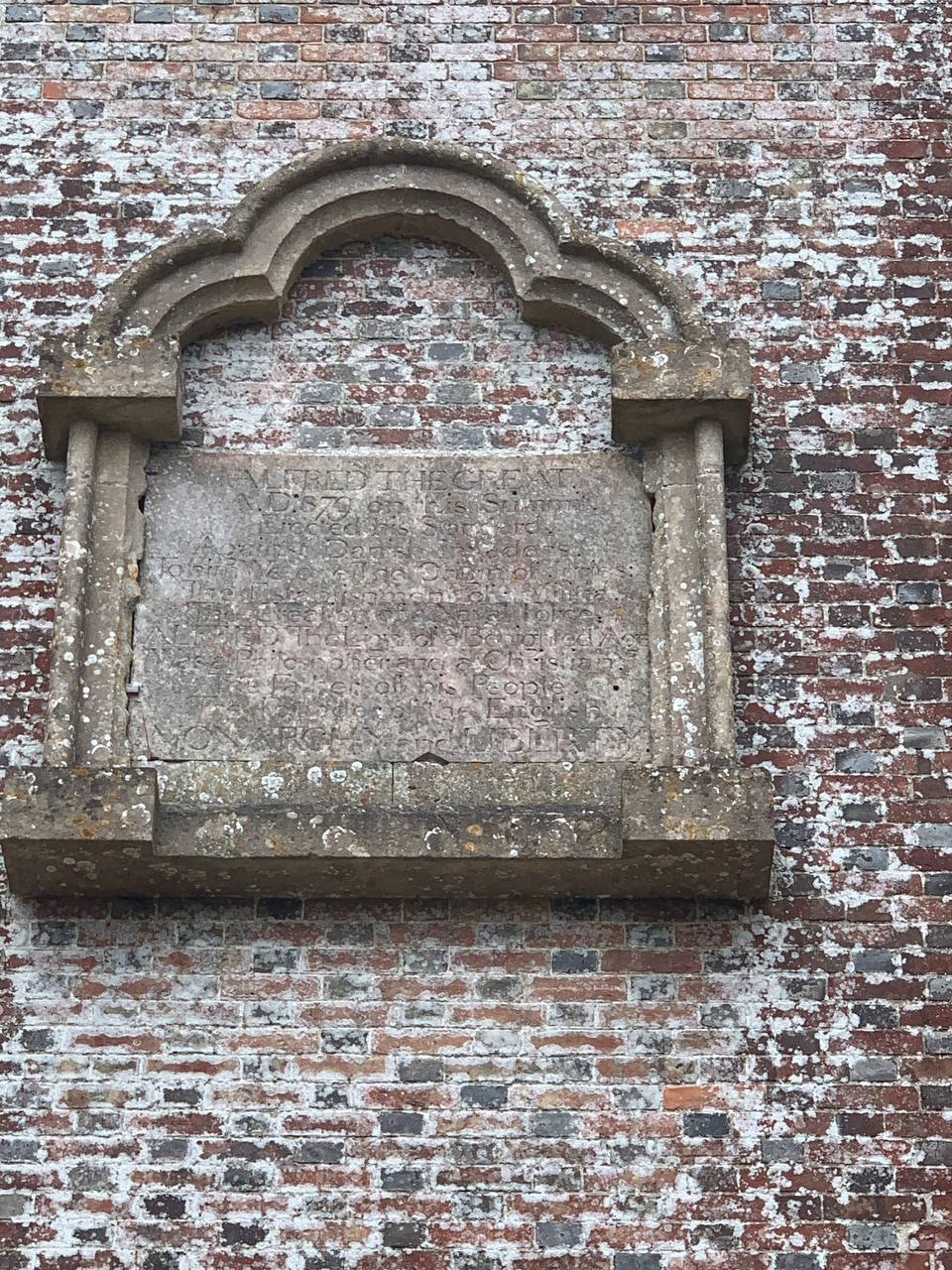
The original stone inscription is heavily weathered and difficult to read. It therefore seems remiss of the National Trust not to have provided an information board for visitors with a readable inscription. The inscription eventually placed upon the tower reads:
“ALFRED THE GREAT
AD 879 ON THIS SUMMIT
ERECTED HIS STANDARD
AGAINST DANISH INVADERS
TO HIM WE OWE THE ORIGIN OF JURIES
THE ESTABLISHMENT OF A MILITIA
THE CREATION OF A NAVAL FORCE
ALFRED THE LIGHT OF A BENIGHTED AGE
WAS A PHILOSOPHER AND A CHRISTIAN
THE FATHER OF HIS PEOPLE
THE FOUNDER OF THE ENGLISH
MONARCHY AND LIBERTY”[12]
The final inscription differs significantly from the much longer version Hoare had contemplated in November 1762. Most noticeably, the explicit reference to contemporary British military victories disappeared. The monument as finally presented to the visitor speaks entirely of Alfred.
The final editorial decision made the monument more exclusively Alfredian, not less. Whatever contemporary political comparisons had entered Hoare’s thinking during the development of the proposed inscription, they were omitted from the words ultimately placed upon the completed tower.
The inscription reflects the eighteenth-century image of Alfred as not merely a warrior king but a foundational figure in English government and liberty. It attributes to him the origin of juries, a militia and naval power, and presents him simultaneously as warrior, philosopher, Christian ruler and father of his people. Whether every institutional claim can be sustained historically is a separate question; what matters here is what these words reveal about the Alfred whom Henry Hoare believed he was commemorating.
Why Does It Say 879?
The date on the tower creates another historical puzzle. The inscription says that Alfred erected his standard on the summit in AD 879. The chronology now accepted for Alfred’s emergence from Athelney, his muster at Egbert’s Stone and his victory at Edington places these events in 878.[4][5] The 879 date therefore belongs to the eighteenth-century understanding of Alfred’s chronology rather than the dating generally accepted today.
The surviving eighteenth-century evidence reveals an additional complication. The contemporary account of the completion of Alfred’s Tower published in 1772 stated that Alfred had erected his standard on the site in 871.[11] That date differs both from the 879 subsequently recorded on the monument and from the 878 chronology accepted today. It suggests that the chronology associated with Alfred’s supposed muster on Kingsettle Hill was itself not entirely stable in the eighteenth century. Why the finished inscription came to specify 879 remains a question worthy of further investigation.
It is a useful reminder that Alfred’s Tower is not itself a ninth-century historical record. It is an eighteenth-century interpretation of ninth-century history. That distinction runs through almost every aspect of the monument.
Who Actually Built Alfred’s Tower?
One of the most surprising discoveries from my investigation concerns the people who physically constructed it. Henry Hoare II is remembered as the patron. Henry Flitcroft is remembered as the architect. But the builders have largely disappeared.
A structure of this scale required an organised workforce and an extensive supply network. Brickmakers or merchants supplied an enormous quantity of bricks. Stone was quarried and dressed. Bricklayers and masons erected the walls. Carpenters were needed for floors and scaffolding. Materials had to be transported to the summit of Kingsettle Hill, and somebody must have supervised the work. Yet the identities of these people are absent from the readily accessible history of Alfred’s Tower.
This is particularly intriguing because the surviving Hoare and Stourhead archive is extensive, and Henry Hoare’s correspondence from 1760–1781 has been published by the Wiltshire Record Society.[13] The Hoare family of Stourhead papers survive principally within collection 383 at the Wiltshire & Swindon History Centre.[14]
It would be wrong to conclude that the original accounts have necessarily been destroyed. Bills, vouchers, ledgers or correspondence identifying the craftsmen may still survive within the archival material. For the moment, however, we know the wealthy man who commissioned Alfred’s Tower and the architect who designed it, while the people who physically constructed one of Somerset’s most extraordinary buildings have largely vanished from its story.
A Monument Recorded as a War Memorial
There is another curious aspect to Alfred’s Tower. The Imperial War Museums includes it in the War Memorials Register as WMR 68253 and classifies the commemorated conflict as the Seven Years’ War.[12]
Hoare’s correspondence certainly shows that he compared Alfred’s military achievements with Britain’s contemporary victories. But this should not be confused with the reason for which the monument was conceived. Hoare had already proposed the tower “out of gratitude” to Alfred before the Seven Years’ War had ended, and the final inscription is entirely concerned with Alfred.[7][8]
The IWM classification therefore appears to conflate the contemporary political context in which Hoare invoked Alfred with the primary commemorative subject of the tower. Alfred’s Tower was conceived as a monument to Alfred.
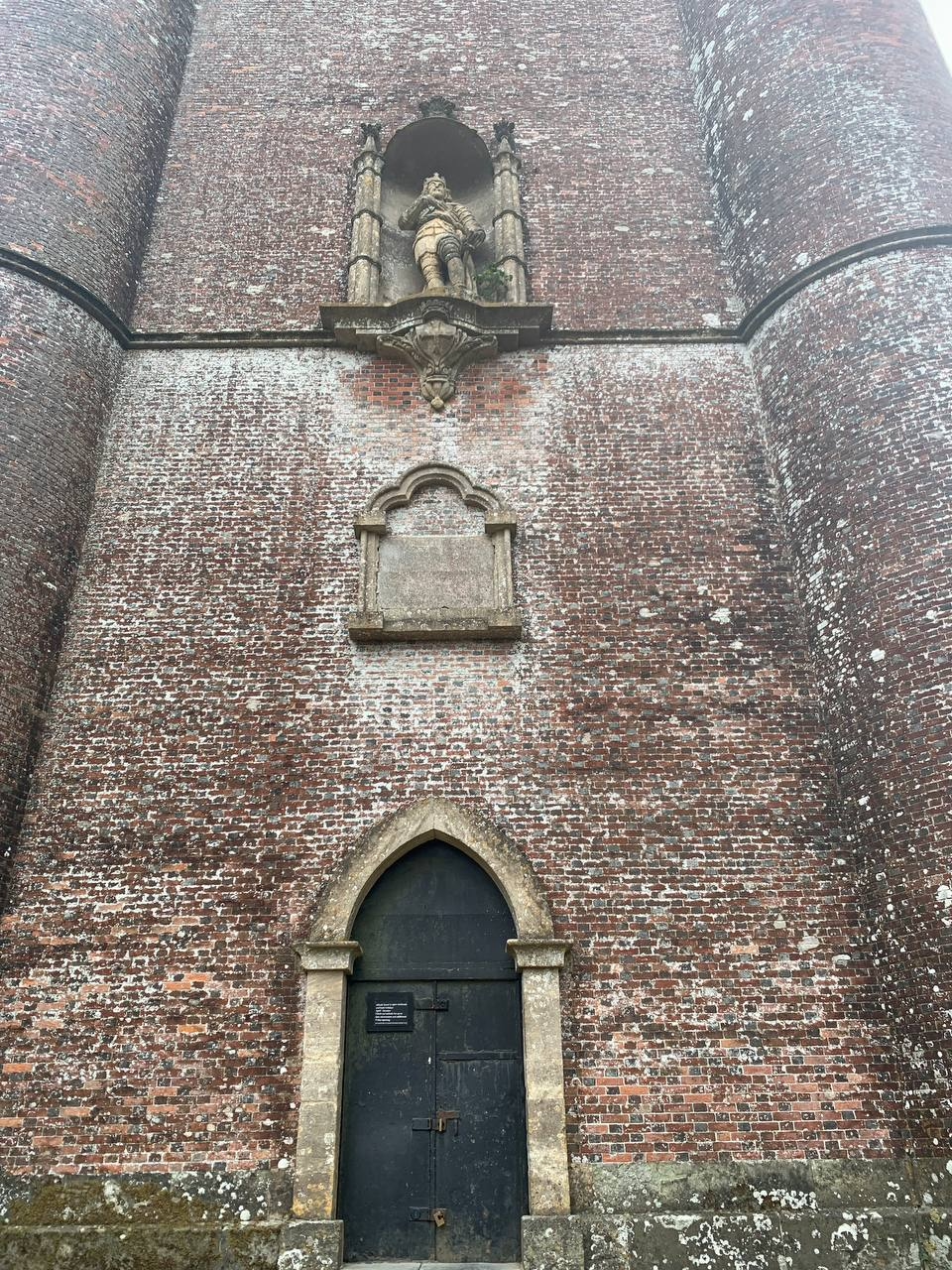
The Modern Record Is Surprisingly Confused
Having traced this history, I returned to the modern descriptions of Alfred’s Tower and found a surprising number of problems.
The National Trust currently describes it in one place as a 160ft “(59m)” tower “built in 1722”. Both figures are wrong: 160 feet is approximately 49 metres, while the tower belongs to the 1760s–1772 building programme.[15] The same National Trust page calls Henry Hoare II “Sir Henry Hoare II”, although he was not a baronet, and states as fact that Alfred raised his standard on this particular spot in 878, when the precise location of Egbert’s Stone remains uncertain.[15]
Historic England presents further problems. Its individual Grade I listing dates the tower to 1766, while its separate registration of the Stourhead landscape says it was completed in the “late 1770s”.[1][9] Contemporary evidence shows that the completed monument was already being described in print in 1772.[11]
Historic England also transcribes one of the most memorable lines of the inscription incorrectly. It records: “Alfred the Lion of a (benighted) Age”.[1]
The inscription actually reads: “ALFRED THE LIGHT OF A BENIGHTED AGE”.[12]
The correct wording is independently preserved by the Imperial War Museums and historian Simon Keynes.[12][16]
Conclusion
When I first saw Alfred’s Tower from the road at Kingsettle Hill, I knew almost nothing about it. Some basic searching on my phone found a Google page that included none of the history of the monument, and didn’t mention Alfred at all. Similarly, the National Trust pages lacked important detail and contained inaccuracies. The lack of information at the monument itself made the building seem even more mysterious. The documentary trail reveals a far richer story.
We can trace Henry Hoare II reading Voltaire in 1762 and being struck by his extraordinary praise of Alfred. We can see Hoare deciding, “out of gratitude”, to erect a tower at a place he believed was associated with Alfred’s recovery from Athelney. Within weeks he was drafting an elaborate inscription linking Alfred’s achievements with Britain’s own military victories. Eight years later he was still writing anxiously about the unfinished building, hoping that he would live to see it completed.
The contemporary evidence now allows the story to be followed still further. In 1772 the “finishing stone” was reported as having been laid on a tower expressly described at the time as erected by Henry Hoare “in memory of King Alfred”. The completed public inscription removed the explicit references to Britain’s contemporary victories which had appeared in Hoare’s earlier draft and concentrated instead upon Alfred: his resistance to invasion, juries, militia, naval force, philosophy, Christianity, his people, monarchy and liberty.[11][12]
The surviving evidence therefore gives us an unusually clear answer to the question which began this investigation. Henry Hoare did not originally conceive the tower as a generic landscape ornament or as a memorial to the Seven Years’ War; he conceived it for Alfred. The contemporary war subsequently provided Hoare with a political parallel through which he interpreted Alfred’s achievements, but Alfred was the inspiration for the tower before the war had ended, and Alfred remained the subject of the monument when it was finally completed.
Nor has the investigation produced contemporary evidence that George III’s accession was a reason for its conception. On the evidence presently identified, that interpretation belongs to the later history of the monument rather than to the explanation Henry Hoare himself gave when he first proposed it.
The tower that finally emerged was therefore more than a decorative folly. It was Henry Hoare’s interpretation of Alfred the Great: warrior, Christian, philosopher, defender of his people and symbolic ancestor of the England Hoare believed himself to inhabit.
Not every historical claim made by the monument can be accepted literally. We cannot establish that Kingsettle Hill was the site of Egbert’s Stone. The inscription dates Alfred’s muster to 879 rather than 878. Some of the institutions attributed to Alfred reflect later traditions about his reign. But these discrepancies are themselves part of the history of Alfred’s Tower. The monument tells us not only how the eighteenth century remembered Alfred, but how powerful his reputation had become almost nine hundred years after his death.
Perhaps the greatest sadness in this story is that a tower erected to preserve the memory of Alfred has itself acquired a confused modern history. Dates have been misreported, its inscription has been mistranscribed, interpretations have hardened into facts, and the identities of the people who physically built it have disappeared from the readily accessible story.
What began for me as the accidental discovery of a mysterious tower on a Somerset hill therefore became an investigation into several different layers of history. There is the ninth-century story of Alfred himself and the extraordinary recovery from Athelney which culminated at Edington. There is the eighteenth-century story of Henry Hoare, reading Voltaire and deciding that Alfred remained worthy of the gratitude of posterity. There is the unresolved question of the older source or tradition which persuaded Hoare that Kingsettle Hill was connected with Alfred’s muster. And there is the modern history of the monument, in which later interpretations have sometimes been repeated as though they were established contemporary facts.
Standing beneath the tower today, therefore, we are looking at two histories at once: the extraordinary story of Alfred’s recovery in 878, and the equally fascinating story of how an eighteenth-century Englishman decided that Alfred’s memory was important enough to preserve in brick and stone on a Somerset hilltop.

Footnotes
[1] Historic England, ‘Alfred’s Tower’, National Heritage List for England, List Entry 1175610. The listing describes the tower as triangular in plan, built in Flemish-bond brickwork with Chilmark stone dressings and circular corner turrets, and attributes it to Henry Flitcroft. It also gives the disputed date 1766 and mistranscribes “LIGHT” as “Lion”. https://historicengland.org.uk/listing/the-list/list-entry/1175610
[2] Matthew Firth, ‘What’s in a Name? Tracing the Origins of Alfred’s “the Great”’, The English Historical Review, Vol. 139, Issue 596 (February 2024), pp. 1–32, published online 21 May 2024. DOI: 10.1093/ehr/ceae078.
[3] Historic England, ‘Stourhead’, National Heritage List for England, Registered Park and Garden, List Entry 1000471. https://historicengland.org.uk/listing/the-list/list-entry/1000471
[4] The Anglo-Saxon Chronicle, entry for AD 878. The Chronicle records Alfred’s refuge at Athelney and his subsequent journey to Egbert’s Stone east of Selwood, where the men of Somerset, Wiltshire and that part of Hampshire which remained unconquered came to meet him, before the army moved to Æglea and Edington.
[5] Asser, Life of King Alfred, account of the campaign of 878. Asser similarly records Alfred leaving Athelney and proceeding to Egbert’s Stone in the eastern part of Selwood before advancing against the Viking army.
[6] Voltaire, Abrégé de l’Histoire universelle depuis Charlemagne jusques à Charlequint, Tome Premier (The Hague: Jean Neaulme, 1753); subsequently incorporated into Essai sur les mœurs et l’esprit des nations, Chapter 26, ‘De l’Angleterre vers le neuvième siècle. Alfred le Grand’.
[7] Henry Hoare II to Susanna, Lady Bruce, 23 October 1762, quoted and discussed in Kenneth Woodbridge, Landscape and Antiquity: Aspects of English Culture at Stourhead 1718 to 1838 (Oxford: Clarendon Press, 1970), p. 53. Hoare states that, after reading Voltaire, he proposed “out of gratitude to Him” to erect a tower on Kingsettle Hill where he believed Alfred had set up his standard.
[8] Henry Hoare II to Lord Bruce, 18 November 1762, cited and discussed in Woodbridge, Landscape and Antiquity, pp. 53–55. Hoare’s proposed inscription begins “In memory of Alfred the Great, The Founder of the English Monarchy”, describes Alfred as “The Giver of most excellent Laws, Jurys, the Bulwark of English Liberty”, and subsequently compares Alfred’s achievements with Britain’s victories during the Seven Years’ War.
[9] Historic England, ‘Stourhead’, National Heritage List for England, List Entry 1000471. The modern entry states that the tower commemorates both the accession of George III and the end of the Seven Years’ War. No equivalent contemporary statement by Henry Hoare identifying George III’s accession as the reason for the tower has so far been identified. https://historicengland.org.uk/listing/the-list/list-entry/1000471
[10] Henry Hoare II to Lady Bruce, 28 April 1770, cited in Woodbridge, Landscape and Antiquity, p. 61.
[11] The Annual Register, or a View of the History, Politicks, and Literature for the Year 1772, Vol. XV (London, 1773), contemporary notice reporting that the “finishing stone was laid” on the tower erected by Henry Hoare “in memory of King Alfred”. The report describes the tower as a brick building 155 feet high, with Alfred’s statue above the doorway and an inscription beneath it. A contemporary reproduction of substantially the same report appeared in The Virginia Gazette, 31 December 1772. The latter gives the then-reported Alfredian date as 871.
[12] Imperial War Museums, ‘King Alfred’s Tower’, War Memorials Register, WMR 68253. The register gives the height as approximately 49 metres, transcribes “ALFRED THE LIGHT OF A BENIGHTED AGE”, and classifies the commemorated war as the Seven Years’ War. https://memorials.iwm.org.uk/memorial/68253
[13] Dudley Dodd (ed.), The Letters of Henry Hoare, 1760–1781, Wiltshire Record Society, Vol. 71 (Chippenham: Wiltshire Record Society, 2018).
[14] Wiltshire & Swindon History Centre, Hoare family of Stourhead papers, principally collection 383. The surviving archive includes extensive family, estate and financial material relating to Stourhead. https://calmview.wiltshire.gov.uk/
[15] National Trust, ‘Alfred’s Tower’. The current page describes the tower as “160ft (59m)” high, says it was “built in 1722”, refers to “Sir Henry Hoare II”, and states that Alfred raised his standard there in 878. https://www.nationaltrust.org.uk/visit/wiltshire/alfreds-tower/
[16] Simon Keynes, ‘The Cult of King Alfred the Great’, Anglo-Saxon England, Vol. 28 (1999), pp. 225–356. DOI: 10.1017/S0263675100002337.

Goodyer Meadows II Selected for the South Downs Open 2026
I am delighted to share that my painting Goodyer Meadows II has been selected for the South Downs Open 2026 at Petersfield Museum and Art Gallery.
The painting forms part of my continuing return to landscape painting and my exploration of the South Downs and the countryside surrounding Petersfield. Working in oils, I am increasingly interested in responding directly to the landscape through colour, light, atmosphere, and the physical qualities of paint.
Goodyer Meadows II, 2026
Oil on board
20 × 20 cm
£199
The South Downs Open brings together work inspired by, connected with, or created within the South Downs region. As someone living and working in Petersfield, I am particularly pleased to have a painting selected that depicts a landscape so close to home.
Goodyer Meadows lies on the edge of Petersfield and is somewhere I know well. The painting is part of my developing body of landscape work exploring the places around me and my relationship with the South Downs landscape.
The exhibition will run at Petersfield Museum and Art Gallery from 10 October 2026 until 13 March 2027, giving visitors plenty of opportunity to see the exhibition over the autumn and winter.
The exhibition opens with an Artists’ Evening on Friday 9 October 2026, when the winner of the South Downs Open, selected by the judges, will also be announced.
I am very pleased that Goodyer Meadows II will be part of the exhibition and that this small painting of a familiar Petersfield landscape will be shown in the heart of the town where it was created.
South Downs Open 2026
Petersfield Museum and Art Gallery
10 October 2026 – 13 March 2027
Goodyer Meadows II, 2026
Oil on board
20 × 20 cm
£199
Sacred Hoop Magazine Article Published
Read my article “Bitter Medicine: The Perils of Plant Medicine Retreats” issue 133 of Sacred Hoop https://www.sacredhoop.org
Published today, 2 September 2026.
Here is a short excerpt:
“This is a personal testimony about the shadow side of some plant medicine retreats, and the harm that can occur when powerful medicines are served without sufficient protection or integrity. Plants can offer profound healing; I know from repeated personal experience with psychedelics, including Iboga. But I also know that poorly held ceremonial spaces can leave participants vulnerable to spiritual, emotional, and psychological harm. I am not against the use of plant medicines, nor is this a criticism of all practitioners who work with them. My concern is with the people who may be under-trained, psychologically unintegrated, spiritually inflated, or operating from ego rather than service to others. Over the past seven years, I have witnessed troubling patterns in spiritual and plant medicine circles: exploitation, weak boundaries, manipulation, and narcissism. I have encountered issues that may put both the paying participants and those assisting at risk.“
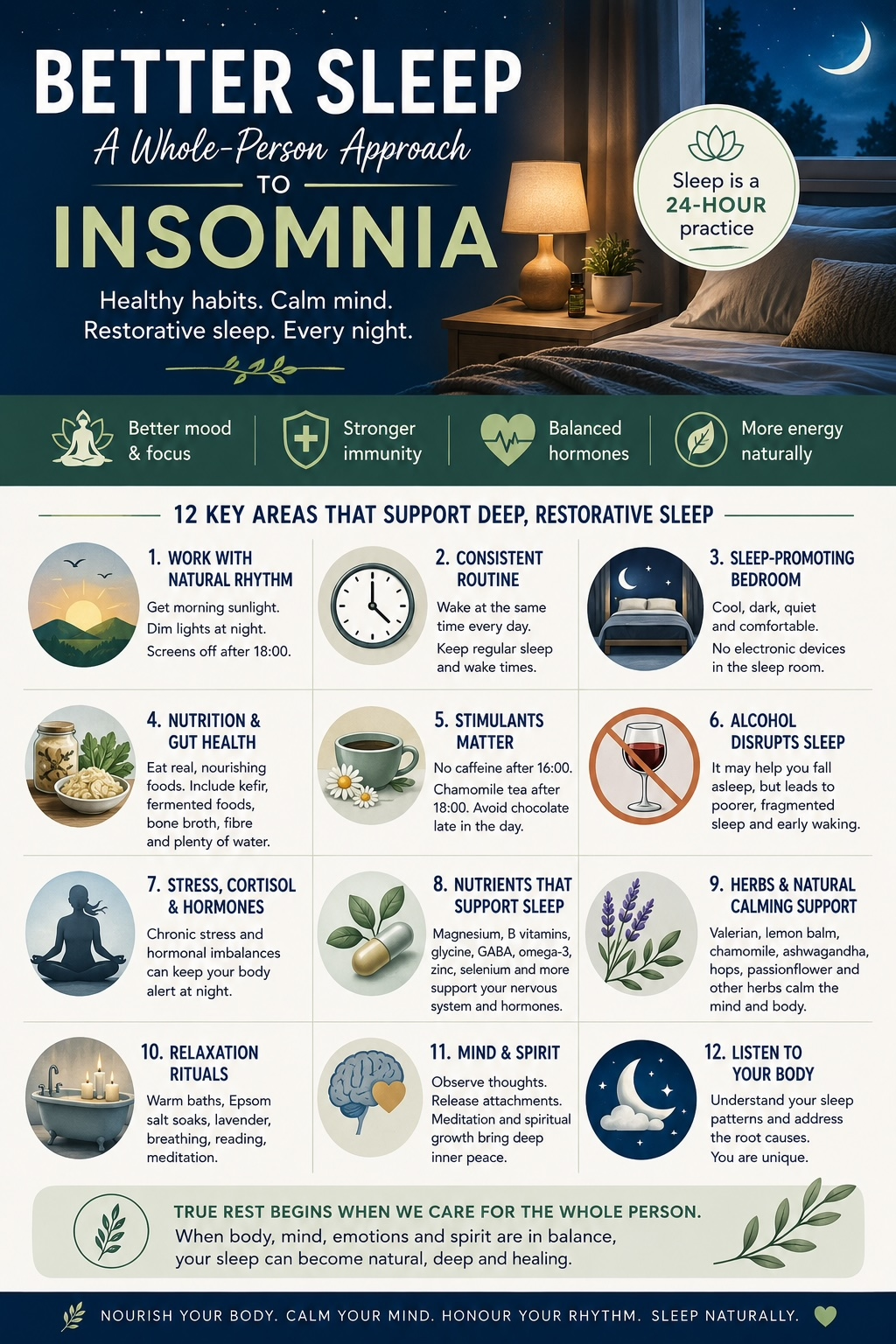
Better Sleep: A Holistic Approach to Insomnia
Here is an audio recording of the article if you prefer to listen:
Sleep is one of the foundations of physical, mental and emotional health. Yet for many people it becomes increasingly difficult to obtain. We may struggle to fall asleep, wake repeatedly during the night, wake much too early in the morning, or sleep for many hours without feeling properly refreshed.
Insomnia should not be approached simply as an isolated problem occurring only at night. Sleep is influenced by what happens throughout the entire twenty-four-hour cycle: daylight and darkness, stress, physical activity, nutrition, gut health, stimulants, alcohol, hormones, nervous-system activity and our mental and emotional state. I therefore prefer to look at sleep as part of the functioning of the whole person.
Different people also require different amounts of sleep. Some people function well with approximately six hours, while others need eight, nine or even ten. Some benefit from a short daytime nap, whereas others sleep best when their sleep occurs in one continuous period at night. Consequently, there is no single number that describes everybody’s ideal sleep requirement.
What matters is obtaining sufficient restful sleep within each twenty-four-hour period to allow the body and mind to recover. Chronic sleep deprivation leaves us with fewer physical and psychological resources with which to cope with stress, and may itself make stressful situations increasingly difficult to manage.
Work With the Natural Light–Dark Cycle
Human beings evolved in an environment in which bright light came primarily from the sun. Daylight indicated activity and darkness indicated rest. Modern life has radically altered that relationship.
Artificial lighting, televisions, computers, tablets and mobile phones allow us to expose ourselves to bright light long after sunset. Blue-enriched light is particularly relevant because light reaching the eyes provides an important signal to the brain’s circadian system about whether it is daytime or nighttime.
One of the simplest changes you can make is therefore to reduce artificial light substantially during the evening.
No phones, computers, tablets or other screens after 18:00.
After 18:00, gradually make your surroundings darker rather than continuing to illuminate the house as though it were daytime. If you want to read before bed, try reading by candlelight or a dim red light rather than under bright overhead lighting.
The objective is to give the body an unmistakable environmental message: the active part of the day is ending.
Wake at the Same Time Every Day
A good night’s sleep begins in the morning.
Wake at approximately the same time every day and go outdoors for a walk. Morning daylight provides the circadian system with a powerful indication that the new day has begun.
Where possible, live more closely according to the natural rhythm of daylight: wake with the sun and begin preparing for sleep as darkness arrives. The precise hours will vary according to season, circumstances and individual requirements, but the underlying principle is to avoid repeatedly pushing wakefulness late into the night.
Keep both bedtime and waking time regular and avoid unnecessary late nights. Regularity helps the body anticipate when it should be awake and when it should be preparing for sleep.
Create a Sleep-Promoting Bedroom
Your sleeping environment matters.
Make your bedroom as quiet as reasonably possible. Earplugs may be useful where unavoidable environmental noise is disturbing sleep. Keep the bedroom comfortably cool or moderate rather than excessively warm, and make the room as dark as possible.
I also recommend switching off electronic devices at night and, where possible, charging phones, tablets and other equipment in a separate room. Ideally, the sleeping room should contain as little electrical equipment as possible. Removing devices also reduces the temptation to check messages, notifications or the time during the night and helps create a clearer distinction between the bedroom and the active, connected part of the day.
If an electrical device is not needed overnight, switch it off rather than leaving it on standby. Keep chargers, phones, laptops, tablets, televisions and other unnecessary electronic equipment out of the sleeping room wherever practicable.
Your bed should also be comfortable and supportive.
Try to use your bed primarily for sleeping rather than spending long periods lying there awake, working, scrolling through a telephone or worrying.
The nervous system learns through association. If night after night is spent lying awake and frustrated in bed, the bed itself can gradually become associated with wakefulness and anxiety. Conversely, repeatedly getting into bed when sleepy strengthens the association between bed and sleep.
What to Do When You Cannot Sleep
Trying harder to sleep is rarely helpful.
If you have been lying awake and cannot sleep, get up for a while rather than remaining in bed becoming increasingly frustrated. Keep the lighting low and do something quiet and relaxing until you feel sleepy.
Useful relaxation techniques include abdominal breathing, progressive muscle relaxation, visualising a peaceful scene, self-hypnosis, reading something pleasurable, listening to soothing music, taking a hot shower, having a warm bath or Epsom salt bath, soaking the feet in an Epsom salt foot bath, and meditation.
Then return to bed when you feel ready to sleep.
Avoid repeatedly looking at the clock. Calculating how many hours remain before morning can transform wakefulness into an increasingly stressful event.
Exercise, Daylight and the Body Clock
Regular physical exercise can help prepare the body for restorative sleep. Establishing a regular time for exercise can also reinforce the rhythm and structure of the day.
Walking outdoors after waking is particularly useful because it combines movement with exposure to natural daylight.
Exercise can also provide an outlet for the physiological consequences of stress. A sedentary body may be physically inactive while the nervous system remains highly activated. Appropriate movement during the day helps create a clearer distinction between daytime activity and nighttime rest.
Food, the Gut and Sleep
Gut health should not be overlooked when considering sleep.
If you drink alcohol or have taken antibiotics, your gut flora will be damaged. The intestinal microbiome interacts with nutrition, metabolism, immune function and signalling between the gut and nervous system. Restoring the intestinal environment should therefore form part of a whole-body approach to health and sleep.
Include naturally fermented foods such as kefir and sauerkraut in the diet.
I also recommend making your own bone broth and drinking approximately one cup each day. Traditionally prepared bone broth provides amino acids and other nutrients and can form part of a nourishing gut-healing diet.
Adequate fibre is important for healthy bowel function, while raw fruits and vegetables provide vitamins, minerals and flavonoids.
Drink sufficient filtered water throughout the day. Add Celtic/Pink salt, electrolytes, and minerals. See The Root Cause Protocol. Individual requirements will vary according to body size, activity, climate and diet.
Avoid going to bed either extremely hungry or immediately after a large meal. If necessary, have a small, light snack of complex carbohydrates rather than a heavy meal immediately before sleep. Eat your evening meal at 18:30.
I have written much more extensively about repairing the intestinal environment, fermented foods, kefir, bone broth, probiotics, Candida and dietary changes in Gut Healing: www.roseautumn.com/2023/11/gut-healing/
If you prefer a plant-based approach, see Natural Plant-Based Gut Healing Foods, which includes fermented foods, prebiotics, plant-based broths, omega-3, turmeric and other gut-supporting foods and supplements: www.roseautumn.com/2025/03/natural-plant-based-gut-healing-foods/
Caffeine, Chocolate and Other Stimulants
If you are one of those people who can’t start the day without black tea or coffee, you may have adrenal fatigue. This is when your adrenal glands have gone into dysfunction due to overstimulation with caffeine. Cortisol production can go low in the morning, causing an inability to wake up, and can be high at night, preventing sleep. See my article on Adrenal Fatigue.
Caffeine stimulates the nervous system and can continue affecting the body for many hours. I recommend no coffee, black tea, green tea or chocolate after 16:00.
Other sources of caffeine include cola drinks, energy or “alert” drinks and stimulant tablets.
Substitute black tea and coffee with herbal teas as medicinal aids. Rooibos is caffeine-free with a strong tea-like flavour but is also a liver detoxifier.
Green tea is interesting because it contains GABA, a calming neurotransmitter, as well as caffeine. Drink Green Tea in the morning, but I would not use caffeinated green tea as an evening sleep drink.
After 18:00, try chamomile tea or specialist sleep teas that include valerian and/or lemon balm instead.
Tick-Tock, Yogi Tea, Clipper, Pukka, and Dragonfly are good brands of tea which do not contain plastics or harmful chemicals.
Alcohol and Sleep
Alcohol deserves particular attention because its initial effects can easily be mistaken for improved sleep.
Alcohol can make a person feel sleepy and may shorten the apparent time required to fall asleep. Sedation, however, is not the same thing as healthy restorative sleep. Alcohol consumption can produce fragmented, poor-quality sleep and contribute to waking later during the night.
It can consequently create a vicious circle. A person cannot sleep, discovers that alcohol makes falling asleep easier, begins drinking in the evening for that purpose, and subsequently experiences poorer-quality sleep. The resulting tiredness and anxiety can then increase the desire to drink again.
Alcohol also damages gut flora and can contribute to nutritional depletion. Anyone trying to understand persistent sleep problems should therefore consider alcohol consumption as part of the overall picture rather than treating it as unrelated to insomnia.
Stress, Cortisol and Sleep
Chronic stress can profoundly disturb sleep.
Cortisol is intimately involved in our daily rhythm of activity and alertness. Cortisol should follow an appropriate daily pattern rather than remaining continually elevated or appearing at inappropriate times.
Being unable to get to sleep can be a sign of cortisol dysfunction and possible thyroid dysfunction. Rather than simply attempting to sedate the body every night, consider why the body remains alert when it should be moving into rest.
Chronic stress can also affect memory, concentration, mood and motivation. Anxiety, depression, low mood, lethargy and lack of motivation may therefore occur alongside disturbed sleep rather than existing as entirely separate problems.
The objective is not merely to “knock yourself out” at bedtime. It is to help restore the conditions in which the nervous system can naturally move between activity and rest.
My article Adrenal Fatigue looks much more closely at adrenal dysfunction, high and low cortisol patterns, cortisol testing, nighttime insomnia, early waking and the nutritional and herbal approaches I use: www.roseautumn.com/2024/04/adrenal-fatigue/
Thyroid function also deserves consideration. I discuss thyroid testing and its relationship with cortisol and adrenal function in Thyroid — Stop the Thyroid Madness Testing: www.roseautumn.com/2023/11/thyroid-stop-the-thyroid-madness-testing/
Women, Hormones and Sleep
Hormonal changes can have a profound effect on sleep, particularly during perimenopause and menopause. For some women, sleep problems appear for the first time during this period. For others, an existing tendency towards poor sleep becomes much more pronounced.
Oestrogen and progesterone influence many systems involved in sleep, mood, temperature regulation and nervous-system activity. As hormone levels fluctuate during perimenopause, sleep can become less predictable. A woman may fall asleep easily on some nights and struggle for hours on others, or begin waking repeatedly for no obvious reason.
Progesterone is especially relevant because it has a calming influence within the nervous system. Changes in progesterone may therefore contribute to feelings of internal agitation, anxiety and difficulty settling at night.
Changes in oestrogen may also affect temperature regulation. Hot flushes and night sweats can repeatedly interrupt sleep, sometimes waking a woman before she is consciously aware that temperature change was the trigger.
Poor sleep can then intensify other symptoms. Sleep deprivation reduces resilience to stress and may worsen irritability, anxiety, poor concentration, memory problems, low mood and exhaustion. The combination can become cyclical: hormonal change affects sleep, disturbed sleep increases stress, and increased stress makes restful sleep more difficult.
This is another reason not to look at insomnia purely as a nighttime problem. During perimenopause and menopause, it may be useful to consider hormone balance alongside cortisol, thyroid function, nutritional status, alcohol consumption, blood-sugar regulation, stress and gut health.
Keeping the bedroom cool can be particularly important where night sweats or hot flushes are involved. Natural fabrics, breathable bedding and layers that can easily be removed may also help reduce the amount of time spent fully awake after a temperature change.
Regular morning daylight, physical activity, an early and consistent sleep schedule, magnesium, calming herbs and stress reduction can all form part of a broader approach.
Nutritional Support for Sleep and the Nervous System
Nutrition provides the raw materials from which the body produces neurotransmitters, hormones, enzymes and cellular energy. Nutritional depletion can therefore affect both stress resilience and sleep.
Magnesium
Magnesium is involved in hundreds of biochemical processes and is particularly important for normal nerve and muscle function. It is commonly used in naturopathic practice to promote physical relaxation and support a calmer nervous system. https://www.nutracore.co.uk/products/magnesium-complex-750mg-glycinate-taurate-l-threonate-capsules
I use three magnesium capsules before bed.
The actual amount of elemental magnesium contained in three capsules varies considerably between products, so the product formulation should always be checked.
Vitamin B Complex
B vitamins support normal nervous-system function and cellular energy production. Periods of prolonged stress can increase nutritional demands, making adequate B-vitamin status particularly important. See the Root Cause Protocol article.
Vitamin B6 and MTHFR
Vitamin B6 participates in amino-acid metabolism and in biochemical pathways involved in neurotransmitter production. Methylation and the MTHFR gene mutation should also be considered when examining B-vitamin metabolism rather than assuming that every individual processes B vitamins identically.
I explore this subject in much greater depth in Genetics — MTHFR & B Vitamin Deficiency, including B12, folate, methylated B vitamins and the relationships I have identified between MTHFR, mood, anxiety, depression, addictive behaviour and disturbed sleep: www.roseautumn.com/2023/11/genetics-mthfr-b-vitamin-deficiency/
Vitamin C
Vitamin C is involved in numerous metabolic processes, including pathways associated with the body’s response to stress. It also functions as an antioxidant. See the article on The Root Cause Protocol.
Selenium
A simple whole-food source of selenium is Brazil nuts. I recommend approximately two Brazil nuts per day.
The selenium content of Brazil nuts can vary substantially, so more is not necessarily better.
My wider approach to minerals is also discussed in The Root Cause Protocol: www.roseautumn.com/2023/11/root-cause-protocol/
Amino Acids
Amino acids are the building blocks of proteins and also provide precursors for important signalling molecules and neurotransmitters. Stress can increase nutritional demands, making adequate protein and amino-acid intake important.
Take a multi-amino acid complex in the morning. This is particularly important if you are vegetarian or vegan.
Glycine
Glycine is an amino acid with inhibitory signalling functions in the nervous system and is also involved in numerous metabolic processes.
For early-morning waking, I use 5–10 g of glycine powder in a small amount of water before bed.
I discuss glycine, the amount I use and its wider relationship with sleep, the nervous system, serotonin, blood-sugar regulation and collagen in Simple Daily Detox Methods: www.roseautumn.com/2026/08/simple-daily-detox-methods/
GABA
Gamma-aminobutyric acid, or GABA, is one of the nervous system’s principal inhibitory neurotransmitters. In simple terms, excitatory signalling encourages neuronal activity whereas inhibitory signalling helps restrain it. GABA is consequently associated with calmness and relaxation. It can be found in Green Tea.
Glutathione / NAC
Glutathione is one of the body’s important endogenous antioxidants and helps protect cells from oxidative damage. N-acetyl cysteine (NAC) provides cysteine used in the production of glutathione. Its relevance is therefore broader than sleep alone and forms part of nutritional support for antioxidant and cellular function.
Nicotinamide Adenine Dinucleotide
NAD participates in cellular energy metabolism and the transfer of chemical energy. Healthy energy metabolism during the day is part of maintaining the wider physiological rhythm within which restorative sleep occurs.
Omega-3 Fish Oil
Omega-3 fatty acids are important components of cell membranes and have numerous roles in brain and cardiovascular function. Fish oil can therefore form part of a broader nutritional programme supporting nervous-system and general health. See the article on The Root Cause Protocol.
Melatonin
Melatonin is a hormone closely associated with the biological signal of darkness. This is another reason why reducing bright and blue-enriched artificial light in the evening is important: the objective should be to work with the body’s natural day-night signalling.
L-Tyrosine
Tyrosine is an amino-acid precursor used in the production of catecholamines and thyroid hormones. It has traditionally been used to support the body during stress. Because these pathways can also affect alertness, its use should be considered in the context of the individual rather than simply assuming that every “sleep supplement” belongs immediately before bed.
Herbs Traditionally Used for Sleep and Stress
Plants have been used to calm the nervous system and encourage sleep for centuries. Different herbs have different actions, so it is more useful to understand what each is traditionally used for than to treat all “sleep herbs” as interchangeable.
Valerian is one of the best-known traditional sleep herbs. It is used for nervous tension, restlessness and difficulty settling into sleep and has a long history of use as a calming tea for the nervous system.
Lemon balm is traditionally used where nervous tension, restlessness or an overactive mind accompanies difficulty sleeping. It can be taken as a tea or in other herbal preparations.
Chamomile is a gentle traditional calming herb particularly suited to an evening tea. Drinking chamomile after 18:00 can also become part of the behavioural ritual signalling that the active day has ended.
Ashwagandha is traditionally regarded as an adaptogenic herb and nerve tonic. It is used to support resilience to stress and promote calm. I use two capsules before bed. https://www.nutracore.co.uk/products/ashwagandha-extract-capsules-5000mg-10-withanolides-ksm-66-vegan-capsule
Hops have traditionally been used for nervousness, restlessness and sleep difficulties. Their calming properties explain their inclusion in many traditional sleep preparations.
Passionflower is traditionally used to calm nervous tension and mental restlessness, particularly when an active mind makes it difficult to settle.
Tulsi, or holy basil, has a long tradition of use as an adaptogenic herb. It may be incorporated into a wider approach aimed at improving resilience to stress. Read the article on Adrenal Fatigue for problems getting to sleep and how this herb can help.
Skullcap has traditionally been used for nervous tension, restlessness and headaches and as a herb supporting sleep.
Wild oat has traditionally been regarded as a restorative nervous-system herb, particularly during periods of exhaustion and prolonged stress.
Polygala root and sour jujube seed are used in traditional Chinese herbal practice in formulations intended to calm or “soothe the spirit” and address restlessness and disturbed sleep.
Schisandra, rehmannia and dong quai have traditionally been used within broader herbal systems to support the body during stress. They are not simply sedatives and should be understood within the wider herbal context in which they are traditionally prescribed.
Siberian ginseng, or eleuthero, is traditionally used as an adaptogen to help the body cope with physical and psychological stress. Take it in the morning as it can be stimulating.
Milk thistle is primarily associated with liver support and antioxidant activity. Its relationship to sleep is therefore indirect: it belongs within a broader naturopathic approach to supporting the body’s overall functioning rather than functioning as a sleeping herb.
Bilberry provides anthocyanins and other antioxidant compounds and is traditionally used to support vascular and cellular health. Again, this is general nutritional support rather than a direct sedative action.
Ginkgo biloba is traditionally used to support circulation and cognitive function. It should therefore be distinguished from herbs such as valerian and hops that are used specifically for calming and sleep.
St John’s wort has traditionally been used in relation to mood and nervous-system complaints, as well as nerve pain. Mood and sleep are closely interconnected, although St John’s wort is not simply a sleeping herb.
Kava has traditionally been used for relaxation, nervous tension and anxiety. It can produce significant physiological effects and is subject to restrictions and safety concerns in some countries, so it should not be treated as an ordinary bedtime tea.
Turmeric is valued primarily for its wider anti-inflammatory and antioxidant properties rather than as a direct sedative. Its place in a sleep programme is therefore part of supporting general physiological health.
Homeopathy
Aurum metallicum is a homeopathic remedy that may be considered for early waking within a homeopathic approach. As with other homeopathic remedies, its selection traditionally depends upon the wider symptom picture and characteristics of the individual rather than the symptom of insomnia alone.
Sleep Troubleshooting: What Kind of Sleep Problem Do You Have?
It is useful to identify the pattern of insomnia rather than treating all disturbed sleep as though it were the same problem. The time at which sleep breaks down can offer useful clues about what needs attention.
All of these sleep problems may be affected by Wi-Fi and light pollution from street lighting. Use blackout blinds or curtain lining and switch of your router. Eliminate electronic devices from the bedroom to reduce electrosmog.
You Cannot Fall Asleep
If you are exhausted but become alert as soon as you get into bed, consider excessive evening stimulation, artificial light, caffeine, chronic stress and cortisol dysfunction.
Look carefully at what happens during the final four to six hours of the day. Are you still working? Are you using a phone or computer late into the evening? Is the house brightly illuminated? Have you consumed caffeine, green tea or chocolate late in the afternoon? Are you mentally replaying conversations, problems or unfinished tasks?
This pattern is often helped by creating a much clearer transition between daytime activity and nighttime rest: no screens after 18:00, dim light, calming tea, meditation, a warm bath, magnesium and a regular bedtime routine.
Possible thyroid dysfunction should also be considered where difficulty settling is persistent or accompanied by other relevant symptoms.
High Cortisol at night can be regulated with Holy Basil. See the post on Adrenal Fatigue for further information.
You Fall Asleep but Wake Repeatedly
Repeated waking may have a different set of causes.
Alcohol is an obvious factor to examine because it can initially produce sleepiness while causing more fragmented sleep later in the night.
Alcohol can stimulate the bladder as it is a diuretic. Limit drinks after 18:00 and always urinate before bed.
Temperature changes, hormonal fluctuations, stress, noise, an uncomfortable bedroom, the need to urinate, digestive discomfort and changes in blood-sugar regulation may also contribute.
Women in perimenopause or menopause should consider whether hot flushes, night sweats or hormonal changes coincide with the awakenings.
Rather than concentrating solely on how to fall asleep initially, examine what may be repeatedly disturbing the body once sleep has begun.
You Wake Very Early and Cannot Return to Sleep
Insomnia does not always mean being unable to fall asleep.
Some people fall asleep without difficulty but wake very early—perhaps at 03:00, 04:00 or 05:00—and cannot return to sleep.
I naturally wake at 05:00. I get up and start work, but I may have a short nap after lunch to help me through the rest of the day.
For early waking at 03:00 to 05:00, I use 3 capsules of a Magnesium Complex, 2 Ashwagandha tablets, and 5–10 g of glycine powder in a small amount of water before bed.
Early waking should also be considered in the context of the person’s entire twenty-four-hour pattern: bedtime, evening light, alcohol, stress, mood, caffeine, blood-sugar regulation and the timing of the circadian rhythm.
Consider stress, cortisol rhythm, alcohol, mood, circadian timing, and whether bedtime itself has become too early for the amount of sleep actually required.
Aurum metallicum may also be considered within a homoeopathic approach where it fits the wider individual picture.
If you wake early, avoid immediately reaching for the telephone or switching on bright lights. Keep the environment quiet and dark so that you do not reinforce the signal that the day has already begun.
Listen to calming music, binaural beats, or shamanic drumming tracks.
You Sleep for Long Enough but Wake Unrefreshed
The number of hours spent in bed does not necessarily tell you whether sleep has been restorative.
Someone may apparently sleep for seven, eight or nine hours yet wake feeling as though they have barely slept.
In this situation, consider sleep quality rather than simply sleep duration.
Alcohol, chronic stress, nutritional depletion, disrupted gut health, repeated micro-awakenings, breathing disturbance during sleep, hormonal changes and an inappropriate sleep environment can all be relevant.
This is also the point at which persistent snoring, witnessed pauses in breathing, morning headaches or extreme daytime sleepiness deserve particular attention.
Your Sleep Is Different Every Night
Highly unpredictable sleep may indicate that the daily routine itself is inconsistent.
Irregular waking times, late nights, varying meal times, weekend lie-ins, inconsistent caffeine intake and large differences in evening artificial-light exposure can all prevent the body clock from establishing a strong rhythm.
In this situation, simplify.
Wake at the same time every day. Get outside in morning daylight. Exercise regularly. Stop caffeine by 16:00. Stop screens at 18:00. Reduce evening lighting and establish the same sequence of activities before bed.
Before continually adding new supplements, establish a stable daily rhythm and observe what changes.
Foods and Substances to Minimise
A sleep programme should consider not only what is added to the diet but also what may need to be reduced.
The original nutritional guidance supplied for this programme identifies processed and unhealthy foods that may aggravate stress, including artificial sweeteners, carbonated soft drinks, chocolate, eggs, fried foods, junk food, pork, red meat, sugar, white-flour products, heavily preserved foods, strongly spiced foods, chips and similar highly processed foods.
Dairy products—including milk, ice cream, butter and cheese—are regarded as healthy in moderation within this approach but may be reduced if excessive consumption appears to contribute to nervousness or other symptoms.
Particular attention should be given to caffeine, including coffee, cola, iced tea, black tea, caffeinated green tea, stimulant tablets and energy or “alert” drinks.
Alcohol, tobacco and mood-altering drugs should also be minimised or avoided. These can offer temporary changes in sensation without resolving the underlying source of stress and may create additional physical and psychological problems.
Where dependence upon alcohol, nicotine, prescription medication or illicit drugs has developed—particularly where tolerance or withdrawal is present—appropriate professional assistance is important.
I examine refined sugar in much greater detail in The Health Risks of White Refined Sugar, including its relationship with mineral depletion, magnesium, hormones, neurotransmitters, anxiety and mood: www.roseautumn.com/2023/11/the-health-risks-of-white-refined-sugar/
Epsom Salt Baths and Foot Baths
A hot shower or bath can be an effective transition between daytime activity and sleep.
Water cleanses the aura of negative energy, providing a soothing effect.
Use calming scented candles made from beeswax or soy and natural soaps.
An Epsom salt bath or foot bath combines the relaxing ritual of bathing with warmth and a deliberate period in which activity stops. Even the ritual itself is valuable: lights can be lowered, the telephone put away, and the nervous system given time to move out of continual stimulation.
Lavender
Lavender has a long traditional association with relaxation and sleep.
Lavender oil can be used in an oil burner or appropriate diffuser, placed carefully on or near the pillow, or added to a small bowl of hot water so that its aroma disperses into the room.
The important point is also behavioural. Repeatedly using the same gentle aroma as part of a bedtime routine can create a strong association between that scent, relaxation and preparation for sleep.
Meditation for Sleep and Stress
Meditation is a mental practice that can influence physiological processes. Its purpose is not necessarily to eliminate thought but to develop greater control over attention so that we can choose where awareness rests rather than continually reacting to whatever thought, sensation or external stimulus appears.
The relaxation and attentional control developed through meditation can be particularly valuable when anxiety and stress contribute to insomnia.
Find a quiet place where you can relax without interruption. Choose a time when you are not so exhausted that you immediately fall asleep.
Sit in a comfortable, straight-backed chair that allows you to remain upright with minimal effort. Support for the upper back and head can be helpful. Sit with your buttocks towards the back of the chair, place your feet slightly forward of your knees and rest your hands either on the arms of the chair or in your lap.
Allow your muscles to relax naturally.
Do not try to relax. Trying is another form of work. Instead, adopt a passive attitude and allow whatever happens to happen. If you feel relaxed, accept it. If you do not initially feel relaxed, accept that as well.
Close your eyes and begin observing your natural breathing.
As you inhale, silently think the word “more”.
As you exhale, silently think “relaxed”.
You can substitute another pair of short, positive or neutral words if you prefer.
Do not deliberately alter your breathing. Simply breathe naturally while returning your attention to the words and breath whenever the mind wanders.
Continue for approximately twenty minutes.
When you finish, allow the body to gradually readjust. Open your eyes, initially focusing on one object and then becoming aware of the wider room. Take several deeper breaths and gently stretch while still seated. Stand when you feel ready and continue stretching if desired.
Ideally, develop a regular meditation practice of approximately twenty minutes twice each day. Immediately after rising and before the evening meal are useful times. I prefer after lunch.
Avoid stimulants such as caffeine if they interfere with your ability to settle. Remove unnecessary interruptions such as telephones and alarms. If thoughts wander, gently return attention to the practice without criticising yourself.
Slow down and allow the process to happen.
I describe my own practice and how I work with thoughts, physical sensations and emotions in considerably more depth in How I Meditate: www.roseautumn.com/2021/10/how-i-meditate/
For readers wishing to explore the spiritual dimension of awareness, identification and consciousness further, see Samadhi: Liberation & The End of Seeking: www.roseautumn.com/2026/02/samadhi-liberation-the-end-of-seeking/
Addiction, Dopamine and the Search for Sensation
There is another dimension to sleep, alcohol and addictive behaviour that deserves consideration.
When we have an unconscious tendency or repeated life pattern, we may not actually be addicted simply to the external thing itself. We may describe ourselves as addicted to caffeine, drugs, alcohol, sex, food or media, but beneath the object is the sensation and reward that the behaviour produces within us, including the involvement of dopamine.
Freedom therefore involves learning to observe the somatic field directly: the changing field of sensations arising within the body and awareness.
Rather than automatically reacting to each sensation by labelling it good or bad, desirable or undesirable, we can learn to remain equanimous and observe it.
By bringing consciousness to this subtle inner world, we begin to see how attachments are created. Thoughts and sensory phenomena can be observed as a continually changing field rather than immediately becoming objects with which we identify.
This inner field of change can also be understood as prana, inner energy or the feeling of inner aliveness.
From this perspective, the movement towards a new Earth involves a movement away from materialism and from an egoic compulsion to endlessly acquire more. What appears externally to be darkness or madness may also be understood spiritually as the dismantling of old patterns.
This is relevant to addiction because lasting change requires more than simply removing an object of addiction. It requires consciousness of the internal pattern that repeatedly seeks the sensations produced by that object.
Shamanic Healing can address repeating patterns of behaviour through Shamanic Subconscious Repatterning.
A Spiritual Perspective on Alcohol, Insomnia and Possession
Alongside the physical, nutritional and psychological approaches described above, there is also a spiritual perspective.
Within a shamanic understanding of illness and altered states, non-human spirits can possess an individual. Alcohol can be understood as a possessing spirit.
Sleep deprivation and alcoholism can be clues that this dimension should be considered.
This does not mean abandoning physical approaches to gut health, nutrition, nervous-system regulation, addiction or sleep. A whole-person approach can consider physical, mental, emotional and spiritual dimensions together rather than assuming that only one level of explanation can exist.
For a fuller explanation of Traditional Shamanism and the techniques that may form part of my work, see Shamanic Healing: www.roseautumn.com/shamanic-healing/
A Practical Evening Routine
Bringing these principles together, an evening might look something like this.
Finish caffeine, including coffee, black tea, caffeinated green tea and chocolate, by 16:00.
At approximately 18:00, stop using phones, computers, tablets and other screens. Begin reducing artificial lighting and allow the environment gradually to become darker.
Eat the evening meal at around 18:30 – sufficiently early that you are neither uncomfortably full nor hungry when you go to bed.
Drink chamomile tea or other sleepy time teas after dinner.
Spend the later evening reading by dim red light or candlelight, meditating, listening to quiet music or engaging in another peaceful activity.
A shower or Epsom salt bath or foot bath can provide a further transition into rest. Lavender can be used to create a familiar relaxing bedtime environment.
Before going to bed, switch off unnecessary electronic equipment and charge phones, tablets and other devices in another room so that the bedroom remains as free from electrical equipment and nighttime distractions as possible.
Take any appropriate evening nutritional or herbal preparations, such as magnesium or the other preparations discussed above, according to your individual programme.
Read a calming novel using red light or candlelight.
Urinate before getting into bed.
Go to bed when sleepy.
Keep the bedroom dark, quiet and comfortably cool.
If you cannot sleep, do not spend hours fighting with yourself in bed. Get up, keep the lights low and engage in something quiet until sleepiness returns.
Then, whatever happened during the night, get up at your regular waking time and go outdoors into natural daylight.
The following evening, begin again.
Sleep Is a Twenty-Four-Hour Practice
Perhaps the most important principle is that sleep cannot be separated from waking life.
What happens at 10:00 in the morning can influence what happens at 10:00 at night. Morning light, movement, nutrition, stress, caffeine, alcohol, gut health, nervous-system activity, emotional patterns, hormones and evening artificial light all contribute to the physiological state in which we eventually go to bed.
Rather than asking only, “What can I take to make myself sleep?”, ask a wider question:
“What is preventing my body and mind from entering their natural state of rest?”
The objective is not simply unconsciousness for eight hours. It is genuinely restorative sleep that leaves the mind and body refreshed and able to meet the following day.
For some people, improving sleep may begin with something as simple as putting the telephone away at 18:00 and walking outside every morning. For others, the deeper work may involve nutrition, gut healing, hormonal change, chronic stress, alcohol, emotional patterns, meditation or spiritual healing.
The important thing is to work with the whole person.
This approach to sleep forms part of my wider approach to health, which considers nutrition, movement, sleep, stress regulation, gut healing, adrenal support, hormone balancing, meditation and natural supplementation together. You can read more about this in Lifestyle Medicine: www.roseautumn.com/lifestyle-medicine/
Shamanic Healing and Sleep
Sleep difficulties do not always arise solely from physical or behavioural causes. From a shamanic perspective, persistent insomnia can also reflect unresolved emotional patterns, energetic disturbance, loss of personal power, intrusive influences, or experiences that the nervous system has not fully integrated. Shamanic healing works with these deeper layers rather than treating sleep as an isolated symptom. Depending upon the individual, my work may include techniques such as energy-body healing, extraction, cord cutting, soul retrieval, changing agreements, Shamanic Subconscious Repatterning or other traditional shamanic methods. The intention is to help restore balance across the physical, emotional, energetic and spiritual aspects of the person, which can in turn support a greater sense of safety, calm and readiness for rest. You can read more about my Shamanic Healing work at: https://www.roseautumn.com/shamanic-healing/
About Rose
Rose is a Shamanic Practitioner offering in-person and distance Shamanic Healing Sessions and Shamanic Life Coaching, specialising in narcissistic abuse.
Rose works without hallucinogenic or psychedelic plant medicines. Instead, she uses an ancient drumming method to access this altered state of consciousness. A session may include a tailored combination of Power Animal Retrieval, Divination, Soul Retrieval, Energy Body Healing, Psychopomp, and Extraction to remove negative energy and blockages.
Each session with me includes Shamanic Subconscious Repatterning. A powerful system that changes the subconscious programmes that drive unwanted behaviour. This method heals trauma at its source, removes the self-limiting programme, and then rewrites a new way of being.
Shamanic Healing can be accessed face-to-face in the Rose Healing Room, Petersfield, East Hampshire or remotely through Distance Healing Sessions. Because the work is carried out in the Spirit Realm with the support of Rose’s Spirit Guides, the client does not need to be physically present in the same room. Distance sessions are narrated in real time, and clients receive an audio recording by email afterwards.
For further information about Shamanic Healing, go to: https://www.roseautumn.com/shamanic-healing/
Important Safety Note
This article describes a whole-person and naturopathic approach to sleep and includes nutritional, herbal, homoeopathic and spiritual perspectives. It is intended for education rather than individual diagnosis or treatment.
Herbs and nutritional supplements are biologically active substances. More is not necessarily better, and combinations may interact with medicines or with one another. Anyone taking prescribed medication, pregnant or breastfeeding, preparing for surgery, or dealing with a significant medical condition should obtain appropriate individual advice before beginning a new supplement or herbal programme.
Do not abruptly stop prescribed medicines, alcohol or other substances where physical dependence may have developed. Withdrawal from some substances can require medical supervision.
Persistent or unexplained insomnia also deserves investigation rather than indefinite self-treatment, particularly where it occurs alongside pronounced daytime sleepiness, breathing problems during sleep, loud snoring, unusual movements, significant changes in mood or other unexplained physical symptoms.
For individual advice, go to: https://www.roseautumn.com/lifestyle-medicine/
Henry Bright’s ‘The Moorland Path’: Landscape in Pastel and Chalk
I read about Bright’s Moorland Path in the book Landscape in Britain 1830-1950. Sadly, most of the works were published in black and white and no reproductions exist online except for part of the picture, which was used to illustrate a book. It is this book cover that I have included in this post.
Henry Bright’s The Moorland Path, in the collection of Ipswich Museums, is a beautiful example of the nineteenth-century tradition of landscape drawing in coloured chalk and pastel. The work depicts an apparently simple subject: a rough path disappearing through open moorland beneath an expansive sky. Yet its simplicity is deceptive. Rather than describing every feature of the landscape equally, Bright builds the image through broad tonal masses, softened passages and carefully selected accents of light and colour.
Bright (1810–1873) was particularly accomplished in the use of coloured chalks and pastels. He was also a successful drawing master and published several instructional books, including Elementary Drawing Book in Landscape for the Use of Beginners (1840) and Bright’s Advanced Landscape Drawing Book (1845). His approach was closely connected with the nineteenth-century landscape-drawing tradition associated with James Duffield Harding, whose teaching practice Bright eventually took over.
The Coloured Paper
One of the most important aspects of Bright’s technique is his use of coloured paper for the midtones of his drawings. Bright deliberately selected different coloured papers according to the atmospheric effect he wanted to achieve.
A Ruined Castle at the Yale Centre for British Art, for example, is executed in black chalk and pastel on slightly textured brown wove paper. Moonlight Scene on the Rhine, also at Yale, combines pastel, gouache, black chalk and graphite on blue wove paper. Other Bright drawings are recorded on buff, grey, tan and drab papers. This is fundamental to understanding his technique. Rather than beginning with white paper and covering the entire surface with pastel, Bright could allow the natural colour of the paper to provide a unifying mid-tone. He then worked both darker and lighter than this ground.
A warm buff or brown paper, for example, could already provide the colour of distant earth, haze, dry vegetation and passages of sky. Dark chalk could establish trees, foreground vegetation and shadow, while pale chalk and white could bring forward clouds, paths and highlights. The result is an extraordinary economy of means. Some passages that initially appear to contain complex mixtures of muted colour may actually consist of relatively little drawing material, with the coloured paper itself doing much of the work.
Drawing Before Colour
Bright’s landscapes are perhaps better understood as coloured drawings rather than pastel paintings in the modern sense. His surviving works frequently combine black chalk or charcoal with white and coloured chalks. A landscape in the Cleveland Museum of Art, for example, is made simply with charcoal and white chalk on tan paper. With only these materials, Bright already possesses three fundamental values: the dark charcoal, the middle tone of the paper and the light of the white chalk.
Colour can then be introduced selectively. This helps explain the coherence of The Moorland Path. Bright does not appear to have approached the landscape as a collection of individually coloured objects — green grass, brown earth, blue sky and so forth. Instead, the landscape is organised primarily through relationships of light and dark, warm and cool, solid and atmospheric. Colour remains subordinate to the larger tonal structure.
Chalk, Pastel and the Stump
Another important part of Bright’s technique was rubbing and blending. Surviving drawings are specifically catalogued as being executed in black chalk and stump. A stump — tightly rolled paper or similar material — allows dry chalk to be pushed into the paper, spread, softened and partially removed from its original drawn form.
This provides an important clue to the atmospheric quality of Bright’s landscapes. A passage could first be drawn relatively strongly and subsequently rubbed down. Fresh chalk could then be placed over the softened material. The process might therefore be thought of as:
drawing → rubbing → softening → redrawing.
The distinction is important. An atmospheric passage need not be vague because the artist never put information there. Detail can first be established and subsequently suppressed. Bright can therefore juxtapose very soft, rubbed areas with surprisingly decisive marks. A sharp piece of chalk dragged across textured paper produces broken, irregular marks quite different from the velvety passage produced by a stump. The combination gives the landscape its vitality.
Bright’s Colour
Across Bright’s landscape drawings we encounter blacks and deep browns, ochre-like earth colours, subdued greens, muted reds and russets, blues and blue-greys, creams and white. Just as importantly, the colour of the paper remains visible amongst them.
Rather than mixing numerous colours to reproduce the precise local colour of every object, Bright seems to have used a limited family of colours capable of shifting the temperature and atmosphere of an already established tonal drawing.
How The Moorland Path May Have Been Made
Without a conservation examination, we cannot reconstruct the precise order in which Bright made The Moorland Path. Comparison with his documented works does, however, suggest a plausible working method.
The composition would first be established on a toned sheet rather than brilliant white paper. The major dark masses could then be introduced using black chalk or charcoal.
Some of these passages would be rubbed with the stump, spreading the chalk into the texture of the paper and establishing broad atmospheric masses rather than sharply defined objects.
The colour of the support could remain exposed through large areas of the drawing.
A small selection of coloured chalks could then introduce changes of temperature — warmer earth and vegetation against cooler distance and sky. Pale chalk and white would establish the strongest lights.
Finally, sharper dark and coloured marks could be returned to selected areas of the drawing.
This last stage is particularly important. Once a passage has been rubbed and softened, a fresh chalk mark placed over it acquires considerable visual strength. Bright can therefore suggest vegetation, branches, grasses and irregular ground with relatively few marks. The picture becomes highly detailed in certain places while remaining remarkably open in others.
The Importance of What Is Left Out
For me, this is perhaps the most interesting lesson contained in The Moorland Path. The drawing demonstrates that simplification does not necessarily mean a lack of observation. Bright appears to understand the landscape extremely well, but he does not give every piece of information equal importance. Some forms are stated. Others are softened. Some disappear almost completely into the colour of the paper.
There is an interesting parallel here with the later landscape practice of Frederick Walker. J. W. North recalled that Walker sought suggestiveness in his work not simply by omitting detail, but by putting detail in and subsequently partially erasing or “wearing” it away. North described the result as “not emptiness, but veiled detail.”
Bright’s procedure is not necessarily the same as Walker’s, but his use of chalk and stump offers a related possibility. Information can be drawn, rubbed back, partly lost and then selectively reinstated. The resulting landscape feels observed without becoming over-described.
Sheep in a Landscape, 22cm x 31cm
A Lesson for Landscape Painting
Although The Moorland Path is a work in pastel and chalk, its lessons extend well beyond those materials.
Beginning on a middle tone immediately reduces the temptation to fill every part of the surface. Establishing the major tonal masses before introducing colour prevents local colour from fragmenting the composition. Rubbing down information allows forms to merge into atmosphere. And returning at the end with a small number of decisive marks creates detail without requiring every part of the landscape to be equally resolved.
Perhaps most importantly, Bright demonstrates how much can be achieved by allowing the support itself to remain part of the finished image.
The landscape is not constructed by continually adding more. Instead, the artist establishes information, suppresses some of it, strengthens selected passages and allows other areas to remain unresolved.
In The Moorland Path, what Bright chooses not to state becomes every bit as important as the marks he leaves behind.