Posts Tagged: Insomnia
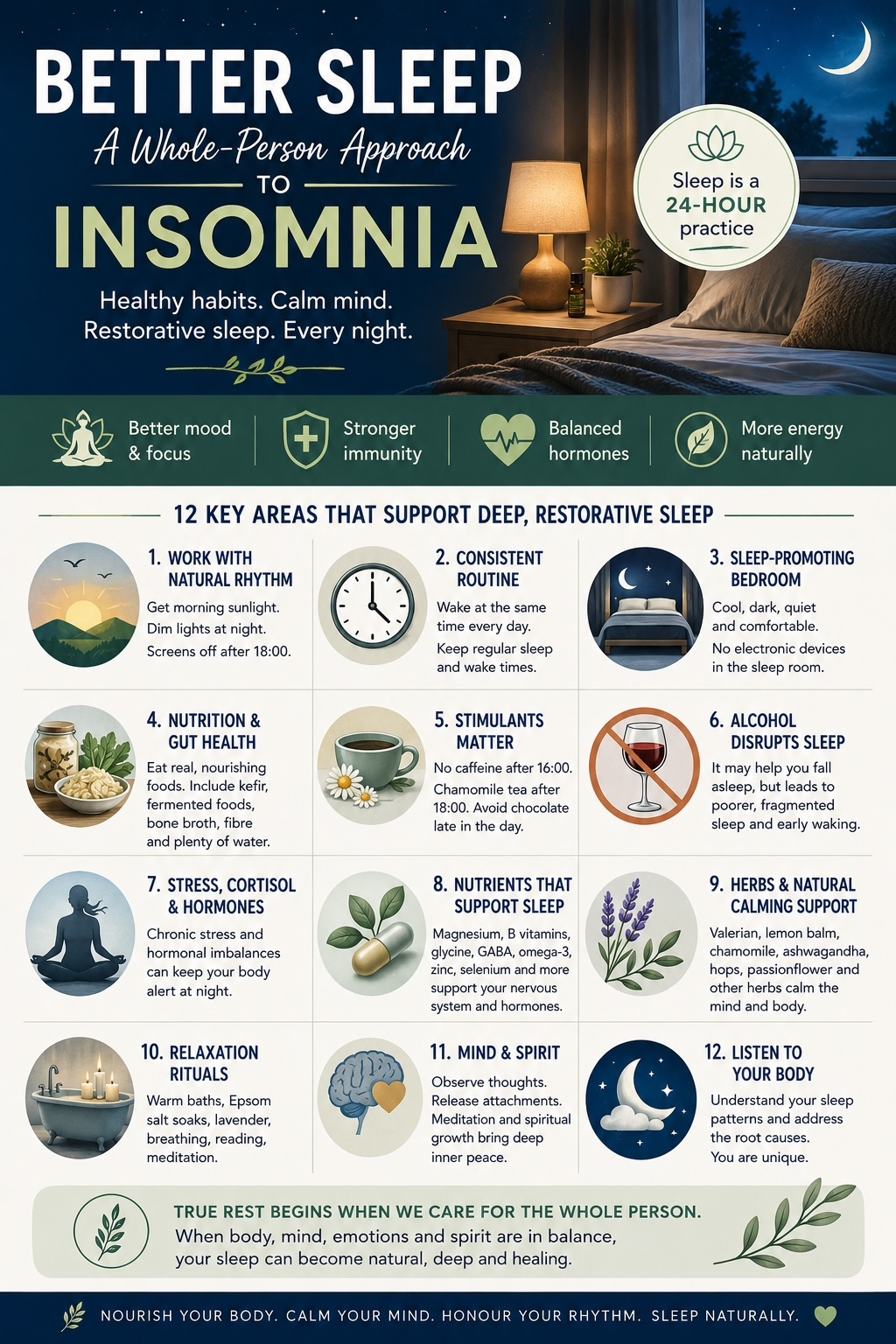
Better Sleep: A Holistic Approach to Insomnia
Here is an audio recording of the article if you prefer to listen:
Sleep is one of the foundations of physical, mental and emotional health. Yet for many people it becomes increasingly difficult to obtain. We may struggle to fall asleep, wake repeatedly during the night, wake much too early in the morning, or sleep for many hours without feeling properly refreshed.
Insomnia should not be approached simply as an isolated problem occurring only at night. Sleep is influenced by what happens throughout the entire twenty-four-hour cycle: daylight and darkness, stress, physical activity, nutrition, gut health, stimulants, alcohol, hormones, nervous-system activity and our mental and emotional state. I therefore prefer to look at sleep as part of the functioning of the whole person.
Different people also require different amounts of sleep. Some people function well with approximately six hours, while others need eight, nine or even ten. Some benefit from a short daytime nap, whereas others sleep best when their sleep occurs in one continuous period at night. Consequently, there is no single number that describes everybody’s ideal sleep requirement.
What matters is obtaining sufficient restful sleep within each twenty-four-hour period to allow the body and mind to recover. Chronic sleep deprivation leaves us with fewer physical and psychological resources with which to cope with stress, and may itself make stressful situations increasingly difficult to manage.
Work With the Natural Light–Dark Cycle
Human beings evolved in an environment in which bright light came primarily from the sun. Daylight indicated activity and darkness indicated rest. Modern life has radically altered that relationship.
Artificial lighting, televisions, computers, tablets and mobile phones allow us to expose ourselves to bright light long after sunset. Blue-enriched light is particularly relevant because light reaching the eyes provides an important signal to the brain’s circadian system about whether it is daytime or nighttime.
One of the simplest changes you can make is therefore to reduce artificial light substantially during the evening.
No phones, computers, tablets or other screens after 18:00.
After 18:00, gradually make your surroundings darker rather than continuing to illuminate the house as though it were daytime. If you want to read before bed, try reading by candlelight or a dim red light rather than under bright overhead lighting.
The objective is to give the body an unmistakable environmental message: the active part of the day is ending.
Wake at the Same Time Every Day
A good night’s sleep begins in the morning.
Wake at approximately the same time every day and go outdoors for a walk. Morning daylight provides the circadian system with a powerful indication that the new day has begun.
Where possible, live more closely according to the natural rhythm of daylight: wake with the sun and begin preparing for sleep as darkness arrives. The precise hours will vary according to season, circumstances and individual requirements, but the underlying principle is to avoid repeatedly pushing wakefulness late into the night.
Keep both bedtime and waking time regular and avoid unnecessary late nights. Regularity helps the body anticipate when it should be awake and when it should be preparing for sleep.
Create a Sleep-Promoting Bedroom
Your sleeping environment matters.
Make your bedroom as quiet as reasonably possible. Earplugs may be useful where unavoidable environmental noise is disturbing sleep. Keep the bedroom comfortably cool or moderate rather than excessively warm, and make the room as dark as possible.
I also recommend switching off electronic devices at night and, where possible, charging phones, tablets and other equipment in a separate room. Ideally, the sleeping room should contain as little electrical equipment as possible. Removing devices also reduces the temptation to check messages, notifications or the time during the night and helps create a clearer distinction between the bedroom and the active, connected part of the day.
If an electrical device is not needed overnight, switch it off rather than leaving it on standby. Keep chargers, phones, laptops, tablets, televisions and other unnecessary electronic equipment out of the sleeping room wherever practicable.
Your bed should also be comfortable and supportive.
Try to use your bed primarily for sleeping rather than spending long periods lying there awake, working, scrolling through a telephone or worrying.
The nervous system learns through association. If night after night is spent lying awake and frustrated in bed, the bed itself can gradually become associated with wakefulness and anxiety. Conversely, repeatedly getting into bed when sleepy strengthens the association between bed and sleep.
What to Do When You Cannot Sleep
Trying harder to sleep is rarely helpful.
If you have been lying awake and cannot sleep, get up for a while rather than remaining in bed becoming increasingly frustrated. Keep the lighting low and do something quiet and relaxing until you feel sleepy.
Useful relaxation techniques include abdominal breathing, progressive muscle relaxation, visualising a peaceful scene, self-hypnosis, reading something pleasurable, listening to soothing music, taking a hot shower, having a warm bath or Epsom salt bath, soaking the feet in an Epsom salt foot bath, and meditation.
Then return to bed when you feel ready to sleep.
Avoid repeatedly looking at the clock. Calculating how many hours remain before morning can transform wakefulness into an increasingly stressful event.
Exercise, Daylight and the Body Clock
Regular physical exercise can help prepare the body for restorative sleep. Establishing a regular time for exercise can also reinforce the rhythm and structure of the day.
Walking outdoors after waking is particularly useful because it combines movement with exposure to natural daylight.
Exercise can also provide an outlet for the physiological consequences of stress. A sedentary body may be physically inactive while the nervous system remains highly activated. Appropriate movement during the day helps create a clearer distinction between daytime activity and nighttime rest.
Food, the Gut and Sleep
Gut health should not be overlooked when considering sleep.
If you drink alcohol or have taken antibiotics, your gut flora will be damaged. The intestinal microbiome interacts with nutrition, metabolism, immune function and signalling between the gut and nervous system. Restoring the intestinal environment should therefore form part of a whole-body approach to health and sleep.
Include naturally fermented foods such as kefir and sauerkraut in the diet.
I also recommend making your own bone broth and drinking approximately one cup each day. Traditionally prepared bone broth provides amino acids and other nutrients and can form part of a nourishing gut-healing diet.
Adequate fibre is important for healthy bowel function, while raw fruits and vegetables provide vitamins, minerals and flavonoids.
Drink sufficient filtered water throughout the day. Add Celtic/Pink salt, electrolytes, and minerals. See The Root Cause Protocol. Individual requirements will vary according to body size, activity, climate and diet.
Avoid going to bed either extremely hungry or immediately after a large meal. If necessary, have a small, light snack of complex carbohydrates rather than a heavy meal immediately before sleep. Eat your evening meal at 18:30.
I have written much more extensively about repairing the intestinal environment, fermented foods, kefir, bone broth, probiotics, Candida and dietary changes in Gut Healing: www.roseautumn.com/2023/11/gut-healing/
If you prefer a plant-based approach, see Natural Plant-Based Gut Healing Foods, which includes fermented foods, prebiotics, plant-based broths, omega-3, turmeric and other gut-supporting foods and supplements: www.roseautumn.com/2025/03/natural-plant-based-gut-healing-foods/
Caffeine, Chocolate and Other Stimulants
If you are one of those people who can’t start the day without black tea or coffee, you may have adrenal fatigue. This is when your adrenal glands have gone into dysfunction due to overstimulation with caffeine. Cortisol production can go low in the morning, causing an inability to wake up, and can be high at night, preventing sleep. See my article on Adrenal Fatigue.
Caffeine stimulates the nervous system and can continue affecting the body for many hours. I recommend no coffee, black tea, green tea or chocolate after 16:00.
Other sources of caffeine include cola drinks, energy or “alert” drinks and stimulant tablets.
Substitute black tea and coffee with herbal teas as medicinal aids. Rooibos is caffeine-free with a strong tea-like flavour but is also a liver detoxifier.
Green tea is interesting because it contains GABA, a calming neurotransmitter, as well as caffeine. Drink Green Tea in the morning, but I would not use caffeinated green tea as an evening sleep drink.
After 18:00, try chamomile tea or specialist sleep teas that include valerian and/or lemon balm instead.
Tick-Tock, Yogi Tea, Clipper, Pukka, and Dragonfly are good brands of tea which do not contain plastics or harmful chemicals.
Alcohol and Sleep
Alcohol deserves particular attention because its initial effects can easily be mistaken for improved sleep.
Alcohol can make a person feel sleepy and may shorten the apparent time required to fall asleep. Sedation, however, is not the same thing as healthy restorative sleep. Alcohol consumption can produce fragmented, poor-quality sleep and contribute to waking later during the night.
It can consequently create a vicious circle. A person cannot sleep, discovers that alcohol makes falling asleep easier, begins drinking in the evening for that purpose, and subsequently experiences poorer-quality sleep. The resulting tiredness and anxiety can then increase the desire to drink again.
Alcohol also damages gut flora and can contribute to nutritional depletion. Anyone trying to understand persistent sleep problems should therefore consider alcohol consumption as part of the overall picture rather than treating it as unrelated to insomnia.
Stress, Cortisol and Sleep
Chronic stress can profoundly disturb sleep.
Cortisol is intimately involved in our daily rhythm of activity and alertness. Cortisol should follow an appropriate daily pattern rather than remaining continually elevated or appearing at inappropriate times.
Being unable to get to sleep can be a sign of cortisol dysfunction and possible thyroid dysfunction. Rather than simply attempting to sedate the body every night, consider why the body remains alert when it should be moving into rest.
Chronic stress can also affect memory, concentration, mood and motivation. Anxiety, depression, low mood, lethargy and lack of motivation may therefore occur alongside disturbed sleep rather than existing as entirely separate problems.
The objective is not merely to “knock yourself out” at bedtime. It is to help restore the conditions in which the nervous system can naturally move between activity and rest.
My article Adrenal Fatigue looks much more closely at adrenal dysfunction, high and low cortisol patterns, cortisol testing, nighttime insomnia, early waking and the nutritional and herbal approaches I use: www.roseautumn.com/2024/04/adrenal-fatigue/
Thyroid function also deserves consideration. I discuss thyroid testing and its relationship with cortisol and adrenal function in Thyroid — Stop the Thyroid Madness Testing: www.roseautumn.com/2023/11/thyroid-stop-the-thyroid-madness-testing/
Women, Hormones and Sleep
Hormonal changes can have a profound effect on sleep, particularly during perimenopause and menopause. For some women, sleep problems appear for the first time during this period. For others, an existing tendency towards poor sleep becomes much more pronounced.
Oestrogen and progesterone influence many systems involved in sleep, mood, temperature regulation and nervous-system activity. As hormone levels fluctuate during perimenopause, sleep can become less predictable. A woman may fall asleep easily on some nights and struggle for hours on others, or begin waking repeatedly for no obvious reason.
Progesterone is especially relevant because it has a calming influence within the nervous system. Changes in progesterone may therefore contribute to feelings of internal agitation, anxiety and difficulty settling at night.
Changes in oestrogen may also affect temperature regulation. Hot flushes and night sweats can repeatedly interrupt sleep, sometimes waking a woman before she is consciously aware that temperature change was the trigger.
Poor sleep can then intensify other symptoms. Sleep deprivation reduces resilience to stress and may worsen irritability, anxiety, poor concentration, memory problems, low mood and exhaustion. The combination can become cyclical: hormonal change affects sleep, disturbed sleep increases stress, and increased stress makes restful sleep more difficult.
This is another reason not to look at insomnia purely as a nighttime problem. During perimenopause and menopause, it may be useful to consider hormone balance alongside cortisol, thyroid function, nutritional status, alcohol consumption, blood-sugar regulation, stress and gut health.
Keeping the bedroom cool can be particularly important where night sweats or hot flushes are involved. Natural fabrics, breathable bedding and layers that can easily be removed may also help reduce the amount of time spent fully awake after a temperature change.
Regular morning daylight, physical activity, an early and consistent sleep schedule, magnesium, calming herbs and stress reduction can all form part of a broader approach.
Nutritional Support for Sleep and the Nervous System
Nutrition provides the raw materials from which the body produces neurotransmitters, hormones, enzymes and cellular energy. Nutritional depletion can therefore affect both stress resilience and sleep.
Magnesium
Magnesium is involved in hundreds of biochemical processes and is particularly important for normal nerve and muscle function. It is commonly used in naturopathic practice to promote physical relaxation and support a calmer nervous system. https://www.nutracore.co.uk/products/magnesium-complex-750mg-glycinate-taurate-l-threonate-capsules
I use three magnesium capsules before bed.
The actual amount of elemental magnesium contained in three capsules varies considerably between products, so the product formulation should always be checked.
Vitamin B Complex
B vitamins support normal nervous-system function and cellular energy production. Periods of prolonged stress can increase nutritional demands, making adequate B-vitamin status particularly important. See the Root Cause Protocol article.
Vitamin B6 and MTHFR
Vitamin B6 participates in amino-acid metabolism and in biochemical pathways involved in neurotransmitter production. Methylation and the MTHFR gene mutation should also be considered when examining B-vitamin metabolism rather than assuming that every individual processes B vitamins identically.
I explore this subject in much greater depth in Genetics — MTHFR & B Vitamin Deficiency, including B12, folate, methylated B vitamins and the relationships I have identified between MTHFR, mood, anxiety, depression, addictive behaviour and disturbed sleep: www.roseautumn.com/2023/11/genetics-mthfr-b-vitamin-deficiency/
Vitamin C
Vitamin C is involved in numerous metabolic processes, including pathways associated with the body’s response to stress. It also functions as an antioxidant. See the article on The Root Cause Protocol.
Selenium
A simple whole-food source of selenium is Brazil nuts. I recommend approximately two Brazil nuts per day.
The selenium content of Brazil nuts can vary substantially, so more is not necessarily better.
My wider approach to minerals is also discussed in The Root Cause Protocol: www.roseautumn.com/2023/11/root-cause-protocol/
Amino Acids
Amino acids are the building blocks of proteins and also provide precursors for important signalling molecules and neurotransmitters. Stress can increase nutritional demands, making adequate protein and amino-acid intake important.
Take a multi-amino acid complex in the morning. This is particularly important if you are vegetarian or vegan.
Glycine
Glycine is an amino acid with inhibitory signalling functions in the nervous system and is also involved in numerous metabolic processes.
For early-morning waking, I use 5–10 g of glycine powder in a small amount of water before bed.
I discuss glycine, the amount I use and its wider relationship with sleep, the nervous system, serotonin, blood-sugar regulation and collagen in Simple Daily Detox Methods: www.roseautumn.com/2026/08/simple-daily-detox-methods/
GABA
Gamma-aminobutyric acid, or GABA, is one of the nervous system’s principal inhibitory neurotransmitters. In simple terms, excitatory signalling encourages neuronal activity whereas inhibitory signalling helps restrain it. GABA is consequently associated with calmness and relaxation. It can be found in Green Tea.
Glutathione / NAC
Glutathione is one of the body’s important endogenous antioxidants and helps protect cells from oxidative damage. N-acetyl cysteine (NAC) provides cysteine used in the production of glutathione. Its relevance is therefore broader than sleep alone and forms part of nutritional support for antioxidant and cellular function.
Nicotinamide Adenine Dinucleotide
NAD participates in cellular energy metabolism and the transfer of chemical energy. Healthy energy metabolism during the day is part of maintaining the wider physiological rhythm within which restorative sleep occurs.
Omega-3 Fish Oil
Omega-3 fatty acids are important components of cell membranes and have numerous roles in brain and cardiovascular function. Fish oil can therefore form part of a broader nutritional programme supporting nervous-system and general health. See the article on The Root Cause Protocol.
Melatonin
Melatonin is a hormone closely associated with the biological signal of darkness. This is another reason why reducing bright and blue-enriched artificial light in the evening is important: the objective should be to work with the body’s natural day-night signalling.
L-Tyrosine
Tyrosine is an amino-acid precursor used in the production of catecholamines and thyroid hormones. It has traditionally been used to support the body during stress. Because these pathways can also affect alertness, its use should be considered in the context of the individual rather than simply assuming that every “sleep supplement” belongs immediately before bed.
Herbs Traditionally Used for Sleep and Stress
Plants have been used to calm the nervous system and encourage sleep for centuries. Different herbs have different actions, so it is more useful to understand what each is traditionally used for than to treat all “sleep herbs” as interchangeable.
Valerian is one of the best-known traditional sleep herbs. It is used for nervous tension, restlessness and difficulty settling into sleep and has a long history of use as a calming tea for the nervous system.
Lemon balm is traditionally used where nervous tension, restlessness or an overactive mind accompanies difficulty sleeping. It can be taken as a tea or in other herbal preparations.
Chamomile is a gentle traditional calming herb particularly suited to an evening tea. Drinking chamomile after 18:00 can also become part of the behavioural ritual signalling that the active day has ended.
Ashwagandha is traditionally regarded as an adaptogenic herb and nerve tonic. It is used to support resilience to stress and promote calm. I use two capsules before bed. https://www.nutracore.co.uk/products/ashwagandha-extract-capsules-5000mg-10-withanolides-ksm-66-vegan-capsule
Hops have traditionally been used for nervousness, restlessness and sleep difficulties. Their calming properties explain their inclusion in many traditional sleep preparations.
Passionflower is traditionally used to calm nervous tension and mental restlessness, particularly when an active mind makes it difficult to settle.
Tulsi, or holy basil, has a long tradition of use as an adaptogenic herb. It may be incorporated into a wider approach aimed at improving resilience to stress. Read the article on Adrenal Fatigue for problems getting to sleep and how this herb can help.
Skullcap has traditionally been used for nervous tension, restlessness and headaches and as a herb supporting sleep.
Wild oat has traditionally been regarded as a restorative nervous-system herb, particularly during periods of exhaustion and prolonged stress.
Polygala root and sour jujube seed are used in traditional Chinese herbal practice in formulations intended to calm or “soothe the spirit” and address restlessness and disturbed sleep.
Schisandra, rehmannia and dong quai have traditionally been used within broader herbal systems to support the body during stress. They are not simply sedatives and should be understood within the wider herbal context in which they are traditionally prescribed.
Siberian ginseng, or eleuthero, is traditionally used as an adaptogen to help the body cope with physical and psychological stress. Take it in the morning as it can be stimulating.
Milk thistle is primarily associated with liver support and antioxidant activity. Its relationship to sleep is therefore indirect: it belongs within a broader naturopathic approach to supporting the body’s overall functioning rather than functioning as a sleeping herb.
Bilberry provides anthocyanins and other antioxidant compounds and is traditionally used to support vascular and cellular health. Again, this is general nutritional support rather than a direct sedative action.
Ginkgo biloba is traditionally used to support circulation and cognitive function. It should therefore be distinguished from herbs such as valerian and hops that are used specifically for calming and sleep.
St John’s wort has traditionally been used in relation to mood and nervous-system complaints, as well as nerve pain. Mood and sleep are closely interconnected, although St John’s wort is not simply a sleeping herb.
Kava has traditionally been used for relaxation, nervous tension and anxiety. It can produce significant physiological effects and is subject to restrictions and safety concerns in some countries, so it should not be treated as an ordinary bedtime tea.
Turmeric is valued primarily for its wider anti-inflammatory and antioxidant properties rather than as a direct sedative. Its place in a sleep programme is therefore part of supporting general physiological health.
Homeopathy
Aurum metallicum is a homeopathic remedy that may be considered for early waking within a homeopathic approach. As with other homeopathic remedies, its selection traditionally depends upon the wider symptom picture and characteristics of the individual rather than the symptom of insomnia alone.
Sleep Troubleshooting: What Kind of Sleep Problem Do You Have?
It is useful to identify the pattern of insomnia rather than treating all disturbed sleep as though it were the same problem. The time at which sleep breaks down can offer useful clues about what needs attention.
All of these sleep problems may be affected by Wi-Fi and light pollution from street lighting. Use blackout blinds or curtain lining and switch of your router. Eliminate electronic devices from the bedroom to reduce electrosmog.
You Cannot Fall Asleep
If you are exhausted but become alert as soon as you get into bed, consider excessive evening stimulation, artificial light, caffeine, chronic stress and cortisol dysfunction.
Look carefully at what happens during the final four to six hours of the day. Are you still working? Are you using a phone or computer late into the evening? Is the house brightly illuminated? Have you consumed caffeine, green tea or chocolate late in the afternoon? Are you mentally replaying conversations, problems or unfinished tasks?
This pattern is often helped by creating a much clearer transition between daytime activity and nighttime rest: no screens after 18:00, dim light, calming tea, meditation, a warm bath, magnesium and a regular bedtime routine.
Possible thyroid dysfunction should also be considered where difficulty settling is persistent or accompanied by other relevant symptoms.
High Cortisol at night can be regulated with Holy Basil. See the post on Adrenal Fatigue for further information.
You Fall Asleep but Wake Repeatedly
Repeated waking may have a different set of causes.
Alcohol is an obvious factor to examine because it can initially produce sleepiness while causing more fragmented sleep later in the night.
Alcohol can stimulate the bladder as it is a diuretic. Limit drinks after 18:00 and always urinate before bed.
Temperature changes, hormonal fluctuations, stress, noise, an uncomfortable bedroom, the need to urinate, digestive discomfort and changes in blood-sugar regulation may also contribute.
Women in perimenopause or menopause should consider whether hot flushes, night sweats or hormonal changes coincide with the awakenings.
Rather than concentrating solely on how to fall asleep initially, examine what may be repeatedly disturbing the body once sleep has begun.
You Wake Very Early and Cannot Return to Sleep
Insomnia does not always mean being unable to fall asleep.
Some people fall asleep without difficulty but wake very early—perhaps at 03:00, 04:00 or 05:00—and cannot return to sleep.
I naturally wake at 05:00. I get up and start work, but I may have a short nap after lunch to help me through the rest of the day.
For early waking at 03:00 to 05:00, I use 3 capsules of a Magnesium Complex, 2 Ashwagandha tablets, and 5–10 g of glycine powder in a small amount of water before bed.
Early waking should also be considered in the context of the person’s entire twenty-four-hour pattern: bedtime, evening light, alcohol, stress, mood, caffeine, blood-sugar regulation and the timing of the circadian rhythm.
Consider stress, cortisol rhythm, alcohol, mood, circadian timing, and whether bedtime itself has become too early for the amount of sleep actually required.
Aurum metallicum may also be considered within a homoeopathic approach where it fits the wider individual picture.
If you wake early, avoid immediately reaching for the telephone or switching on bright lights. Keep the environment quiet and dark so that you do not reinforce the signal that the day has already begun.
Listen to calming music, binaural beats, or shamanic drumming tracks.
You Sleep for Long Enough but Wake Unrefreshed
The number of hours spent in bed does not necessarily tell you whether sleep has been restorative.
Someone may apparently sleep for seven, eight or nine hours yet wake feeling as though they have barely slept.
In this situation, consider sleep quality rather than simply sleep duration.
Alcohol, chronic stress, nutritional depletion, disrupted gut health, repeated micro-awakenings, breathing disturbance during sleep, hormonal changes and an inappropriate sleep environment can all be relevant.
This is also the point at which persistent snoring, witnessed pauses in breathing, morning headaches or extreme daytime sleepiness deserve particular attention.
Your Sleep Is Different Every Night
Highly unpredictable sleep may indicate that the daily routine itself is inconsistent.
Irregular waking times, late nights, varying meal times, weekend lie-ins, inconsistent caffeine intake and large differences in evening artificial-light exposure can all prevent the body clock from establishing a strong rhythm.
In this situation, simplify.
Wake at the same time every day. Get outside in morning daylight. Exercise regularly. Stop caffeine by 16:00. Stop screens at 18:00. Reduce evening lighting and establish the same sequence of activities before bed.
Before continually adding new supplements, establish a stable daily rhythm and observe what changes.
Foods and Substances to Minimise
A sleep programme should consider not only what is added to the diet but also what may need to be reduced.
The original nutritional guidance supplied for this programme identifies processed and unhealthy foods that may aggravate stress, including artificial sweeteners, carbonated soft drinks, chocolate, eggs, fried foods, junk food, pork, red meat, sugar, white-flour products, heavily preserved foods, strongly spiced foods, chips and similar highly processed foods.
Dairy products—including milk, ice cream, butter and cheese—are regarded as healthy in moderation within this approach but may be reduced if excessive consumption appears to contribute to nervousness or other symptoms.
Particular attention should be given to caffeine, including coffee, cola, iced tea, black tea, caffeinated green tea, stimulant tablets and energy or “alert” drinks.
Alcohol, tobacco and mood-altering drugs should also be minimised or avoided. These can offer temporary changes in sensation without resolving the underlying source of stress and may create additional physical and psychological problems.
Where dependence upon alcohol, nicotine, prescription medication or illicit drugs has developed—particularly where tolerance or withdrawal is present—appropriate professional assistance is important.
I examine refined sugar in much greater detail in The Health Risks of White Refined Sugar, including its relationship with mineral depletion, magnesium, hormones, neurotransmitters, anxiety and mood: www.roseautumn.com/2023/11/the-health-risks-of-white-refined-sugar/
Epsom Salt Baths and Foot Baths
A hot shower or bath can be an effective transition between daytime activity and sleep.
Water cleanses the aura of negative energy, providing a soothing effect.
Use calming scented candles made from beeswax or soy and natural soaps.
An Epsom salt bath or foot bath combines the relaxing ritual of bathing with warmth and a deliberate period in which activity stops. Even the ritual itself is valuable: lights can be lowered, the telephone put away, and the nervous system given time to move out of continual stimulation.
Lavender
Lavender has a long traditional association with relaxation and sleep.
Lavender oil can be used in an oil burner or appropriate diffuser, placed carefully on or near the pillow, or added to a small bowl of hot water so that its aroma disperses into the room.
The important point is also behavioural. Repeatedly using the same gentle aroma as part of a bedtime routine can create a strong association between that scent, relaxation and preparation for sleep.
Meditation for Sleep and Stress
Meditation is a mental practice that can influence physiological processes. Its purpose is not necessarily to eliminate thought but to develop greater control over attention so that we can choose where awareness rests rather than continually reacting to whatever thought, sensation or external stimulus appears.
The relaxation and attentional control developed through meditation can be particularly valuable when anxiety and stress contribute to insomnia.
Find a quiet place where you can relax without interruption. Choose a time when you are not so exhausted that you immediately fall asleep.
Sit in a comfortable, straight-backed chair that allows you to remain upright with minimal effort. Support for the upper back and head can be helpful. Sit with your buttocks towards the back of the chair, place your feet slightly forward of your knees and rest your hands either on the arms of the chair or in your lap.
Allow your muscles to relax naturally.
Do not try to relax. Trying is another form of work. Instead, adopt a passive attitude and allow whatever happens to happen. If you feel relaxed, accept it. If you do not initially feel relaxed, accept that as well.
Close your eyes and begin observing your natural breathing.
As you inhale, silently think the word “more”.
As you exhale, silently think “relaxed”.
You can substitute another pair of short, positive or neutral words if you prefer.
Do not deliberately alter your breathing. Simply breathe naturally while returning your attention to the words and breath whenever the mind wanders.
Continue for approximately twenty minutes.
When you finish, allow the body to gradually readjust. Open your eyes, initially focusing on one object and then becoming aware of the wider room. Take several deeper breaths and gently stretch while still seated. Stand when you feel ready and continue stretching if desired.
Ideally, develop a regular meditation practice of approximately twenty minutes twice each day. Immediately after rising and before the evening meal are useful times. I prefer after lunch.
Avoid stimulants such as caffeine if they interfere with your ability to settle. Remove unnecessary interruptions such as telephones and alarms. If thoughts wander, gently return attention to the practice without criticising yourself.
Slow down and allow the process to happen.
I describe my own practice and how I work with thoughts, physical sensations and emotions in considerably more depth in How I Meditate: www.roseautumn.com/2021/10/how-i-meditate/
For readers wishing to explore the spiritual dimension of awareness, identification and consciousness further, see Samadhi: Liberation & The End of Seeking: www.roseautumn.com/2026/02/samadhi-liberation-the-end-of-seeking/
Addiction, Dopamine and the Search for Sensation
There is another dimension to sleep, alcohol and addictive behaviour that deserves consideration.
When we have an unconscious tendency or repeated life pattern, we may not actually be addicted simply to the external thing itself. We may describe ourselves as addicted to caffeine, drugs, alcohol, sex, food or media, but beneath the object is the sensation and reward that the behaviour produces within us, including the involvement of dopamine.
Freedom therefore involves learning to observe the somatic field directly: the changing field of sensations arising within the body and awareness.
Rather than automatically reacting to each sensation by labelling it good or bad, desirable or undesirable, we can learn to remain equanimous and observe it.
By bringing consciousness to this subtle inner world, we begin to see how attachments are created. Thoughts and sensory phenomena can be observed as a continually changing field rather than immediately becoming objects with which we identify.
This inner field of change can also be understood as prana, inner energy or the feeling of inner aliveness.
From this perspective, the movement towards a new Earth involves a movement away from materialism and from an egoic compulsion to endlessly acquire more. What appears externally to be darkness or madness may also be understood spiritually as the dismantling of old patterns.
This is relevant to addiction because lasting change requires more than simply removing an object of addiction. It requires consciousness of the internal pattern that repeatedly seeks the sensations produced by that object.
Shamanic Healing can address repeating patterns of behaviour through Shamanic Subconscious Repatterning.
A Spiritual Perspective on Alcohol, Insomnia and Possession
Alongside the physical, nutritional and psychological approaches described above, there is also a spiritual perspective.
Within a shamanic understanding of illness and altered states, non-human spirits can possess an individual. Alcohol can be understood as a possessing spirit.
Sleep deprivation and alcoholism can be clues that this dimension should be considered.
This does not mean abandoning physical approaches to gut health, nutrition, nervous-system regulation, addiction or sleep. A whole-person approach can consider physical, mental, emotional and spiritual dimensions together rather than assuming that only one level of explanation can exist.
For a fuller explanation of Traditional Shamanism and the techniques that may form part of my work, see Shamanic Healing: www.roseautumn.com/shamanic-healing/
A Practical Evening Routine
Bringing these principles together, an evening might look something like this.
Finish caffeine, including coffee, black tea, caffeinated green tea and chocolate, by 16:00.
At approximately 18:00, stop using phones, computers, tablets and other screens. Begin reducing artificial lighting and allow the environment gradually to become darker.
Eat the evening meal at around 18:30 – sufficiently early that you are neither uncomfortably full nor hungry when you go to bed.
Drink chamomile tea or other sleepy time teas after dinner.
Spend the later evening reading by dim red light or candlelight, meditating, listening to quiet music or engaging in another peaceful activity.
A shower or Epsom salt bath or foot bath can provide a further transition into rest. Lavender can be used to create a familiar relaxing bedtime environment.
Before going to bed, switch off unnecessary electronic equipment and charge phones, tablets and other devices in another room so that the bedroom remains as free from electrical equipment and nighttime distractions as possible.
Take any appropriate evening nutritional or herbal preparations, such as magnesium or the other preparations discussed above, according to your individual programme.
Read a calming novel using red light or candlelight.
Urinate before getting into bed.
Go to bed when sleepy.
Keep the bedroom dark, quiet and comfortably cool.
If you cannot sleep, do not spend hours fighting with yourself in bed. Get up, keep the lights low and engage in something quiet until sleepiness returns.
Then, whatever happened during the night, get up at your regular waking time and go outdoors into natural daylight.
The following evening, begin again.
Sleep Is a Twenty-Four-Hour Practice
Perhaps the most important principle is that sleep cannot be separated from waking life.
What happens at 10:00 in the morning can influence what happens at 10:00 at night. Morning light, movement, nutrition, stress, caffeine, alcohol, gut health, nervous-system activity, emotional patterns, hormones and evening artificial light all contribute to the physiological state in which we eventually go to bed.
Rather than asking only, “What can I take to make myself sleep?”, ask a wider question:
“What is preventing my body and mind from entering their natural state of rest?”
The objective is not simply unconsciousness for eight hours. It is genuinely restorative sleep that leaves the mind and body refreshed and able to meet the following day.
For some people, improving sleep may begin with something as simple as putting the telephone away at 18:00 and walking outside every morning. For others, the deeper work may involve nutrition, gut healing, hormonal change, chronic stress, alcohol, emotional patterns, meditation or spiritual healing.
The important thing is to work with the whole person.
This approach to sleep forms part of my wider approach to health, which considers nutrition, movement, sleep, stress regulation, gut healing, adrenal support, hormone balancing, meditation and natural supplementation together. You can read more about this in Lifestyle Medicine: www.roseautumn.com/lifestyle-medicine/
Shamanic Healing and Sleep
Sleep difficulties do not always arise solely from physical or behavioural causes. From a shamanic perspective, persistent insomnia can also reflect unresolved emotional patterns, energetic disturbance, loss of personal power, intrusive influences, or experiences that the nervous system has not fully integrated. Shamanic healing works with these deeper layers rather than treating sleep as an isolated symptom. Depending upon the individual, my work may include techniques such as energy-body healing, extraction, cord cutting, soul retrieval, changing agreements, Shamanic Subconscious Repatterning or other traditional shamanic methods. The intention is to help restore balance across the physical, emotional, energetic and spiritual aspects of the person, which can in turn support a greater sense of safety, calm and readiness for rest. You can read more about my Shamanic Healing work at: https://www.roseautumn.com/shamanic-healing/
About Rose
Rose is a Shamanic Practitioner offering in-person and distance Shamanic Healing Sessions and Shamanic Life Coaching, specialising in narcissistic abuse.
Rose works without hallucinogenic or psychedelic plant medicines. Instead, she uses an ancient drumming method to access this altered state of consciousness. A session may include a tailored combination of Power Animal Retrieval, Divination, Soul Retrieval, Energy Body Healing, Psychopomp, and Extraction to remove negative energy and blockages.
Each session with me includes Shamanic Subconscious Repatterning. A powerful system that changes the subconscious programmes that drive unwanted behaviour. This method heals trauma at its source, removes the self-limiting programme, and then rewrites a new way of being.
Shamanic Healing can be accessed face-to-face in the Rose Healing Room, Petersfield, East Hampshire or remotely through Distance Healing Sessions. Because the work is carried out in the Spirit Realm with the support of Rose’s Spirit Guides, the client does not need to be physically present in the same room. Distance sessions are narrated in real time, and clients receive an audio recording by email afterwards.
For further information about Shamanic Healing, go to: https://www.roseautumn.com/shamanic-healing/
Important Safety Note
This article describes a whole-person and naturopathic approach to sleep and includes nutritional, herbal, homoeopathic and spiritual perspectives. It is intended for education rather than individual diagnosis or treatment.
Herbs and nutritional supplements are biologically active substances. More is not necessarily better, and combinations may interact with medicines or with one another. Anyone taking prescribed medication, pregnant or breastfeeding, preparing for surgery, or dealing with a significant medical condition should obtain appropriate individual advice before beginning a new supplement or herbal programme.
Do not abruptly stop prescribed medicines, alcohol or other substances where physical dependence may have developed. Withdrawal from some substances can require medical supervision.
Persistent or unexplained insomnia also deserves investigation rather than indefinite self-treatment, particularly where it occurs alongside pronounced daytime sleepiness, breathing problems during sleep, loud snoring, unusual movements, significant changes in mood or other unexplained physical symptoms.
For individual advice, go to: https://www.roseautumn.com/lifestyle-medicine/
 0
0