Posts Tagged: Natural Fragrance
Synthetic Fragrances: Effects on Our Health
Watch an audio version of this article here: https://youtu.be/VdAkK6uxtHc
I became aware of the adverse health effects of personal-care products twenty-five years ago. Since eliminating all synthetic fragrances from my home, I have become much more aware of the physical reactions I experience when exposed to other people’s perfumes and fragranced products.
When workmen attend my property for maintenance, I sometimes find the combination of body spray and aftershave so overwhelming that it causes me to sneeze. The same thing can happen when I am out walking my dog and pass women wearing heavy perfume. These experiences prompted me to look more closely at what synthetic fragrances contain, how we are exposed to them, and the effects they may have upon our health.
Fragrance has become so embedded in everyday life that we may barely notice how frequently we encounter it. Perfume and aftershave are obvious sources, but synthetic fragrances are also found in shampoos, conditioners, shower gels, deodorants, moisturisers, cosmetics, soaps, household cleaners, washing powders, fabric softeners, candles, and air fresheners.
Today, it is seemingly no longer enough for our homes, clothes, and bodies simply to be clean: they are expected to smell clean as well. Fragrance has consequently become an important selling point for an enormous range of household and personal-care products.
This means that our exposure to fragrance does not begin and end with perfume. When all these different sources are considered together, our daily exposure to the chemicals used to manufacture artificial fragrances can become considerable.
What Is Synthetic Fragrance?
Almost without exception, modern perfumes are manufactured entirely from petrochemicals. More disturbingly, many of these chemicals are considered to be hazardous waste. Over 5,000 chemicals are used in fragrance manufacture, and 95 per cent are made from petroleum. These include benzene derivatives, aldehydes, and many other known toxins and sensitisers capable of causing cancer, birth defects, central nervous system disorders, and allergic reactions.
The word “fragrance” can therefore be misleading. It sounds as though it describes a smell, but on an ingredients label it can represent a mixture of dozens of individual substances.
The terms “fragrance”, “parfum”, or “perfume” may consequently tell the consumer very little about the individual chemicals creating the scent.
What Happens When We Smell a Fragrance?
The nose is a chemical receptor. When we inhale a fragrance, we are breathing in the chemicals that make up that particular smell, and it is the combination of these chemicals that causes the physiological, emotional, and psychological reactions associated with fragrance.
The sense of smell has a more direct connection to the brain than any other sense. Fragrances, no matter what their source, are able to breach the blood-brain barrier, gaining direct access to the limbic system, which is, among other functions, the emotional switchboard of the brain.
We are therefore not simply “smelling” perfume. We are physically encountering and inhaling the chemicals that create it.
Synthetic fragrances can therefore contribute to indoor air pollution, particularly when numerous fragranced products are being used in an enclosed environment.
Fragrance Is Also Absorbed Through the Skin
Inhalation is not our only source of exposure. Fragrance chemicals can also be absorbed through the skin. The greater the emollient quality of the product you are using, such as a skin cream, the greater the absorbency.
When fragrance chemicals penetrate the skin, they can affect other organs. Some have been shown to cause discolouration of internal organs; others are toxic to the liver and kidneys. Still others accumulate in fatty tissue and are passed on to children through breast milk.
This is particularly relevant to products designed to remain on the body, including perfume, deodorant, moisturiser, body lotion, cosmetics, and hair products.
A person using several fragranced products every morning may therefore encounter fragrance chemicals from numerous sources before even leaving the house.
Synthetic Fragrance and Indoor Air
The air inside our homes can contain pollutants from paints, solvents, glues, furniture, pressed woods, cleaning products, cosmetics, air fresheners, and other household products. Some of these substances release volatile organic compounds, or VOCs, into the surrounding air.
Air fresheners deserve particular attention because their purpose is specifically to release fragrance into the indoor environment. Plug-in air fresheners, sprays, fragranced candles, diffusers, and other scented products can continually or repeatedly introduce volatile substances into the air.
Rather than actually making air “clean”, an artificial fragrance usually changes how the air smells while introducing additional chemicals into it.
One of the simplest ways of reducing concentrations of indoor pollutants is ventilation. Opening windows and allowing fresh air to circulate can help whisk away VOC chemicals from paints, formaldehyde from kitchens and furniture, and chemicals released from glues, carpets, and other household materials.
Toluene and Fragrance
One chemical that has attracted particular concern in discussions about perfume is toluene.
Toluene is one of the most common chemicals used in the preparation of perfumes and is also found in solvents. In a 1991 report by America’s Environmental Protection Agency (EPA), toluene was found in every single fragrance sample collected by the agency. According to the report, the chemical was “most abundant in car parts retailers as well as the fragrance section of the department store”.
Toluene has been shown to cause cancer and nervous system damage and is designated as hazardous waste by the EPA.
Fragrance and the Respiratory System
One of the principal areas of concern surrounding fragranced products is their effect upon the respiratory system. Much of the research into the adverse effects of fragrances centres around asthma, and perfume has long been known to be an environmental risk factor for asthma.
There is copious evidence that toluene can not only trigger asthma attacks but can cause asthma in previously healthy people. Some 72 per cent of asthma patients in one study had adverse reactions to perfume; their lung function dropped between 18 and 58 per cent below baseline measurements.
One Russian study concluded that childhood asthma was higher in areas where homes were situated near, among other places, perfume factories and busy roads, again pointing to the link between petroleum by-products of all varieties and damaged health.
Fragrance and the Nervous System
We have learned from research into glue sniffing that constantly inhaling volatile substances can cause permanent neurological and psychiatric damage. Children who inhale glue and solvents can become listless or violent, have poor concentration, and experience convulsions and even coma. One of the main ingredients of these solvents is toluene. This begs the question: what is the difference between wearing perfume and sniffing glue?
The Problem With the Word “Fragrance”
One of the difficulties facing consumers is discovering precisely what a fragrance contains. All cosmetics and personal-care products are required to have a list of ingredients placed in order of their relative quantity. However, ingredients used in fragrances or mixtures that are considered trade secrets are exempt from these requirements.
Consequently, an ingredients list may identify a complex mixture simply as “fragrance” or “parfum”, rather than naming every constituent of that mixture. This makes apparently straightforward advice such as “read the label” considerably more complicated. A consumer may carefully inspect a product and still be unable to identify every substance contained within its fragrance mixture.
Phthalates in Fragranced Products
Phthalates are frequently components of fragrance, which often contains dozens of chemicals. The entire mixture simply appears as “fragrance” or “parfum” on the ingredients list. Thus, reading labels cannot assure us that there are no phthalates in a product.
Phthalates are endocrine-disrupting chemicals which affect our hormonal system.
In May 2002, a coalition of US environmental and public-health organisations contracted with a major national laboratory to test 72 brand-name, off-the-shelf beauty products for the presence of phthalates. The majority of the products tested contained phthalates, yet none of them included phthalates on their ingredients list.
This illustrates the broader problem created when a fragrance is treated as a mixture rather than fully disclosed as a collection of individual chemicals.
Parabens and Fragranced Toiletries
Parabens are not themselves fragrances, but they frequently arise in the wider discussion about exposure to chemicals through cosmetics and toiletries because they are mainly used as preservatives.
Parabens are skin and eye irritants. They have also been found to mimic the female hormone oestrogen and have even been found in human breast tumours. This has led to suggestions that parabens are linked to breast cancer.
Our exposure to these substances needs to be considered alongside our exposure to fragrance because the toiletries and cosmetics we use frequently contain numerous chemicals simultaneously.
“Natural” Fragrance
You might think you are safe choosing products that advertise “natural” fragrances. Unfortunately, the difference between synthetic and natural is very limited, and all claims about “natural” fragrances should be viewed with suspicion.
Marketing language does not necessarily tell us what chemicals are contained within a product. It is therefore more useful to examine the ingredients and question why fragrance is necessary in the first place.
The Cumulative Exposure Question
Perhaps the most important issue is not any single bottle of perfume. A person might wake in bedding washed with fragranced detergent and fabric conditioner, shower using fragranced shampoo and body wash, apply fragranced moisturiser and deodorant, spray perfume, clean the house with fragranced products, sit in a room containing a plug-in air freshener, and then encounter other people’s perfumes and fragranced cleaning products at work, in shops, or on public transport.
Each exposure may appear insignificant when considered separately. Together, they illustrate how synthetic fragrance has become a persistent part of the modern chemical environment.
Our bodies detox a certain amount daily, but for most people this may not be enough. The theory is that toxic residue is a key feature, alongside stress, in acute and chronic illness.
Our exposure to fragrance therefore needs to be considered as part of the total toxic load upon the body rather than looking at each fragranced product in isolation.
How to Reduce Exposure to Synthetic Fragrance
Reducing exposure does not require eliminating every chemical from our environment. Many exposures are outside our control, but those inside the home are often easier to change.
Avoid perfumes and synthetic fragrances. Hundreds of chemicals are used in perfume, and 95 per cent of chemicals used in fragrances are synthetic compounds derived from petroleum. They include benzene derivatives, aldehydes, and many other known toxins and sensitisers capable of causing cancer, birth defects, central nervous system disorders, and allergic reactions.
Perfume and aftershave can be reduced or avoided. Fragrance-free shampoo, soap, deodorant, moisturiser, cosmetics, washing products, and household cleaners can replace fragranced versions. Air fresheners can simply be removed because of their propellants and chemicals.
Minimise exposure to petrol fumes, solvents, glues, paints, varnishes, paint strippers, nail varnish, and nail-varnish removers, and avoid dry cleaning where possible.
Opening windows regularly can improve ventilation and reduce the accumulation of volatile chemicals indoors. When decorating, non-toxic or low-VOC paints and finishes can also reduce the chemical burden within the home.
When buying toiletries and cosmetics, examine the ingredients for terms such as “fragrance” and “parfum”, while remembering that these words may represent mixtures rather than individual ingredients.
Most importantly, consider the number of fragranced products you use every day. Shampoo, conditioner, shower gel, soap, deodorant, moisturiser, cosmetics, washing detergent, fabric conditioner, cleaning spray, air freshener, and perfume can all contribute to our overall exposure.
Do We Really Need Everything to Smell?
Perhaps the most useful change is also the simplest: reconsider the assumption that cleanliness should have a smell.
Clean clothes do not naturally smell of “spring meadow”. A clean house does not naturally smell of synthetic flowers, vanilla, or “ocean breeze”. Clean skin does not need to retain an artificial fragrance throughout the day.
These scents have become so familiar that an absence of fragrance can initially seem unusual.
Research into toxic toiletries tells us what we do not want to know, which may be why governments, manufacturers of personal-care products, and consumers have stubbornly ignored the facts. For years, shelves full of makeup and toiletries have been our salvation, our ticket to eternal youth and glamour. But not only do most of the products we use damage hair, skin, and nails, making them look older and less healthy, they may actually be putting us on the fast track to chronic illness.
Synthetic fragrance is one of the environmental exposures over which we have considerable personal control. We cannot remove every pollutant from the world around us, but we can decide whether to continually spray, wash, diffuse, and apply artificial fragrances within our own homes and onto our own bodies.
Sometimes, clean air should simply smell of nothing.
Natural Alternatives to Synthetic Fragrance
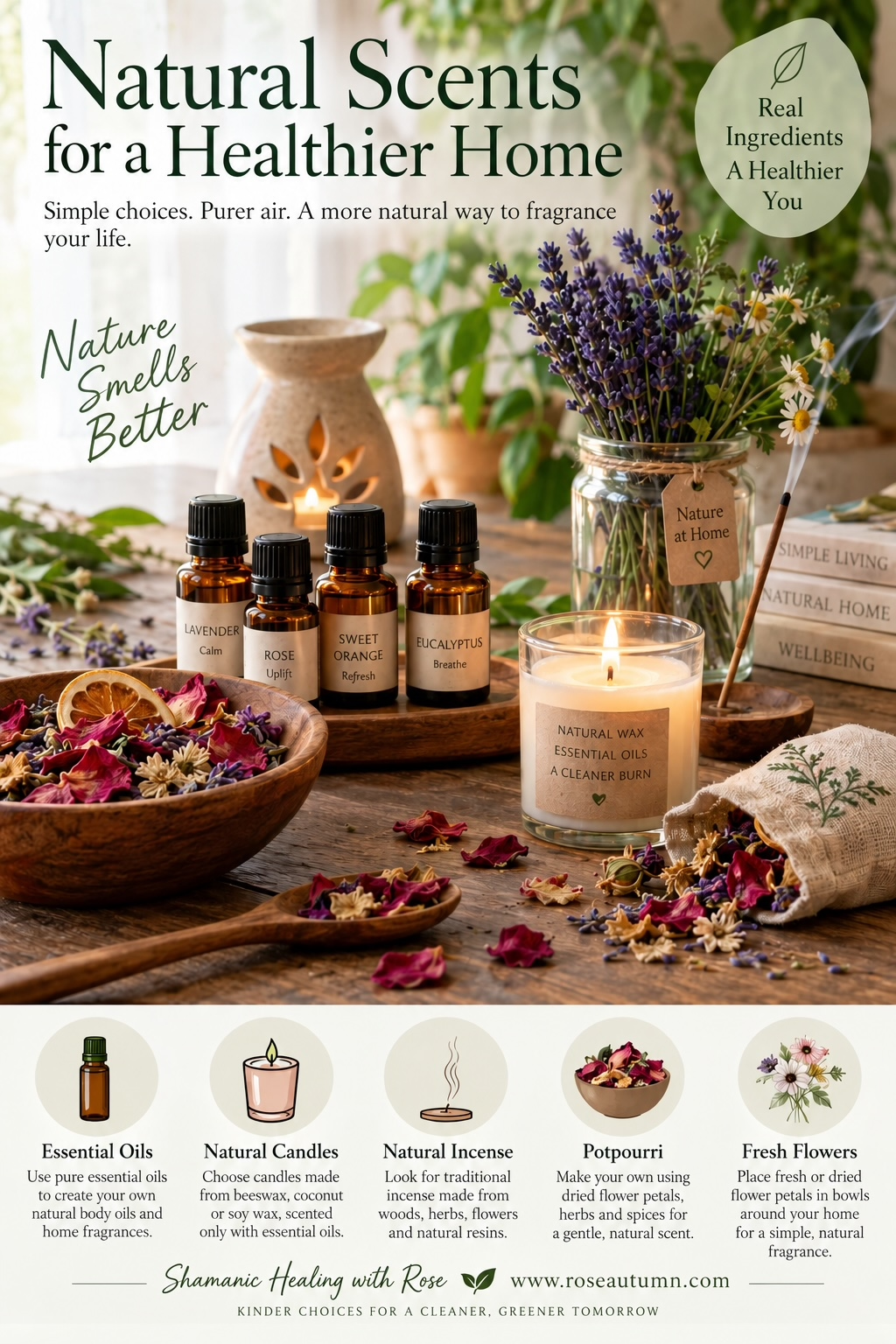
Avoiding synthetic fragrance does not mean that we have to give up beautiful smells altogether. Essential oils provide a natural alternative and can be used to fragrance the body and home without relying upon synthetic perfume.
Essential Oils
You can make a simple body oil by adding a few drops of your chosen essential oil to a natural carrier oil, such as organic jojoba, sweet almond, apricot kernel, or coconut oil. Essential oils are highly concentrated and should generally be diluted before being applied to the skin. Different oils can also be blended to create your own personal fragrance using flowers, herbs, woods, resins, and citrus oils. Essential oils are also powerful natural substances and can cause skin irritation or allergic reactions in some people, so always dilute with a carrier oil and do a patch test.
Scented Candles
The same principle can be applied to products used around the home. When buying scented candles, look for products made from natural waxes, such as beeswax, coconut, or soy wax, and scented only with essential oils rather than synthetic “fragrance” or “parfum”. Check the ingredients rather than relying upon descriptions such as “natural”, “botanical”, or “aromatherapy”.
Natural Incense
Natural incense is another alternative, but again it is important to look at what it actually contains. Traditional incense can be made from aromatic woods, herbs, flowers, gums, and natural resins such as frankincense and myrrh. Avoid incense containing artificial perfumes, synthetic fragrance oils, or unnecessary chemical additives. Remember that burning anything produces smoke and airborne particles, so incense and candles should be used in moderation and with good ventilation.
Potpourri and Flower Petals
Potpourri offers another simple way to fragrance the home naturally. Instead of buying commercially fragranced potpourri, which may contain synthetic perfume, you can make your own from dried flower petals, herbs, spices, and other aromatic plant materials. Rose petals, lavender, rosemary, mint, cinnamon sticks, cloves, dried citrus peel, and naturally fragrant woods can be combined in bowls or small fabric bags and placed around the home. A few drops of a favourite essential oil can be added when the natural scent begins to fade. Fresh or dried flower petals can also be placed in bowls to provide a gentle fragrance without filling the room with artificial perfume. Making your own potpourri has the additional advantage that you know exactly what it contains and can change the mixture with the seasons.
By choosing simple products with clearly identified ingredients, or making our own body oils and home fragrances, we can still enjoy scent while considerably reducing our exposure to the complex mixtures of synthetic chemicals found in conventional perfumes and fragranced products.
Shamanic Healing with Rose
Our physical environment is only one aspect of our wellbeing. My work as a shamanic practitioner takes a holistic approach to healing, working with the emotional, energetic, and spiritual aspects of our lives.
I offer traditional shamanic healing sessions from The Rose Healing Room in Hampshire, England, as well as distance healing. Sessions may include energy body healing, shamanic journeying, power animal retrieval, soul retrieval, cord cutting, extraction, changing agreements, and other techniques depending on what arises during the session.
About Rose
Rose is a Shamanic Practitioner offering in-person and distance Shamanic Healing Sessions and Shamanic Life Coaching, specialising in narcissistic abuse.
Rose works without hallucinogenic or psychedelic plant medicines. Instead, she uses an ancient drumming method to access this altered state of consciousness. A session may include a tailored combination of Power Animal Retrieval, Divination, Soul Retrieval, Energy Body Healing, Psychopomp, and Extraction to remove negative energy and blockages.
Each session with me includes Shamanic Subconscious Repatterning. A powerful system that changes the subconscious programmes that drive unwanted behaviour. This method heals trauma at its source, removes the self-limiting programme, and then rewrites a new way of being.
Shamanic Healing can be accessed face-to-face in the Rose Healing Room, Hampshire, England or remotely through Distance Healing Sessions. Because the work is carried out in the Spirit Realm with the support of Rose’s Spirit Guides, the client does not need to be physically present in the same room. Distance sessions are narrated in real time, and clients receive an audio recording by email afterwards.
For further information about Shamanic Healing, go to: https://www.roseautumn.com/shamanic-healing/
To book a session, visit: www.roseautumn.com/bookings/
 0
0