Posts Tagged: shamanic extraction
Shamanic Healing: Ancient Traditions & Modern Practice
To listen to the audio recording of this article, go here: https://youtu.be/56VWfE9qMco
Shamanic practices are among the oldest known forms of spiritual practice and healing.[1] Long before the development of modern medicine or organised systems of psychotherapy, people sought healing through their relationships with nature, ceremony, altered states of consciousness, ancestors, and the spirit realm.
Shamanic traditions have developed among peoples in widely separated parts of Mother Earth, while the practices themselves have been transmitted through generations in many different cultural forms. Rather than representing a single religion or uniform system of belief, shamanic practice encompasses diverse traditions connected by recurring relationships between healing, the natural environment, altered states of consciousness, and the spirit realm.
Shamanic Healing as it is practised today has nevertheless changed considerably. Understanding where these practices came from, and how they have developed, is important not only for practitioners, but also for anyone considering Shamanic Healing.
Where Did Shamanic Healing Originate?
Shamanic Healing did not begin with a single historical moment, nor was there originally one universal system called shamanism.
The word “shaman” most probably derives from the Tungus-speaking Evenki people of northern Siberia. The Evenki term saman referred to a particular spiritual practitioner within the community.[2] The much broader application of the terms “shaman” and “shamanism” to comparable spiritual practitioners and practices in cultures across Mother Earth developed subsequently.
Practices that scholars have described as shamanic have been identified within numerous cultures. These traditions have taken different forms, reflecting the beliefs, environment, ancestors, and spiritual understanding of individual peoples.
Despite these differences, certain practices and characteristics recur across a number of traditions. These can include altered states of consciousness, communication with spirits, healing, divination, ceremony, and relationships with the natural and spiritual realms.[2]
It is therefore important not to treat the many indigenous traditions now described collectively as “shamanism” as though they constituted a single historical religion or spiritual system.
The Traditional Role of the Shaman
Traditionally, shamanic practitioners were usually embedded within their communities. Their responsibilities could extend considerably beyond anything we would now recognise as the role of a therapist.
Depending upon the particular culture, the practitioner might undertake healing, divination, ceremony, communication with ancestors or spirits, guidance for the community, and the identification of spiritual causes of illness or misfortune.[2]
Shamanic practice was therefore not simply a collection of healing techniques. It formed part of a wider relationship between the individual, the community, the natural environment, and the spirit realm.
This distinction becomes particularly important when considering how Shamanic Healing has developed in the modern Western world.
The Development of Modern Shamanic Practice
During the twentieth century, the work of anthropologists, researchers, and writers brought greater awareness of indigenous shamanic traditions to Western audiences.
One particularly influential writer was the historian of religions Mircea Eliade. His Shamanism: Archaic Techniques of Ecstasy, first published in French in 1951 and translated into English in 1964, had a major influence upon both academic and popular understandings of shamanism. Eliade placed particular emphasis upon ecstatic states and the spiritual journeys undertaken by shamans.[3]
Another particularly influential figure was the American anthropologist Michael Harner. Harner began studying indigenous cultures during the 1950s and subsequently undertook fieldwork among the Shuar of Ecuador and the Conibo of the Peruvian Amazon. He began teaching shamanic methods to small groups in the United States during the early 1970s.[4]
Harner eventually developed what became known as Core Shamanism. Rather than attempting to reproduce one particular indigenous tradition, he sought to identify what he regarded as universal, near-universal, or commonly occurring elements within shamanic traditions. These included the shamanic journey and the use of repetitive drumming to facilitate an altered state of consciousness.[5]
In 1979, Harner established the Centre for Shamanic Studies. His influential book The Way of the Shaman appeared in 1980, and the Foundation for Shamanic Studies subsequently developed from his work.[4][6][7]
This approach had an enormous influence upon the development of contemporary Western shamanic practice.
Shamanic techniques consequently became accessible to people who had not inherited them through membership of a traditional shamanic culture. Contemporary Shamanic Healing may now be encountered through individual healing sessions, workshops, training courses, retreats, shamanic circles, and other forms of spiritual practice.
Shamanic Healing in the Twenty-First Century
The development of contemporary Shamanic Healing has also created important questions about how these practices should be approached.
There is an important distinction between indigenous shamanic traditions and contemporary Western shamanic practice. A traditional practitioner exists within the particular spiritual, cultural, and social context of a community. A contemporary Western practitioner may learn and work with shamanic techniques without possessing that inherited cultural role. For this reason, I describe myself as a Shamanic Practitioner rather than claiming the traditional cultural role of a Shaman.
Understanding the history of these practices encourages me to approach Shamanic Healing with respect, humility, and an awareness that the techniques I practise have a much longer history than the contemporary therapeutic environment in which I offer them.
It also raises important questions about cultural appropriation. Contemporary practitioners need to consider where particular teachings, ceremonies, terminology, and objects originate, and whether adopting culturally specific practices without their original context is appropriate.
Core Shamanism represents one response to this problem. Harner deliberately sought to distinguish what he considered the underlying methods of shamanism from ceremonies and cultural practices specific to individual indigenous peoples.[5]
Whatever approach a practitioner follows, understanding the provenance of a practice is an important part of practising responsibly.
Ancient Principles in a Modern Practice
Respecting the origins of shamanic traditions does not mean that Shamanic Healing must remain unchanged.
Spiritual traditions have always existed within particular communities and environments. As circumstances change, how people encounter and practise spiritual healing can change as well.
In my own practice, I work with principles and techniques including shamanic journeying, drumming, spiritual connection, intention, ceremony, energy healing, and relationship with Mother Earth. My Shamanic Healing work may also include Power Animal Retrieval, Soul Retrieval, Cord Cutting, Shamanic Extraction, Changing Agreements, Psychopomp, and Spiritual Parasite or Entity Removal.
At the same time, I believe it is important to distinguish between working with shamanic principles and simply reproducing ceremonies belonging to cultures other than my own.
This allows contemporary Shamanic Healing to develop while maintaining respect for the traditions from which much of our knowledge has emerged.
Continuing to Learn
Training as a Shamanic Practitioner is not the end of the learning process.
My practice continues to develop through research, personal spiritual practice, experience of working with clients, reflection upon the provenance of particular practices and terminology, and continued exploration of different shamanic traditions.
For me, understanding the history of Shamanic Healing is therefore not simply an academic exercise: it influences how I practise.
The further we explore the history and cultural context of shamanic practices, the better equipped we are to distinguish between ancient traditions, modern interpretations, and our own direct spiritual experience.
Shamanic Healing continues to evolve. My intention is to allow my own practice to evolve with it, while maintaining respect for its history, its cultural significance, and the relationship between human beings, the spirit realm, and Mother Earth.
About Rose
Rose is a Shamanic Practitioner offering in-person and distance Shamanic Healing Sessions and Shamanic Life Coaching, specialising in narcissistic abuse.
Rose works without hallucinogenic or psychedelic plant medicines. Instead, she uses an ancient drumming method to access this altered state of consciousness. A session may include a tailored combination of Power Animal Retrieval, Divination, Soul Retrieval, Energy Body Healing, Psychopomp, and Extraction to remove negative energy and blockages.
Each session with me includes Shamanic Subconscious Repatterning. A powerful system that changes the subconscious programmes that drive unwanted behaviour. This method heals trauma at its source, removes the self-limiting programme, and then rewrites a new way of being.
Shamanic Healing can be accessed face-to-face in the Rose Healing Room, Petersfield, East Hampshire or remotely through Distance Healing Sessions. Because the work is carried out in the Spirit Realm with the support of Rose’s Spirit Guides, the client does not need to be physically present in the same room. Distance sessions are narrated in real time, and clients receive an audio recording by email afterwards.
For further information about Shamanic Healing, go to: https://www.roseautumn.com/shamanic-healing/
References
[1] Pollock, Donald, “Shamanism”, Oxford Bibliographies in Anthropology, Oxford University Press, first published 26 October 2015, revised 19 February 2019. Pollock describes shamanism as having been regarded as one of the world’s oldest religions and records evidence associated with shamanic practice in Palaeolithic cave art. See also Manvir Singh, “The Cultural Evolution of Shamanism”, Behavioral and Brain Sciences, vol. 41, 2018, e66, which describes shamanism as an ancient human institution, records its presence among nearly all documented hunter-gatherer societies, and concludes that it probably characterised the religious lives of many ancestral human populations. https://academic.oup.com/reference/62334/reference-article-abstract/554065193 https://pubmed.ncbi.nlm.nih.gov/28679454/
[2] Cox, James L., “Shamanism”, in Adam Possamai and Anthony J. Blasi (eds.), The SAGE Encyclopedia of the Sociology of Religion, SAGE Publications, 2020, pp. 747–748. Cox discusses the probable derivation of the term shaman from the Tungus-speaking Evenki people of northern Siberia, the traditional role of the practitioner, and the subsequent development of the broader concept of shamanism. https://researchers.westernsydney.edu.au/en/publications/shamanism/
[3] Eliade, Mircea, Shamanism: Archaic Techniques of Ecstasy, translated from the French by Willard R. Trask, Bollingen Series LXXVI, Princeton University Press, Princeton, 1964. Originally published in French as Le Chamanisme et les techniques archaïques de l’extase, Payot, Paris, 1951. Eliade’s comparative study placed particular emphasis upon ecstasy and the spiritual journey and became one of the most influential twentieth-century studies of shamanism. https://press.princeton.edu/books/paperback/9780691210667/shamanism
[4] Foundation for Shamanic Studies, “Michael Harner, PhD”. Harner studied with the Shuar in Ecuador and the Conibo of the Peruvian Amazon, began teaching shamanic methods during the early 1970s, founded the Center for Shamanic Studies in 1979, and subsequently established the Foundation for Shamanic Studies. https://www.shamanism.org/michael-harner/
[5] Foundation for Shamanic Studies, “About the Foundation for Shamanic Studies”. The Foundation describes Core Shamanism as Harner’s system based upon what he identified as universal, near-universal, and common features of shamanism, distinguished from the culturally specific ceremonies of individual indigenous peoples. https://www.shamanism.org/about/
[6] Harner, Michael, “The History and Work of the Foundation for Shamanic Studies”, Shamanism, Journal of the Foundation for Shamanic Studies, originally published 1991; revised and republished 2005. Harner describes the development of his practice, his teaching workshops from the early 1970s, the development of Core Shamanism, the establishment of the Center for Shamanic Studies, and the publication of The Way of the Shaman in 1980. https://www.shamanism.org/articles/the-history-and-work-of-the-fss/
[7] Harner, Michael, The Way of the Shaman: A Guide to Power and Healing, Harper & Row, New York, 1980; revised edition, HarperSanFrancisco, 1990.

Shamanic Case Study – Distance Extraction
ML is in Shamanic training and asked me to conduct an Extraction Journey because she had perceived an intrusion and asked for assistance with its removal.
I conducted a Distance Healing Session focussing on Extraction only, which was not the complete session I would usually provide.
I journeyed to my team and we discovered three intrusions; two on the front of her torso and one on the back. We removed the negative energy from these sites and identified that it originated from her mother.
To ensure that the intrusion does not return, we asked if there was an agreement in place. ML had made an agreement around her mother’s behaviour which was protecting the intrusion and causing ML to repeat the pattern in her relationships. We gave ML a new agreement so that she could change her pattern of behaviour and stop being held back in her relationships by the old one.
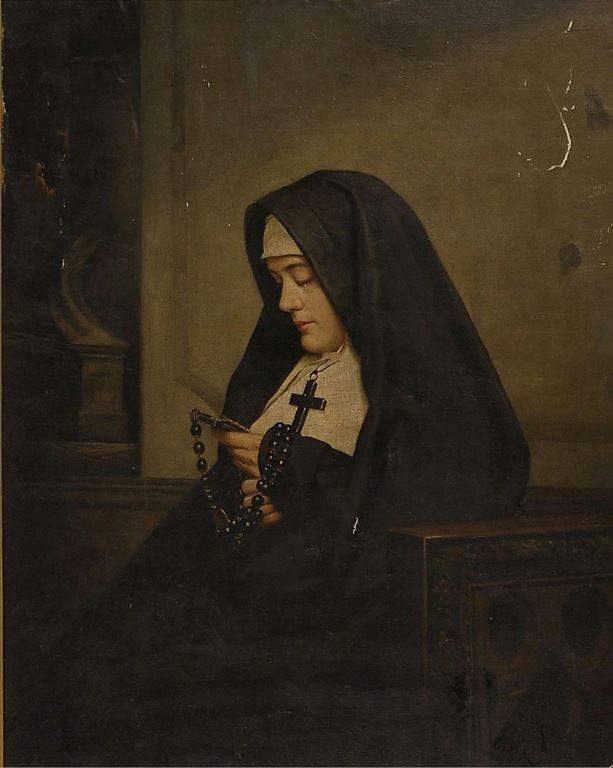
At the end of the session, we were sealing in the new agreement and a female nun came into view; she said she was an ancestor who had come to protect her.
In her feedback, ML said that the journey resonated for her and that she had previously been struggling to work through some of the aspects of it herself. She confirmed that the old agreement came from her mother.
ML said that the female nun was her great-aunt from her mother’s side and is welcomed support as she works through issues surrounding her conservative religious upbringing.
 0
0