Posts Tagged: Gut health
The Hidden Cost of Coffee: What Your Daily Cup Is Doing to Your Body
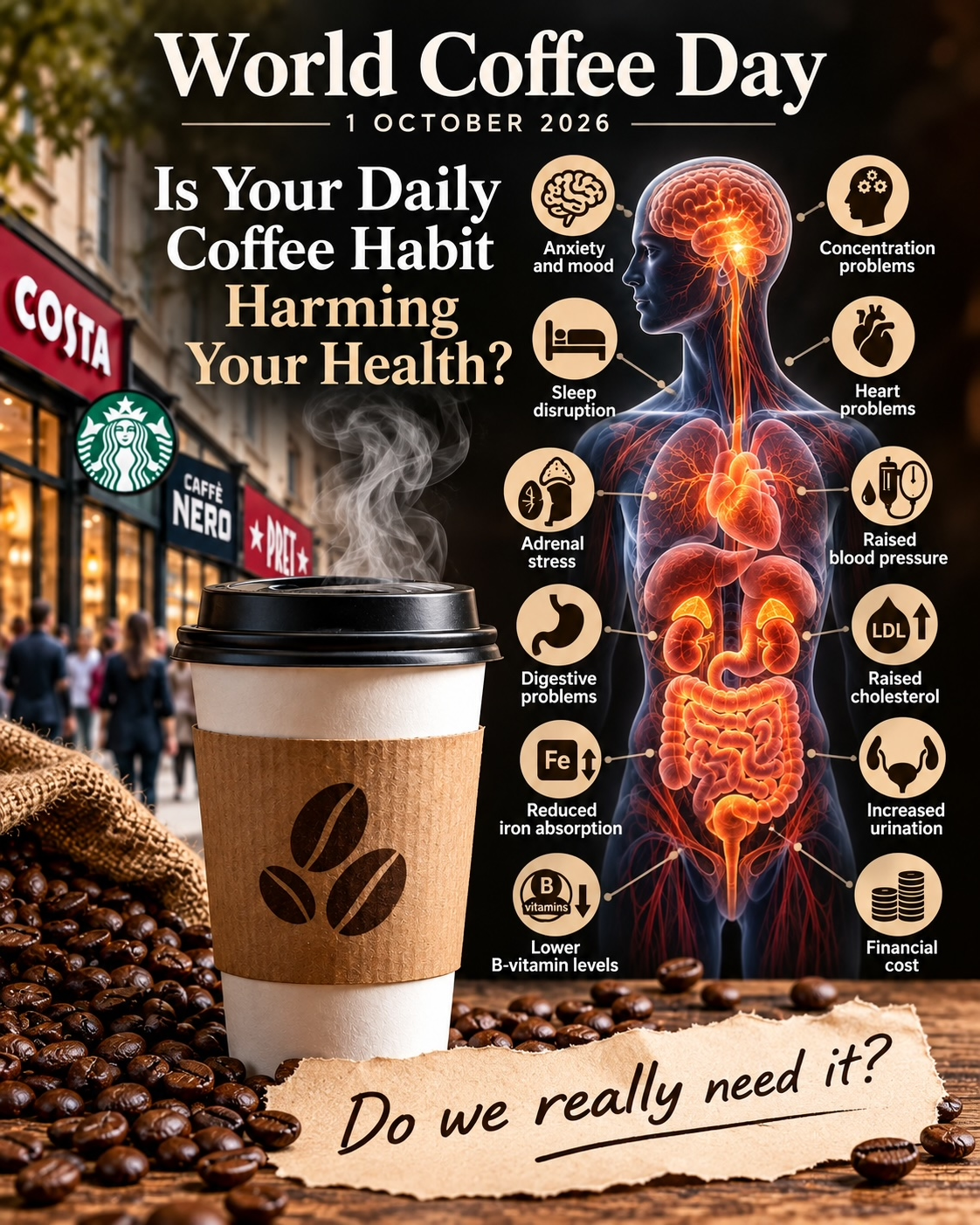
World Coffee Day is celebrated on 1 October 2026, prompting us to question the effects that coffee has on our health and finances.
To listen to the audio recording of this article, go to: https://youtu.be/GVxyl4oJm-w
The fact that this is now a scheduled date on the calendar demonstrates how much the system wants you to consume this product, and the motivation is not for your health; it is for profit. Profit from the sales of takeaway coffee from their popular high-street outlets, and from the medical interventions that unhealthy people require from the industrial medical complex. In particular, antidepressants for anxiety, sleeping tablets, statins, and ADHD medication.
In the 1980s, people in England predominantly drank tea, in the form of loose black tea, usually at home, at work, or in an independent cafe. Although a small number of specialist coffee shops already existed, the branded coffee-shop culture that we recognise today had not yet taken over the English high street.
That began to change rapidly during the mid-to-late 1990s. Costa, which had opened its first London coffee shop in 1981, was acquired by Whitbread in 1995 and subsequently expanded. Caffè Nero was established in London in 1997 and began expanding outside the capital in 1999, while Starbucks opened its first UK shop in London in September 1998. By 2000, Starbucks already had 156 UK stores, demonstrating just how rapidly the new coffee-shop culture was spreading.
Over the past 30 years, coffee has consequently become embedded in our culture, with branded corporate coffee shops on high streets across England and familiar programmed scripts around ‘meeting for a coffee’ or needing coffee to wake up in the morning. Yet behind this everyday habit is a powerful psychoactive substance that affects the nervous, hormonal, cardiovascular, and digestive systems. These effects raise questions about what a daily coffee habit is actually doing to the body.
Coffee can:
- inhibit iron absorption;
- affect levels of some B vitamins;
- lower natural energy levels;
- contribute to anxiety and depression;
- stimulate the body’s stress response;
- raise cortisol levels;
- affect concentration;
- disrupt sleep;
- cause physical dependence;
- affect the cardiovascular system;
- affect the digestive system; and
- contribute to prolonged adrenal stimulation and the state commonly known as adrenal fatigue or ‘burnout’.
Adrenal Fatigue
By far the most harmful effect of coffee consumption is the way caffeine stresses the adrenal glands, which over the long term will cause adrenal dysfunction.
The adrenals release hormones directly into the bloodstream, including cortisol, which regulates our sleep/wake cycle. It is released during times of stress to give your body an energy boost. The adrenal glands also release adrenaline and noradrenaline during stressful situations, initiating the fight-or-flight response.
Human experiments have measured increased circulating adrenaline following caffeine. In one study, intravenous caffeine increased plasma adrenaline by 114%.
A placebo-controlled human experiment using caffeine equivalent to approximately two or three cups of coffee found that caffeine increased cortisol by about 30%. A recent review confirms these effects and notes that the cortisol response becomes blunted and can sometimes disappear with chronic caffeine consumption. Other controlled experiments have confirmed that caffeine can increase cortisol even while people are resting.
If we spike these hormones by regularly drinking caffeinated beverages, we will eventually cause adrenal fatigue, where the adrenal glands stop functioning correctly.
There are signs of adrenal dysfunction that are easy to spot:
- Low cortisol in the morning: waking up having had a full night’s sleep only to feel exhausted, causing us to reach for a caffeine hit to get us going;
- High cortisol at night: we feel tired but experience insomnia.
Other symptoms can be headaches, dizziness, general fatigue, and palpitations.
Are you tired all the time and lacking energy? Do you automatically reach for a caffeine hit to get you through the day? Contrary to popular belief, drinking coffee doesn’t give you energy; it simply appears to energise you by overstimulating your adrenal glands, causing a rush of adrenaline and cortisol.
Sleep Disruption
Coffee can significantly impair sleep. This is one of the clearest causal effects. A 2023 systematic review and meta-analysis of 24 studies found that caffeine reduced total sleep time by about 45 minutes, reduced sleep efficiency by about 7%, delayed falling asleep by about 9 minutes, increased wakefulness after sleep onset, and reduced deep sleep. The authors calculated that a coffee containing about 107 mg caffeine could affect total sleep time if consumed within approximately 8.8 hours of bedtime. A newer meta-analysis of controlled crossover trials reached essentially the same conclusion.
This is primarily a caffeine effect and would therefore also apply to black tea, hot chocolate, and cola drinks.
Increased Anxiety
Coffee contains caffeine, which promotes nervousness, sleeplessness, and ‘the jitters’.
Caffeine can increase anxiety, particularly at higher doses. Controlled studies establish an anxiogenic effect. A 2024 study found increased anxiety in healthy people, with a substantially stronger effect at doses above about 400 mg caffeine. A 2026 systematic review of 27 studies similarly concluded that the evidence predominantly supports a dose-dependent increase in anxiety symptoms.
People with panic disorder are particularly sensitive. In placebo-controlled caffeine-challenge studies using roughly 400–750 mg, about 51% of participants with panic disorder experienced a panic attack, compared with almost none after placebo.
Caffeine Dependency
Regular caffeine use can produce physical dependence and withdrawal. This is very well established experimentally. Abrupt withdrawal can cause headache, fatigue, drowsiness, reduced alertness, difficulty concentrating, irritability, depressed mood, nausea, and flu-like symptoms. A major review found headache in about 50% of subjects undergoing experimental withdrawal and clinically significant impairment in about 13%. Symptoms typically begin 12–24 hours after stopping, peak around 20–51 hours, and can persist for 2–9 days. Withdrawal has been demonstrated following habitual intakes as low as around 100 mg of caffeine per day.
Caffeine withdrawal is not merely an association: it has been demonstrated under controlled conditions.
Heart Problems
Caffeinated coffee can increase extra or early heartbeats, which feel like a flutter, thump, skipped beat, or palpitation. In a CRAVE randomised trial, in which people alternated between coffee-consumption days and caffeine-avoidance days, extra beats occurred more frequently on days when people drank coffee, increasing from an average of 102 to 154 per day.
Interestingly, the same experiment recorded about 36 minutes less sleep on coffee days, reinforcing the controlled sleep evidence.
Raised Blood Pressure
Coffee can acutely raise blood pressure. A meta-analysis of randomised trials found caffeine supplementation increased systolic blood pressure by about 1.9 mmHg and diastolic pressure by about 1.7 mmHg overall. In people with hypertension, doses of 200–300 mg caffeine produced considerably larger acute increases — around 8.1 mmHg systolic and 5.7 mmHg diastolic — lasting for three hours or more.
Raised LDL Cholesterol
Unfiltered coffee can raise LDL cholesterol. This is another particularly strong causal finding because it has been demonstrated in randomised trials. The important substances are the coffee diterpenes cafestol and kahweol, which remain in coffee prepared without effective paper filtration.
A meta-analysis of randomised trials found coffee consumption increased total cholesterol, LDL cholesterol, and triglycerides, with substantially greater effects from unfiltered coffee. An earlier meta-analysis specifically found that unfiltered coffee increased total and LDL cholesterol, whereas filtered coffee produced very little increase.
Purified cafestol has also been experimentally administered to humans. It produced sizeable increases in total cholesterol, LDL, and triglycerides, establishing that the diterpene itself can cause the effect.
This distinction matters enormously. Cafetière/French-press, boiled Scandinavian coffee, and Turkish-style coffee contain substantially more diterpenes than paper-filtered coffee.
Reduced Iron Absorption
Coffee inhibits the absorption of non-haem iron when consumed with meals. This has been demonstrated directly in human absorption experiments. In one controlled study, drinking coffee with a meal reduced non-haem iron absorption by 39%. With another test meal, absorption fell from 5.88% without coffee to 1.64% with drip coffee and 0.97% with instant coffee. Stronger coffee caused still greater inhibition.
Timing mattered: coffee taken an hour before the meal did not impair absorption, whereas coffee taken with the meal or an hour afterwards did.
This is therefore a genuine nutritional disadvantage, particularly relevant to people who depend heavily on plant-derived iron or who have marginal iron stores.
Reduced B-Vitamin Levels
High coffee consumption has been associated with lower blood concentrations of some B vitamins. A particularly useful study examined 10,601 healthy adults and measured their coffee consumption alongside circulating B vitamins. Compared with people who did not drink coffee, those drinking four or more cups per day had:
- 11.7% lower folate (vitamin B9);
- 14.1% lower pyridoxal phosphate (the active form of vitamin B6); and
- 5.5% lower riboflavin (vitamin B2).
Low B-Vitamin levels contribute to increased anxiety and depression.
Their homocysteine was also 6.8% higher.
High Homocysteine
B vitamins are important in recycling and converting homocysteine. Folate (B9) and vitamin B12 help convert homocysteine back into methionine. Vitamin B6 helps convert homocysteine along another pathway into cysteine and other substances.
It isn’t just low B vitamins that increase homocysteine; coffee itself is capable of altering homocysteine metabolism independently of simply lowering circulating B-vitamin concentrations.
In one randomised crossover trial, people drank one litre of strong paper-filtered coffee every day for four weeks. Their average homocysteine increased from 8.1 to 9.6 μmol/L — an 18% increase. Coffee increased homocysteine in 24 of the 26 participants.
Another randomised trial using one litre of unfiltered cafetière coffee daily found an increase of about 10% after two weeks.
More importantly, another study looked at quantities closer to normal consumption. People accustomed to drinking about four cups of filtered coffee per day who stopped drinking coffee for six weeks experienced an average reduction in homocysteine of 1.08 μmol/L.
High homocysteine is associated with vascular disease and increased blood clots or DVT. Clots are associated with stroke, and blocked arteries, which can cause coronary heart disease and lung problems.
Coffee and Gut Acidity
Coffee is acidic and contributes to acidity in the gut, which may create an environment for cancer cells, which thrive in high acidity. Brewed coffee typically has a pH of 4.8 to 5.1, compared with natural water at pH 7, and stomach acid around pH 1 to 3.
Coffee naturally contains acids including chlorogenic, citric, malic, and quinic acids. Coffee can stimulate gastrin and gastric secretion, affect oesophageal function, stimulate colonic motor activity, and prompt bowel movements. Someone with reflux, dyspepsia, gastritis, or a particularly sensitive digestive system may find coffee aggravating.
Coffee stimulates gastric acid secretion and gastrin. This is directly demonstrated physiologically in controlled human experiments, which have repeatedly shown that both ordinary and decaffeinated coffee can stimulate gastric acid secretion and gastrin release. Remarkably, in some experiments, decaffeinated coffee stimulated more gastric acid secretion than caffeine alone.
That tells us something important: caffeine is not the only gastrointestinal stimulant in coffee. Other coffee constituents are involved.
Different coffees also produce different effects. One human study comparing roasts found that a dark roast stimulated gastric acid secretion less strongly than a medium roast containing considerably more chlorogenic acids and other compounds.
Increased acid secretion may contribute to gut health problems such as gastritis, stomach ulcers, or intestinal damage.
Acid Reflux
Coffee can exacerbate gastro-oesophageal reflux in some people. The newest comprehensive meta-analysis, published in 2026 and covering 40 studies and 122,074 people, found GERD more common among coffee drinkers. Coffee stimulates gastric physiology and can provoke heartburn in susceptible individuals.
Increased Urination
Caffeine can worsen urinary urgency and frequency. A systematic review including seven randomised controlled trials found that reducing caffeine improved urinary urgency, frequency, nocturia, and some measures of urinary incontinence in people with overactive bladder.
This means caffeine is a genuine bladder stimulant in susceptible people rather than the association being purely anecdotal.
Bone Fracture Risk
An increased fracture risk in women remains unresolved rather than proven. Meta-analyses have found a dose-dependent association between higher coffee consumption and fracture risk in women. One reported a relative risk of 1.14 when comparing the highest with the lowest consumption groups, while finding the opposite association in men. The major BMJ umbrella review also identified fracture risk in women as one of the few consistently unfavourable associations.
Effects During Pregnancy
Pregnancy is the clearest situation in which coffee/caffeine intake is associated with potentially serious harm. Higher maternal caffeine exposure has repeatedly been associated with pregnancy loss, lower birth weight, small-for-gestational-age babies, and stillbirth. A dose-response meta-analysis found that increasing caffeine consumption was associated with progressively greater risks, although most of this evidence is observational and therefore cannot establish causality as securely as the sleep or cholesterol experiments can.
Heavy Metal Toxicity
Coffee is a source of nickel, which can cause kidney problems.
The Financial Cost of Coffee
There is also a considerable financial incentive to kick the daily coffee habit. In September 2026, the average price of a latte across four of the major UK high-street coffee chains — Costa, Starbucks, Caffè Nero, and Pret — is approximately £4.03. Buying just one takeaway coffee every day therefore costs around £28.21 a week, £122.57 a month, or £1,470.95 a year. Someone buying two coffees a day could be spending almost £3,000 a year. Giving up the daily takeaway coffee could therefore leave an extra £1,471 in your pocket each year — as well as removing a regular source of caffeine from your diet.
Conclusion
Rather than automatically celebrating World Coffee Day on 1 October, perhaps we should use the occasion to question why coffee has become such an established part of our daily culture. For many people, reaching for coffee first thing in the morning, during the working day, or when meeting friends has become an automatic habit rather than a conscious choice.
Coffee affects the body in numerous ways, from stimulating the stress response and disrupting sleep to affecting digestion, cardiovascular function, and the absorption of nutrients. Regular consumption can also create physical dependence, leaving people reaching for another cup simply to avoid the fatigue, headache, and lack of concentration associated with withdrawal.
World Coffee Day therefore provides an opportunity to question the habit rather than simply celebrate it. Why do we drink coffee? How does it make us feel without the temporary stimulation of caffeine? What effect is it having upon our health, sleep, energy, and finances? And, perhaps most importantly, do we actually need it?
About Rose
Rose is a Shamanic Practitioner offering in-person and distance Shamanic Healing Sessions and Shamanic Life Coaching, specialising in narcissistic abuse.
Rose works without hallucinogenic or psychedelic plant medicines. Instead, she uses an ancient drumming method to access this altered state of consciousness. A session may include a tailored combination of Power Animal Retrieval, Divination, Soul Retrieval, Energy Body Healing, Psychopomp, and Extraction to remove negative energy and blockages.
Each session with me includes Shamanic Subconscious Repatterning. A powerful system that changes the subconscious programmes that drive unwanted behaviour. This method heals trauma at its source, removes the self-limiting programme, and then rewrites a new way of being.
Shamanic Healing can be accessed face-to-face in the Rose Healing Room, Petersfield, East Hampshire or remotely through Distance Healing Sessions. Because the work is carried out in the Spirit Realm with the support of Rose’s Spirit Guides, the client does not need to be physically present in the same room. Distance sessions are narrated in real time, and clients receive an audio recording by email afterwards.
For further information about Shamanic Healing, go to: https://www.roseautumn.com/shamanic-healing/


Kombucha Benefits: Gut Health, Immune Support & Detox
Kombucha is a fermented tea that contains beneficial bacteria, yeast, and organic acids that support digestion and boost the immune system. Many people choose to include Kombucha as an alternative to probiotic capsules due to its potential health benefits, particularly for gut health and overall well-being. As well as being a delicious cold drink, it is also very cost-effective if you make it yourself.
Probiotics for Gut Health
Kombucha contains probiotics, or live beneficial bacteria, which help to balance the gut microbiome. A healthy gut is important for digestion, nutrient absorption, and immune function.
Antioxidants
Kombucha, especially when made from green tea, contains antioxidants that help fight free radicals in the body. Antioxidants may reduce inflammation and support overall health.
Detoxification
Kombucha contains organic acids including acetic acid and gluconic acid, which support the body’s detoxification processes by promoting liver function and helping to eliminate toxins.
Improved Digestion
The probiotics and organic acids in kombucha aid digestion by supporting the breakdown of food and promoting healthy gut flora.
Immune Support
A healthy gut is closely linked to a strong immune system. By promoting gut health, kombucha may indirectly help support the immune system.
Natural Energy Boost
Kombucha contains B vitamins, which may provide a natural energy boost without the crash associated with caffeinated and sugary drinks.
Common Bacterial Strains in Kombucha
Kombucha contains a variety of bacteria and yeast strains that develop during the fermentation process. These microorganisms create the symbiotic culture of bacteria and yeast (SCOBY) that ferments the tea and produces the unique taste and potential health benefits of kombucha. While the exact strains can vary, some of the most common bacterial strains found in kombucha include:
Acetobacter Xylinum (or Gluconacetobacter Xylinus)
This is one of the dominant strains in kombucha, responsible for producing acetic acid (which gives kombucha its tangy flavor) and cellulose, which forms the structure of the SCOBY. Acetic acid is known to have antibacterial properties, which may help limit harmful bacteria in the gut. The production of cellulose can help maintain the structural integrity of the SCOBY.
Lactobacillus Species
Lactobacillus is a lactic acid bacterium that converts sugars into lactic acid, contributing to the slight sourness of kombucha. Lactobacillus is one of the most well-known probiotic bacteria, promoting gut health by supporting digestion, balancing gut flora, and potentially enhancing the immune system.
Acetobacter Pasteurianus
This bacterium helps convert ethanol (produced by yeast fermentation) into acetic acid, giving kombucha its vinegar-like flavour. Acetobacter strains, through their production of acetic acid, contribute to gut health by creating an environment that supports the growth of beneficial bacteria.
Gluconobacter Oxydans
Gluconobacter species convert sugars into organic acids such as gluconic acid and acetic acid during fermentation. Organic acids produced by Gluconobacter may help promote detoxification by supporting liver function and promoting the body’s elimination of waste.
Benefits of Bacteria in Kombucha
Share your kombucha brewing experiences in the comments; I’d love to hear about your flavours.
If you need support with gut healing, book a Lifestyle Medicine session to improve your energy, creativity, and mood for optimal performance.
 0
0