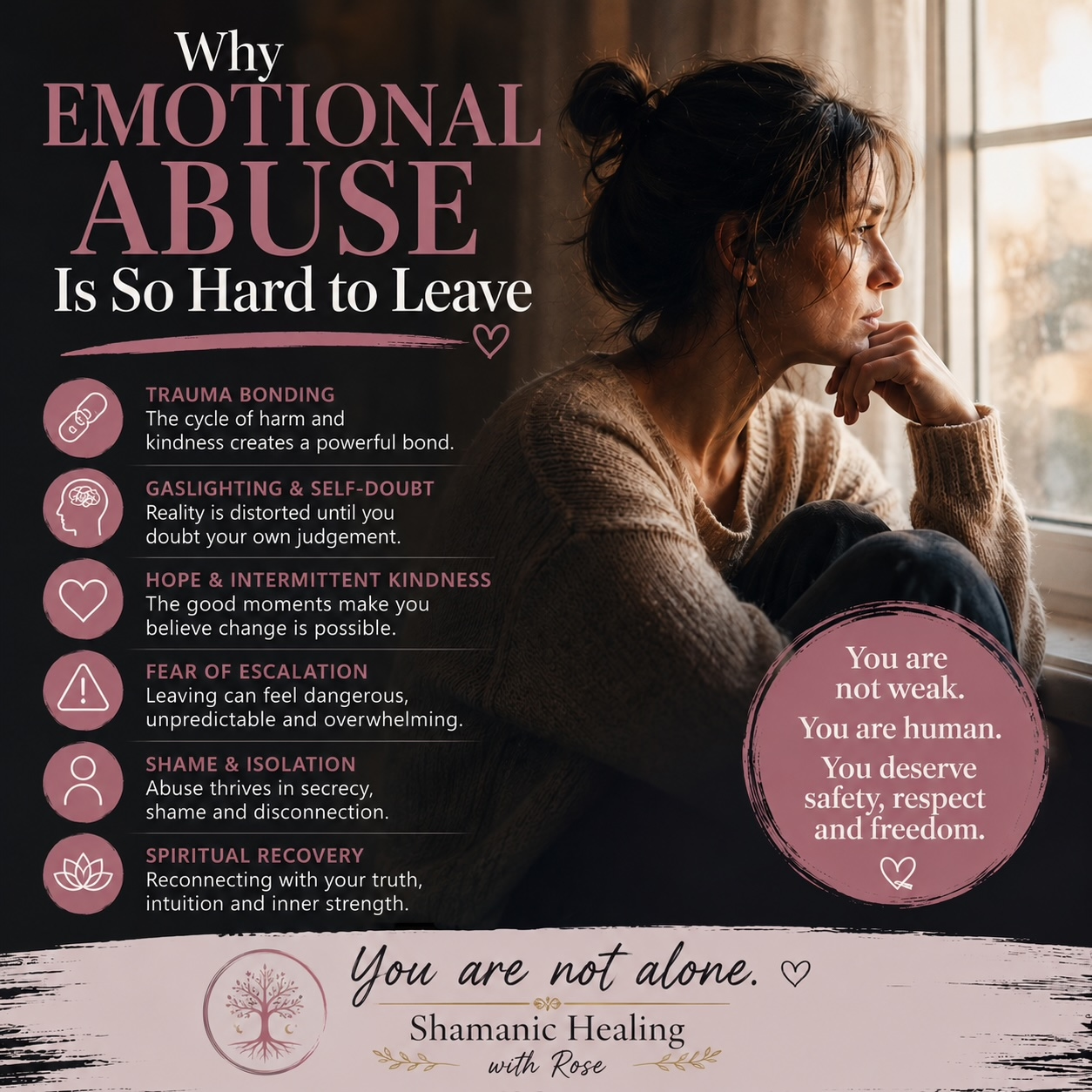
Why Emotional Abuse Is So Hard to Leave
One of the most misunderstood aspects of emotional abuse is why someone stays. From the outside, it may seem obvious that a person should simply leave, but emotional abuse often works by gradually weakening a person’s confidence, clarity, independence, and trust in themselves. By the time they recognise the pattern, they may feel confused, ashamed, frightened, financially trapped, emotionally attached, or responsible for the other person’s well-being. This article explores why emotional abuse can be so difficult to leave, and why compassion, support, and understanding are far more helpful than judgment.
Trauma Bonding
One reason emotional abuse can be so difficult to leave is trauma bonding. This happens when periods of criticism, control, cruelty, withdrawal, or intimidation are mixed with moments of affection, apology, kindness, or apparent remorse. The relationship becomes emotionally unpredictable. One day, the person may feel rejected, blamed, or afraid; another day, they may feel loved, needed, or reassured that things will change.
This cycle can create a powerful attachment. The victim may begin to focus on the good moments and minimise the harm, hoping that the loving version of the person will return permanently. They may believe that if they can just explain themselves better, behave differently, avoid certain topics, or become more understanding, the relationship will improve. Over time, the nervous system becomes caught in a cycle of fear, relief, hope, and disappointment.
Trauma bonding is not a weakness. It is a survival response to an unstable emotional environment. The person may not be choosing the abuse; they may be trying to hold on to the moments of connection that make the relationship feel meaningful. This is why it can be so hard to leave, even when part of them knows that the relationship is damaging them.
Gaslighting and Self-Doubt
Emotional abuse often involves gaslighting, denial, blame-shifting, or the repeated distortion of reality. The person causing harm may insist that the abuse did not happen, that it was not serious, that the victim is too sensitive, too dramatic, unstable, selfish, or imagining things. They may twist conversations, deny what was said, or turn every attempt to raise a concern into an accusation against the victim.
Over time, this can seriously damage a person’s trust in their own judgement. They may start asking themselves: “Am I overreacting?” “Was it really that bad?” “Maybe it is my fault.” “Maybe I am the problem.” This self-doubt can make leaving feel almost impossible, because the person may no longer feel clear enough to trust their own perception of what is happening.
Gaslighting is especially harmful because it attacks the victim’s inner compass. When someone has been repeatedly told that their feelings, memories, and reactions are wrong, they may need time and support to reconnect with their own reality. Leaving an emotionally abusive relationship often begins with the quiet but powerful recognition: “I am allowed to trust what I know. I am allowed to believe my own experience.”
Hope and Intermittent Kindness
Another reason people stay is hope. Emotional abuse is rarely abusive every moment of every day. There may be times when the relationship feels loving, exciting, intimate, or normal. The abusive person may apologise, cry, promise to change, become affectionate, give gifts, or speak about the future in a way that feels convincing. These moments can be very confusing.
Intermittent kindness can make the relationship harder to leave because it gives the victim something to hold on to. They may remember who the person was at the beginning, or who they still seem to be in their better moments. They may believe the abuse is caused by stress, trauma, insecurity, alcohol, work pressure, family problems, or past wounds. They may keep waiting for the “real” person to come back.
This hope is understandable, but it can also keep someone trapped in a painful cycle. A relationship should not require someone to endure repeated harm in exchange for occasional kindness. Genuine change requires responsibility, consistency, accountability, and respect over time. Promises alone are not enough if the same damaging pattern continues.
Fear of Escalation
For some people, leaving does not feel emotionally difficult; it may feel unsafe. Emotional abuse can include intimidation, threats, stalking, financial control, social isolation, coercive control, or the fear that the other person will punish them for trying to leave. Even if there has been no physical violence, the victim may sense that the situation could escalate if they challenge the relationship or try to end it.
This is why it is not always helpful to tell someone to “just leave.” Leaving may involve practical risks around housing, money, children, pets, work, reputation, family pressure, or safety. The person may need to plan carefully, gather support, speak to a trusted friend or professional, and contact a specialist domestic abuse service before making decisions.
If there is any risk of danger, threats, coercive control, or escalation, safety should come first. The priority is not to prove a point to the abusive person or force them to understand. The priority is to protect the victim’s well-being and help them take the next safest step.
Shame and Isolation
Emotional abuse often creates shame. The victim may feel embarrassed that they stayed, ashamed that they tolerated certain behaviour, or afraid that others will judge them. They may worry that people will say, “Why didn’t you leave sooner?” or “Why did you put up with that?” These reactions can make it even harder to ask for help.
Abusive relationships can also become isolating. The person may have been criticised for seeing friends, discouraged from speaking openly, made to feel guilty for having outside support, or slowly cut off from the people who might have helped them see the situation more clearly. Even when friends and family are still present, the victim may hide what is happening because they feel confused, protective of the relationship, or afraid of not being believed.
Shame keeps abuse hidden. Compassion helps bring it into the light. If someone has stayed in an emotionally abusive relationship, it does not mean they are foolish, weak, or responsible for the abuse. It means they have been living inside a dynamic that may have slowly worn down their confidence, clarity, and sense of self. What they need is not judgment, but support, patience, and a safe space to tell the truth.
Spiritual Recovery
Emotional abuse can affect more than the mind. Many people describe feeling as though they have lost themselves. They may feel disconnected from their intuition, their body, their voice, their creativity, their confidence, or their spiritual centre. After living in a relationship where they have been criticised, controlled, blamed, or made to doubt themselves, they may need time to remember who they are outside the abusive dynamic.
Spiritual recovery can involve reconnecting with the self at a deeper level. This may include rebuilding boundaries, listening again to inner guidance, restoring a sense of personal power, and releasing the emotional weight of fear, shame, guilt, or confusion. For some people, therapy, journaling, time in nature, meditation, prayer, creative practice, bodywork, or shamanic healing may help them begin to feel grounded and whole again.
Shamanic healing, in particular, may support someone who feels emotionally fragmented, energetically drained, or disconnected from their own truth. For those who are ready to rebuild their inner strength and reclaim their voice, soul retrieval and Shamanic Subconscious Repatterning will assist, along with extraction.
By extracting any negative residues, one can clear the body and reset the energy body. Soul retrieval will bring back the soul parts (life force energy) stolen by the abuser, reinstalling empowerment and confidence. Shamanic Subconscious Repatterning will rewrite the subconscious programmes so that you can create new, supportive relationships.
Conclusion
Leaving emotional abuse is rarely simple. It can involve trauma bonding, self-doubt, fear, hope, shame, isolation, practical barriers, and a deep emotional attachment to the person causing harm. This is why victims need understanding rather than judgment. From the outside, the answer may seem obvious, but from the inside, emotional abuse can feel confusing, frightening, and painfully difficult to untangle.
If you recognise yourself in this article, try to take your feelings seriously. You do not have to make every decision at once. Begin by noticing the pattern, trusting your own experience, and reaching out for safe, confidential support. Healing starts when you are able to say, even quietly to yourself, “What happened to me matters. My feelings matter. I deserve to feel safe, respected, and free to be myself.”
About Rose
Rose is a Shamanic Practitioner offering in-person and distance Shamanic Healing Sessions and Shamanic Life Coaching, specialising in narcissistic abuse.
Rose works without hallucinogenic or psychedelic plant medicines. Instead, she uses an ancient drumming method to access this altered state of consciousness. A session may include a tailored combination of Power Animal Retrieval, Divination, Soul Retrieval, Energy Body Healing, Psychopomp, and Extraction to remove negative energy and blockages.
Each session with me includes Shamanic Subconscious Repatterning. A powerful system that changes the subconscious programmes that drive unwanted behaviour. This method heals trauma at its source, removes the self-limiting programme, and then rewrites a new way of being.
Shamanic Healing can be accessed face-to-face in the Rose Healing Room, Petersfield, East Hampshire or remotely through Distance Healing Sessions. Because the work is carried out in the Spirit Realm with the support of Rose’s Spirit Guides, the client does not need to be physically present in the same room. Distance sessions are narrated in real time, and clients receive an audio recording by email afterwards.
For further information about Shamanic Healing, go to: https://www.roseautumn.com/shamanic-healing/
 0
0 0
0
 20
20