Posts Tagged: shamanism

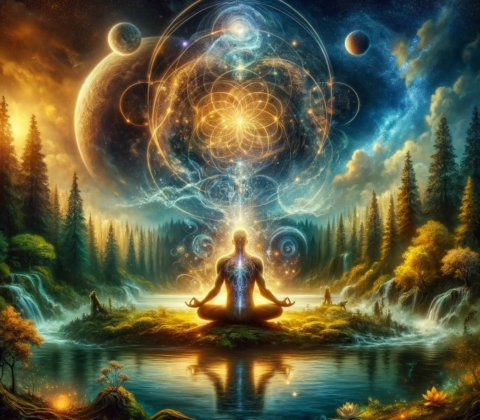
Mind, Soul, and Consciousness in Shamanism
One of the questions people ask is whether shamanic traditions make a distinction between the mind and the soul, and if they do, how that distinction is actually understood.
In my experience, there is a strong distinction between the mind and the soul. The mind is part of our human experience, but the soul belongs to a deeper level of being.
The Soul
The Soul is the primary aspect and the essence of our being. It is eternal. It can cross dimensions, experience different levels of consciousness, and reincarnate into different beings. It can be fragmented by trauma, causing soul loss. This is why soul retrieval is such an important part of Shamanic Healing.
The Mind
The mind, by contrast, is not a clear reflection of who we really are. It is a secondary aspect forming the functional or cognitive apparatus that processes our experience of the world. It can be conditioned by trauma, fear, social programming, and ego. It can also be influenced, distorted, and destabilised by negative forces. For that reason, I do not see the mind as identical with the soul.
This is not a simple topic. Language changes across cultures, and translation is imperfect. Different lineages use different words. Some teachings speak poetically rather than analytically. Yet in the teachings I have received, and through my own healing and practice, a meaningful distinction does appear to exist. It is not always presented as a rigid philosophical diagram, but more often as a practical map for healing and direct spiritual experience.
The logic mind and the spirit mind
North American shamanism makes this distinction very clearly through the understanding of the practitioner as a hollow bone. Once the logic mind is silenced, the spirits can speak and work through the practitioner. Practitioners are taught a methodology for accessing the spirit mind directly. This suggests that ordinary thinking function is not the same as the deeper faculty through which spiritual knowledge is received.
So, within this understanding, the thinking mind is not rejected, but it is not considered the highest or most reliable instrument for spiritual perception. The logic mind is useful in ordinary life, but it can also generate noise, analysis, projection, and internal chatter. The spirit mind, by contrast, is the faculty through which one enters non-ordinary reality and receives guidance, healing, and truth from spirit.
This means that a person can be perfectly functional in ordinary mental terms and still be disconnected from deeper spiritual knowing. It also means that someone may be intellectually clear while still carrying wounds, blockages, or losses on a deeper level that the rational mind alone cannot resolve.
My own experience of mind and healing
In my own life, I have found that the mind can be trained, steadied, and brought into greater peace.
Daily meditation over the past fifteen years has enabled me to gain much greater control over my mind, so that I have moved from depression and anxiety towards peace and contentment. That inner work has shown me that the mind is changeable. It can be disciplined. It can be healed. It can become quieter and less reactive.
Meditation has been essential, yet I have also found that some deeper wounds do not fully resolve through mental discipline alone. Through plant medicine work, Shamanic Healing, and training as a Shamanic Practitioner, I have experienced another level of healing that goes beyond thought. Soul retrieval, in particular, has brought fragmented life-force energy back to me, giving me a stronger and more powerful base from which to operate.
It also creates a stronger connection with the soul, removing some of the veils that get in the way and shroud who we really are.
Shamanic Consciousness
Another important distinction in the teachings I have received is between different states of consciousness.
Ordinary reality is normal waking consciousness in the physical world.
Non-ordinary reality refers to realities that are not bound by the usual constraints of the physical world.
The shamanic state of consciousness is the state through which non-ordinary reality can be entered intentionally and with purpose.
This matters because the division is not simply between “mind” and “soul.” Consciousness itself is understood to have layers or states. Ordinary waking awareness is one level. Dreaming is another. The shamanic state is another. So when people ask how many layers there are, the answer is not always a neat numbered ladder. Rather, what is offered is a practical distinction between different modes of awareness and different ways of knowing.
The subconscious is another layer
There is another distinction in the teachings I have received that matters just as much: the distinction between conscious thought and subconscious patterning.
Shamanic healing often works beneath trauma and beneath ordinary cognition, at the level of old agreements, inherited patterns, and behavioural imprints. This suggests that a person may be mentally articulate, emotionally composed, and outwardly functional, while still being governed by hidden agreements formed through trauma, fear, repetition, or conditioning.
These agreements are not the soul, but they are also not simply surface thought. They belong to a deeper layer of conditioning that shapes behaviour until it is brought into awareness and changed.
So yes, a person can be healthy and functional in the mind and still have deeper layers beneath ordinary awareness. These may include the internal dialogue, subconscious agreements, and the spirit mind.
Soul as life-force, not just identity
The idea of soul retrieval, as I have come to understand it through the teachings I have received and through my own healing, introduces another crucial distinction.
Here, the soul is not merely the personality, nor simply the seat of beliefs. It is a living spiritual essence or life-force. Following trauma, shock, or injury, part of that essence may withdraw or dissociate. Healing occurs when this missing part is retrieved and restored.
This is very different from modern psychological language. Thought may continue. A person may remain outwardly functional. But vitality, presence, wholeness, and deep coherence may be reduced when soul parts are missing.
In my own experience, soul retrieval has restored fragmented life-force energy and strengthened my connection to my deeper essence. It has not simply changed how I think. It has changed the energetic basis from which I live.
Healing trauma and building a strong container
Healing trauma is also essential because it creates a stronger container to hold spiritual energy.
As more life-force returns, we need the strength, grounding, and integrity to hold it well. Otherwise, what comes in can feel overwhelming or unstable. Healing is not only about receiving power or light. It is also about being able to embody that energy safely and clearly.
For me, this has reinforced the importance of humility, service, and boundaries. Spiritual energy should never be approached through ego inflation or self-importance. It must be held with humility and a sincere wish to be in service, while also maintaining clear boundaries.
That balance matters. A person can grow spiritually without becoming grandiose. They can become more powerful without becoming less human. In fact, the deeper the work, the more important groundedness becomes.
So is there a division between self and soul?
Yes, I believe there is, though not always in the rigid way that Western philosophy might define it.
The self that thinks, analyses, worries, narrates, and maintains ordinary functioning is not identical to the deeper spiritual essence. The ordinary self includes the logic mind and conscious personality. Beneath and beyond that are subconscious agreements, spirit perception, life-force energy, and soul parts.
The self can carry stories; the soul carries vitality. The self can be mentally organised; the soul can still be wounded, fragmented, or partially absent.
At the same time, these are not completely separate substances. They interact. A spiritual wound can affect mental and emotional life. A changed agreement can strengthen the person and allow more life-force to return. Healing involves restoring the physical, mental, emotional, and spiritual aspects together rather than isolating one from the others.
Are there exact names and numbers for the layers?
In the teachings I have received, there is not always a final, precise taxonomy of exactly how many layers the mind has. What is offered instead is a set of distinctions that are experiential and functional.
These include:
• the logic mind or internal dialogue
• the ordinary waking mind
• the subconscious agreements that pattern behaviour
• the spirit mind
• the soul as life-force
• soul parts that may dissociate and later return
• different states of consciousness, such as ordinary waking awareness, dreaming, and the shamanic state
That may not amount to a universal doctrine of all shamanic cultures everywhere, but it does form a coherent healing model.
A Kaleidoscope
The image of a kaleidoscope is a beautiful metaphor for all of this.
At any moment, what we call “mind” may be a shifting pattern made of thought, memory, emotion, habit, imagination, perception, and spiritual sensitivity. The pattern changes as the pieces move. Some arrangements are harmonious. Some are distorted. Some are beautiful but incomplete.
Healing is not only about calming the mind. It is also about restoring lost light, changing the deeper agreements that distort perception, and bringing more of the soul back into the present.
So the answer, as I understand it through the teachings I have received and through my own direct experience, is that there is a distinction between mind and soul. The soul is pure and eternal. The thinking mind is one layer. The subconscious is another. The spirit mind is another. The soul is deeper still, as living essence and life-force.
Healing happens when these layers are brought back into right relationship with one another, which is the core essence of Shamanic Healing.


Interview about Shamanic Healing on Shine Radio
I was unexpectedly interviewed about Shamanic Healing by Jo Gray of Petersfield’s Shine Radio at the recent opening of The Centre of Complementary Medicine, in Petersfield.


Regenerate Yourself on Imbolc 1st February 2024
In Shamanic tribal cultures, the Medicine Wheel represents the changing seasons and natural cycles of the year. Our ancient Celtic ancestors were deeply connected to the land, the seasons, and the natural world and honoured these times with rituals and ceremonies. By following this cyclical way of life we too can be aligned with the rhythms and patterns of nature that can offer us their wisdom and support our well-being.
In England, as the great wheel turns we now find nature slowly re-emerging from the deep hibernation of Winter. The 1st of February marks the Ancient Celtic festival of Imbolc (pronounced Im-molk), the first of eight celebrations held throughout the year to herald the change of the seasons.
Imbolc is a cross-quarter or mid-season festival halfway between the Winter Solstice and the Spring Equinox. It marks the change in energy as the light starts to illuminate the end of the long, dark Winter to activate a new cycle of life, bringing the first stirrings of Spring.
Mother Earth is pregnant with the seeds of summer’s fruits, so Imbolc represents regeneration as the light returns to warm the land and nurture the new growth. As such it is linked with pregnancy and the Goddess Brigid in her role as a Maiden and fertility goddess. She rules the fire of the hearth as well as the fire of imagination through poetry and crafts. She also blessed other skills that required the use of fire, like blacksmithing.
Imbolc is symbolised by snowdrops and milk; the first plants and foods of early Spring. Ancient farmers used it to mark the start of Spring when the first baby lambs were born. They ensured lambs were born before the calves because they could survive better and provide much-needed milk after the long winter.
Over time, this day was absorbed by Christianity as the feast of St Brigid, Ireland’s Mother Saint, and one of Ireland’s three patron saints.
As nature starts to wake up, the new Spring energy invites us to celebrate a point of both seasonal and psychic transformation. We can use this phase to activate a new cycle on a personal level to bring in creative energy for new ideas and behaviours.
To clear the way for the new growth of our intentions we can start with purification, cleansing, and clearing away stagnation that built up over the winter months.
- Open all the windows and sound cleanse each room by clapping loudly in each corner, or ringing a bell to shift stagnant energies which have built up over the long winter.
- Burn sage with all of the windows open to remove unwanted energy and attract the new.
- Spring clean and de-clutter your home.
- Light a fire or candle in every room.
- Make a list of the old things you want to let go of and burn it.
- Collect snowdrops for the windowsill.
- Drum, dance, recite poetry, and sing songs.
- Brainstorm, create a vision board, and journal, to plan your new activities, ideas and ambitions for the coming year.
- Plant seeds for new skills and hobbies: join a choir, take a class, or learn to paint or draw.
If you would like assistance with clearing out old patterns of behaviour and limiting beliefs, book a Shamanic Healing Session with Rose: https://www.roseautumn.com/shamanic-healing/
Some altar items for inspiration:
- Incense. Myrrh, frankincense, and musk are good for creating a ritual space;
- Basil, rosemary, and cinnamon are good for uplifting energy;
- Red or orange candles;
- Sun symbols;
- Snowdrops (first flower of spring);
- Something woollen or a sheep figure;
- A triskele or other triple goddess symbol;
- Early greens like wild garlic;
- A blue cloth represents flowing water;
- Crystals with solar or passionate associations: citrine, garnet, amber, sunstone.
The other festivals are:
Spring Equinox, or Eostre, 21 March
Beltane, 1-2 May
Summer Solstice, or Litha, 21 June
Lughnasadh, or Lammas, 1-2 August
Autumn Equinox, or Mabon, 2 September
Samhain, 31 October-2 November
Winter Solstice, or Yule, 21 December
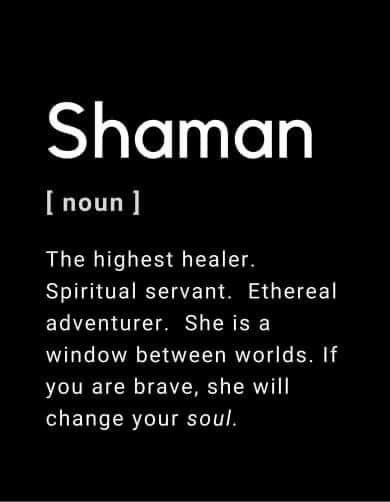

Patriarchy Against the Feminine in Shamanism
I feel saddened to be having to write this post, which is about men being triggered by women talking about the feminine in Shamanic culture. This sadness stems from the realisation that patriarchal energy is still alive and strong even in the spiritual community – and I have seen it flowing through women too.
When I read this post from a Shamanic group on my FaceBook newsfeed I felt my heart open with a really powerful resonance.

I received the realisation of looking back at a long linage of women who were in service to others and I felt fortified by that strong female heritage behind me. It felt empowering to be part of that history.
At no point did I consider that making a statement about the feminine in relation to Shamanism would be considered to be controversial by anyone. Surely my male friends would want to celebrate the feminine energy if they knew of its power?
Apparently not. It seems that some men read this post and became upset. But instead of walking away from it with the realisation that they need to go and work on their own stuff, they stopped to take the time to project their issues onto me.
The first man said ‘why not a man?’. Well my initial response was that I didn’t say that a Shaman couldn’t be a man. Indeed much of the history of Shamanism is written by men and is about men. As a female Shaman I often feel excluded by the strong masculine energy within the practice which is similar to how I felt twenty years ago as an art student walking the halls of big museums looking at the world through the male gaze.
The past 5,000 years of patriarchy have successfully edited the feminine influence from every aspect of social history so that as a female scholar one struggles to find books about women artists or Shamen written by women and focussing on feminine perspectives. The further back in history we go the stronger the male narrative becomes with misogynistic tendencies completely normalised and accepted.
I was listening to a podcast by Gene Decode last night. He is a former military man who had a spiritual awakening and is now an intuitive in the truther movement discerning what is true intelligence about current events by using his psychic abilities. A caller into Gene’s Q&A show asked why there were missing elements from both the Platonic Solids (Spheres and Toroids) and the Greek Elements (Aether, Wood, and Metal). Gene responded that the missing elements are feminine and that feminine has been disregarded by the control system because of its power. Hence we had witch hunts where it was acceptable to falsely accuse a woman, subject her to sexual abuse, and then kill her in the most horrific way as a sacrifice to Satan.
He said that if society knew the true power women hold then all the repression would stop.
Later on another post popped up on my newsfeed which again observed the role of the feminine in Shamanic practice and related it to creative force women hold. It was attributed to an article in Tom Tom magazine but the author was not mentioned.
The most interesting and least well-known aspect of shamanism is the traditional role of women, both as shamans and drummers. British scholar Geoffrey Ashe wrote that shamans were originally women, and that the oldest form of the word ‘shaman’ is gendered female. Across Asia, female shamans have been observed since the dawn of modern anthropology, and even male shamans in some native cultures around the world have worn women’s clothes and striven for an androgynous persona in ritual to better connect with the spirit world. Some of the oldest known ritual burials were of female shamans or priestesses, in areas as far apart as Germany and Israel, dated from 8,000-12,000 years ago. How women came to embody this role so early in human history isn’t known, though their ability to produce life is most likely the answer. Ritual drums were often painted red to depict menstrual blood, had symbols of the vulva, and rituals centered around fertility and fecundity.
Feminine power therefore stems from the womb and the unique female ability to create new life which in turn feeds into the healing role of the Matriarch in tribal culture. It is an older woman’s life experience and deep understanding of the body and its natural cycles and magical rites of passage from maiden, mother, to crone that brings her to the role of healer. By coming to terms with the rhythms and changes in her own body she can assist others who are experiencing the same issues. She can guide the younger woman through menstruration, pregnancy, birth, mothering, and the menopause helping her to find the lessons and gifts they bring.
This notion of feminine bodily experience as the root of healing others is echoed in the words of Jane Hardwicke Collings founder of the School of Shamanic Womancraft in Australia:
The shaman was the community healer, seer and gatekeeper between the worlds, the spiritual ceremonialist and often the midwife. She worked with herbs, dreams, symbols, ceremony, ritual, oracles and journeying in trance states to other realms for the purpose of healing and mediation for others. Nature was her guide; she understood the interconnectedness of all things.
https://schoolofshamanicwomancraft.com/wp-content/uploads/2018/05/Shamanism.pdf
It is likely that early tribal cultures would have found the process of gestation and birth a magical alchemical act. The ability to make another human from sperm inside the magical space of the womb would have revered the feminine in society. Men perhaps would have marvelled at the ability of their beloved to bring an heir of a blood lineage. This reverence is likely what first created the matriarchal cultures that came before patriarchy.
But I experienced anything but reverence for the feminine from a male Shaman friend of mine. When I read his response my heart shuddered with disgust for what he had written: that I was wrong. It is interesting that he was projecting his anger at me because the words I posted were not mine, they were written by a male writer. Therefore should it not be the writer who is wrong?
As a former admin on a natural health group I know how those who are Archontically controlled can deplete our energy with pointless arguing. As such I have learned to let others hold their own opinions without wasting my time giving the alternative view. If people try to argue with me now I just scroll past and feel confident in my ability to not allow others to intrude into my personal space. I hold my frequency high and am unaffected by the anger of others.
I deleted the comment and deleted the person as a friend as it isn’t the first time I have felt this intense negative energy directed towards me from him. I wondered though, what evidence is there that I am wrong? Of course in his egoic state of anger at my audacity as a female to associate Shamanism with the feminine he did not cite any published works.
So I decided to do my own research into the notion of the feminine in Shamanism and I’ve been fascinated with the research I have found – expect more from me on this topic.
 0
0