Posts Tagged: Emotional abuse
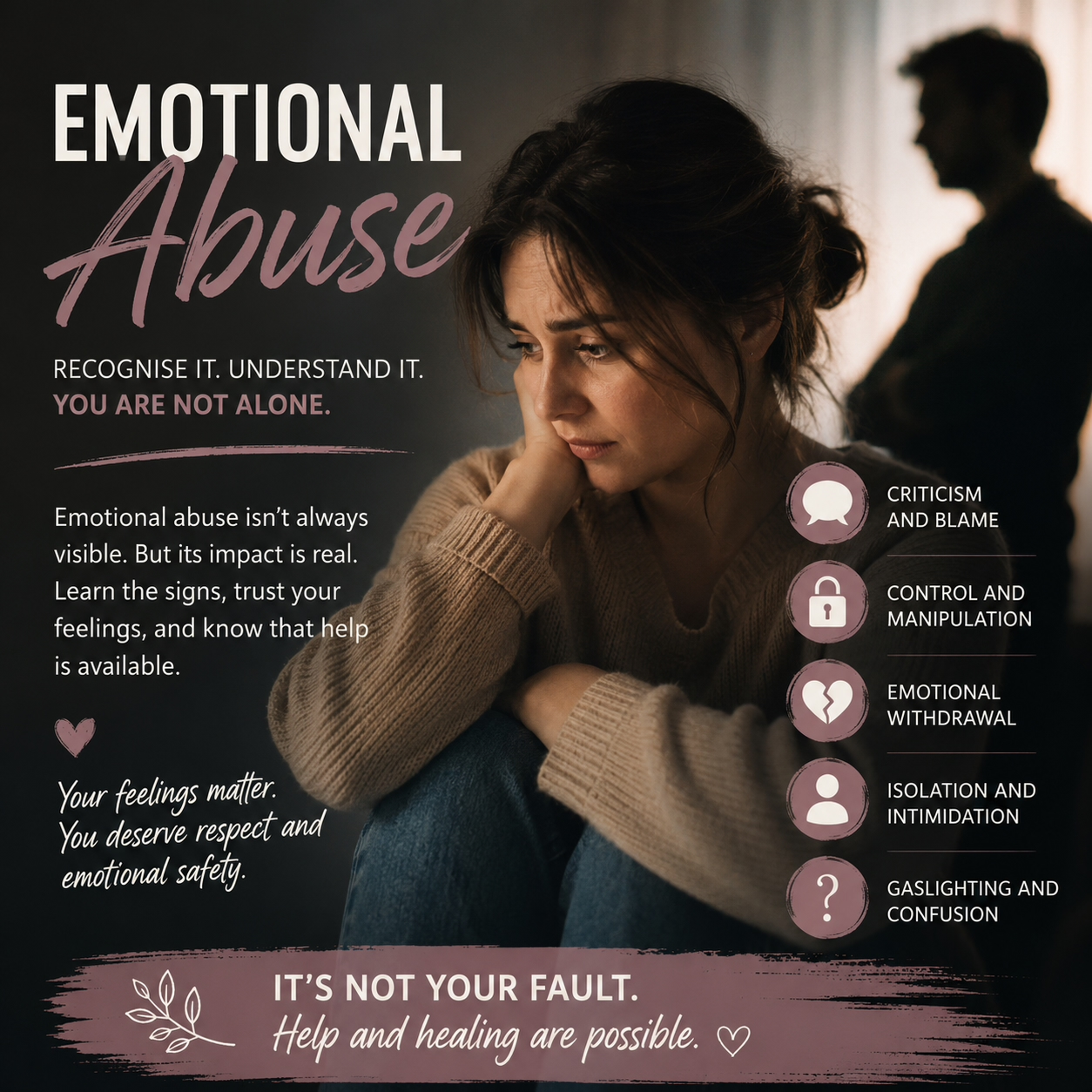
Emotional Abuse
In this article, we will look at what emotional abuse is, how it can show up in everyday relationships, and why it can be so difficult to recognise while it is happening. We will explore common patterns such as criticism, control, gaslighting, blame-shifting, emotional withdrawal, and intimidation, as well as the effect these behaviours can have on a person’s confidence, well-being, and sense of self. The aim is to help readers identify unhealthy dynamics more clearly, trust their own perceptions, and begin thinking about what support, boundaries, or next steps may be needed.
What is Emotional Abuse?
Emotional abuse is a pattern of behaviour to undermine another person’s confidence, independence, and sense of reality. Unlike a normal conflict, emotional abuse is not simply about hurt feelings or disagreement; it is about power and control. Because emotional abuse often happens privately and may be subtle or denied by the person causing harm, it can be difficult to recognise, but its impact can be deeply damaging.
Emotional abuse is best understood as a repeated pattern of behaviour rather than a single isolated incident. The key elements often include power and control, manipulation, criticism, blame, intimidation, emotional withdrawal, humiliation, isolation, and the distortion of reality through gaslighting or denial.
These behaviours may be subtle at first, but over time they can create a relationship dynamic in which the person on the receiving end feels increasingly anxious, confused, ashamed, overly responsible, isolated, diminished, unable to trust their own judgment, or afraid to express their own needs. What makes the behaviour abusive is the way it is used repeatedly to destabilise the other person, reduce their confidence, and keep them emotionally dependent, compliant, or unsure of themselves.
Identifying Emotional Abuse
We can begin to identify emotional abuse by looking less at isolated incidents and more at the repeated emotional pattern of the relationship. Ordinary conflict may involve disagreement, frustration, or hurt feelings, which are quickly resolved through apologies and discussion.
In contrast, emotional abuse tends to leave one person feeling consistently smaller, confused, anxious, guilty, afraid, or responsible for keeping the other person calm.
We may recognise that we are in an emotionally abusive relationship if we notice a repeated pattern in which our confidence, freedom, judgement, or emotional well-being is being worn down. We may feel as though they are constantly walking on eggshells, apologising to keep the peace, doubting our own memory or perception, or changing our behaviour to avoid criticism, anger, sulking, ridicule, or withdrawal.
Signs can include being belittled, blamed, mocked, isolated from friends or family, controlled financially or socially, threatened, intimidated, ignored as punishment, or made to feel “too sensitive” when they try to raise concerns.
A key warning sign is that the relationship no longer feels emotionally safe: instead of feeling respected and able to speak freely, the person feels confused, diminished, anxious, trapped, or afraid of the consequences of being themselves.
The most useful question for the reader is: “Do I feel more like myself in this relationship, or less?” Emotional abuse often creates self-doubt and dependence; coercive control can include isolation, monitoring, threats, financial control, and intimidation, and it is recognised in UK domestic abuse guidance as a serious pattern of harm.
Why is Emotional Abuse Happening?
If we are someone who is naturally happy and who enjoys making friends and spending time with people, we may begin to wonder why emotional abuse can occur. What purpose does it serve in any relationship?
People may become emotionally abusive for different reasons, but the behaviour often has one central function: it gives them power, control, or emotional relief at another person’s expense. Some people have learned these patterns in childhood, some feel deeply insecure or threatened by another person’s independence, and some use blame, criticism, intimidation, withdrawal, or manipulation because they cannot manage their own shame, anger, jealousy, fear, or vulnerability in a healthy way.
Others may have a strong sense of entitlement, a need to dominate, or narcissistic traits that make it difficult for them to take responsibility for the impact of their behaviour.
Whatever the cause, emotional abuse is not caused by the victim, and it should not be excused as stress, love, trauma, or passion. The responsibility remains with the person using abusive behaviour to recognise it, stop it, and seek help if they are unable to change.
Understanding Is Not Excusing
Understanding why someone behaves abusively is not the same as excusing the behaviour. A person may have experienced trauma, insecurity, abandonment, shame, or unhealthy relationship patterns in their own past, but these experiences do not give them the right to control, intimidate, belittle, manipulate, or emotionally harm another person.
Explanations can help us recognise where abusive patterns may come from, but responsibility still belongs to the person choosing those behaviours. This distinction is important because victims of emotional abuse are often encouraged to feel sorry for the abuser, understand their pain, or make endless allowances for their wounds. Compassion may explain someone’s suffering, but it should never be used to minimise the damage they cause or to pressure another person into staying in an unsafe relationship.
What to Do If You Think You Are Being Emotionally Abused
If something does not feel right in a relationship, that concern is worth expressing to a trusted friend or therapist, especially where hurtful behaviour is repeatedly excused or minimised.
If you think you may be in an emotionally abusive relationship, try to take your concerns seriously, even if the other person denies the behaviour or tells you that you are overreacting. Emotional abuse often creates confusion and self-doubt, so it can help to step back and look at the pattern: how often it happens, how it makes you feel, and whether you feel free, safe, respected, and able to be yourself.
You may want to keep a private record of incidents, speak to someone you trust, contact a therapist, GP, or specialist domestic abuse service, and begin thinking carefully about your emotional and practical safety. It is usually safer not to confront an abusive person impulsively, especially if there is intimidation, coercive control, threats, stalking, financial control, or fear of escalation.
Support can help you make sense of what is happening, rebuild trust in your own judgement, and consider your next steps at a pace that feels safe.
Shamanic Healing for Emotional Support
Shamanic healing may assist someone recovering from emotional abuse by helping them reconnect with their own inner strength, intuition, and sense of self after a relationship that has left them feeling diminished, confused, or disconnected. Emotional abuse can affect a person not only psychologically, but also spiritually and energetically, leaving them feeling drained, fragmented, fearful, or unable to trust their own judgement. Within a safe and supportive healing space, shamanic work may help the person release emotional heaviness, restore personal boundaries, recover lost confidence, and begin to feel more grounded in their own body and truth. It offers healing for those seeking to rebuild their energy, reclaim their voice, and move towards a deeper sense of wholeness through Extraction, to remove any darkness, Soul Retrieval, to get your soul parts (life force energy) back from an abuser, and Shamanic Subconscious Repatterning to reprogramme the subconscious from trauma response to a new way of being.
Further Reading
This blog post is part of a recent series exploring my experience of abusive behaviour in daily life:
Read about my experience of one-sided communication here: https://www.roseautumn.com/2026/06/when-someone-talks-at-you/
Read about my experience of emotional dumping here: https://www.roseautumn.com/2026/06/emotional-dumping
Read about my experience of setting boundaries here: https://www.roseautumn.com/2026/06/boundary-setting-reactions/
Read about my experience of gaslighting here: https://www.roseautumn.com/2026/06/gaslighting/
For further information about Shamanic Healing, go to: https://www.roseautumn.com/shamanic-healing/
About Rose
Rose is a Shamanic Practitioner trained in traditional shamanism. She is a member of the Federation of Holistic Therapists and is fully insured for in-person and distance Shamanic Healing sessions, as well as Shamanic Life Coaching. She specialises in supporting people recovering from narcissistic abuse.
Rose works without hallucinogenic or psychedelic plant medicines. Instead, she uses an ancient drumming method to access this altered state of consciousness. A session may include a tailored combination of Power Animal Retrieval, Divination, Soul Retrieval, Energy Body Healing, Psychopomp, and Extraction to remove negative energy and blockages.
Each session with me includes Shamanic Subconscious Repatterning. A powerful system that changes the subconscious programmes that drive unwanted behaviour. This method heals trauma at its source, removes the self-limiting programme, and then rewrites a new way of being.
Shamanic Healing can be accessed face-to-face in the Rose Healing Room, Petersfield, East Hampshire or remotely through Distance Healing Sessions. Because the work is carried out in the Spirit Realm with the support of Rose’s Spirit Guides, the client does not need to be physically present in the same room. Distance sessions are narrated in real time, and clients receive an audio recording by email afterwards.
For further information about Shamanic Healing, go to: https://www.roseautumn.com/shamanic-healing/
 0
0