Shamanic Healing for Borderline Personality Disorder
Borderline Personality Disorder (BPD) is often misunderstood, stigmatised, and spoken about in ways that miss its deeper truth. Rather than being a “personality flaw,” BPD is increasingly understood as a nervous-system and attachment response shaped by early relational trauma. Behind the intense emotions, fear of abandonment, and relationship difficulties is a highly sensitive system that learned to stay in survival mode to cope. This article explores BPD through a trauma-informed, compassionate lens — focusing on what’s really happening beneath the behaviours, and how healing becomes possible when safety and regulation are restored.
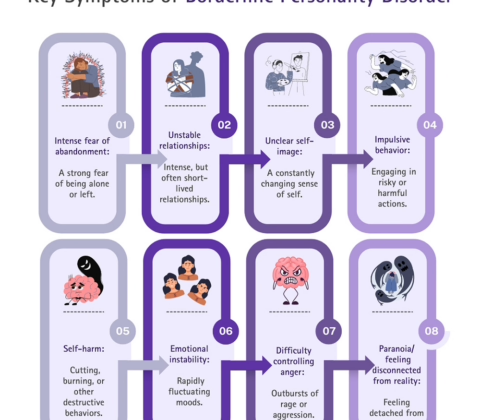
Core Features
-
Emotional instability – intense, rapidly shifting emotions (anger, sadness, anxiety) often triggered by relationships
-
Fear of abandonment – extreme sensitivity to real or perceived rejection; frantic efforts to avoid being left
-
Unstable relationships – idealising someone one moment, then devaluing them the next (“all good / all bad” thinking)
-
Unstable self-image – shifting sense of identity, values, goals, or sense of self
-
Impulsivity – risky behaviours (spending, sex, substances, binge eating, reckless driving)
-
Self-harm or suicidal behaviour – cutting, burning, threats or attempts (not always present, but common)
-
Chronic emptiness – persistent feelings of inner void or boredom
-
Intense anger – difficulty controlling anger; outbursts or simmering resentment
-
Stress-related paranoia or dissociation – feeling unreal, disconnected, or suspicious under stress
Key Patterns
-
Emotion-driven reactions rather than reasoned responses
-
Black-and-white thinking (splitting)
-
High sensitivity to tone, silence, or small changes in others
-
Symptoms often ease with age, especially with therapy
Important Notes
-
BPD is not a character flaw — it’s a trauma-linked nervous system pattern
-
Many people with BPD are highly empathetic, intuitive, and creative
-
Effective treatments exist, especially Dialectical Behaviour Therapy (DBT)
Cause of BPD
In my experience, those with BPD are empaths who grew up with Narcissistic Abuse from Narcissistic Mothers. A caregiver with Narcissistic Personality Disorder will cause many emotional problems in children. Those children who are very sensitive will be the worst affected and may end up with extreme damage in the form of BPD. Children will be further affected by harsh and unfair treatment by teachers, resulting from the institutional narcissism within schools.
How Shamanic Healing Can Support Recovery from BPD
Shamanic Healing approaches recovery from Borderline Personality Disorder by working at the level where many BPD patterns originate: the subconscious, energetic, and nervous-system imprint of early trauma. Rather than focusing on symptoms alone, shamanic work seeks to restore wholeness, safety, and inner sovereignty.
Shamanic Subconscious Repatterning
Shamanic Subconscious Repatterning, as offered by Rose, supports recovery from BPD by addressing the deep-rooted subconscious programmes and emotional imprints that drive automatic responses and survival patterns. This approach uses shamanic journeying to access and shift dysfunctional, self-limiting beliefs held in the subconscious mind, replacing them with more empowering patterns that reduce reactivity, fear-based behaviours, and emotional overwhelm — essentially rewiring how the limbic (emotional) brain responds to triggers. By releasing old trauma imprints, removing energetic blockages, and reinstating lost life-force energy, Shamanic Subconscious Repatterning can help people with BPD feel more grounded, regulated, and in control of their emotional responses, creating space for new, healthier ways of being.
Restoration
From a shamanic perspective, chronic emotional instability, fear of abandonment, and identity disturbance can be understood as forms of power loss — where parts of the self disconnect during overwhelming experiences. Practices such as soul retrieval and energy-body clearing are designed to gently restore these lost aspects, allowing the individual to feel more grounded, present, and internally anchored.
Drumming
Shamanic healing also emphasises regulation through the rhythm of the drumming to calm the nervous system, bringing it out of survival mode and into a state of connection and safety. This mirrors modern somatic trauma approaches, helping emotions become less overwhelming and more manageable over time.
Indirect Healing
Another key element is working with spiritual allies and symbolic imagery rather than cognitive analysis alone. For many people with BPD, direct talking can re-trigger emotional flooding. Shamanic work allows healing to occur indirectly, through imagery, sensation, and felt experience, bypassing the analytical mind while still creating profound shifts in behaviour and emotional response.
Nervous System Regulation
Importantly, shamanic healing can support nervous-system regulation, repair attachment wounds, and strengthen a sense of inner stability. Over time, this combination can help individuals move from survival-driven reactions toward greater self-trust, emotional balance, and a felt sense of belonging within themselves.
Restoration
At its core, shamanic healing reframes recovery from BPD not as “fixing what is broken,” but as remembering what was lost — and restoring the individual’s innate capacity for balance, connection, and self-compassion.
 0
0 0
0
 20
20