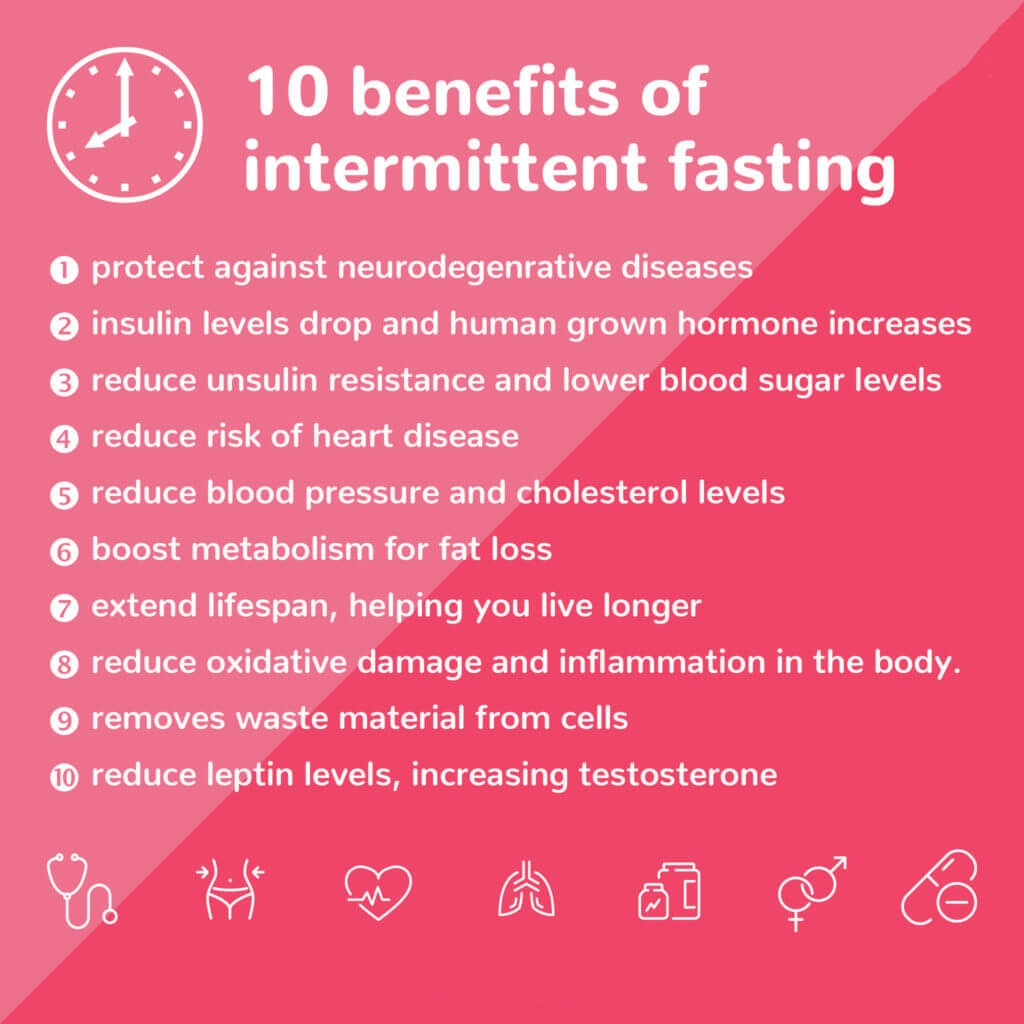
Fasting & Human Growth Hormone: Boost Your Health

One of the benefits of fasting is the production of Human Growth Hormone (HGH).  HGH is a peptide hormone made by the pituitary gland that plays a central role in growth, tissue repair, metabolism, brain function, and healthy ageing. It’s sometimes called the body’s repair and regeneration hormone.


What Human Growth Hormone (HGH) Does

HGH affects almost every system in the body:

1. Cell Repair & Regeneration

  • Stimulates tissue repair (muscle, skin, organs)

  • Increases collagen production → healthier skin and joints

  • Speeds wound healing

2. Muscle & Fat Metabolism

  • Promotes fat burning (lipolysis)

  • Preserves lean muscle mass

  • Shifts the body toward using fat and ketones for fuel

3. Brain & Nervous System

  • Supports neuroplasticity and memory

  • Improves sleep quality (especially deep sleep)

  • Supports mood regulation

4. Immune & Longevity Effects

  • Enhances immune cell regeneration

  • Supports mitochondrial health

  • Declines naturally with age (significantly after ~30)


What Happens to HGH When We Fast

Fasting is one of the strongest natural stimulators of HGH.

During Fasting:

  • Insulin drops

  • Blood glucose stabilises

  • HGH rises dramatically

Studies show:

  • 24-hour fast → HGH increases up to 5×

  • 48-hour fast → HGH may increase 10–20×

This rise happens because:

  • Low insulin removes suppression of HGH release

  • The body shifts into repair mode rather than growth mode

  • HGH protects muscle while fat is burned


Why HGH Rises During Fasting (Evolutionary Logic)

From a survival standpoint:

  • When food is scarce, the body does not want to break down muscle

  • HGH preserves muscle and organs

  • Energy is drawn from stored fat

  • Repair processes are prioritised

This is why fasting often leads to:

  • Fat loss without muscle loss

  • Mental clarity

  • Reduced inflammation


HGH, Autophagy & Healing

HGH works alongside autophagy (cellular recycling):

Process Role
HGH Repairs and rebuilds tissue
Autophagy Clears damaged cells and proteins

Fasting activates both — creating a powerful clean-up and repair cycle.


Health Benefits Linked to Fasting-Induced HGH

  • Improved insulin sensitivity

  • Reduced inflammation

  • Enhanced fat loss

  • Skin rejuvenation

  • Better recovery from injury

  • Possible longevity benefits

This is why fasting is used therapeutically in:

  • Metabolic syndrome

  • Inflammatory conditions

  • Neurodegenerative disease research

  • Anti-ageing medicine


What Blocks HGH Release

To maximise natural HGH:

  • ❌ Frequent snacking

  • ❌ High sugar intake

  • ❌ Late-night eating

  • ❌ Alcohol before sleep

  • ❌ Chronic stress and poor sleep


Natural Ways to Increase HGH (Without Fasting)

  • Deep sleep (especially before midnight)

  • Resistance training

  • High-intensity exercise

  • Protein cycling (not constant grazing)

  • Cold exposure

  • Short fasts (14–18 hours)


Important Safety Notes

Fasting is not appropriate for everyone. Avoid or seek supervision if you have:

  • Eating disorders

  • Pregnancy or breastfeeding

  • Advanced adrenal fatigue

  • Type 1 diabetes

  • Certain medications


A Nervous-System Perspective

From a trauma-informed and somatic lens:

  • Fasting shifts the body from sympathetic “survival” mode into parasympathetic repair

  • Lower insulin and inflammation reduce nervous-system hypervigilance

  • HGH supports restoration rather than defence

This is one reason many people report emotional clarity or spiritual insight during fasting — the nervous system is no longer dominated by constant metabolic demand.


1️⃣ What Happens Between 14–18 Hours of Fasting

By ~12–14 hours

  • Insulin is low and stable

  • The body switches from glucose → fat burning

  • Hunger hormones (ghrelin) begin to calm

  • Mental clarity often improves

By ~14–16 hours

  • HGH rises significantly (muscle-protective, fat-burning)

  • Autophagy begins (cellular clean-up)

  • Inflammation starts to reduce

  • Gut gets a true rest-and-repair window

By ~16–18 hours

  • Deeper fat metabolism and ketone use

  • Improved insulin sensitivity

  • Increased mitochondrial efficiency

  • Nervous system shifts toward parasympathetic repair

  • Appetite regulation improves long-term

This window is where many people get most of the benefits with the least stress.


2️⃣ Key Benefits of 14–18 Hour Fasting

Metabolic & Hormonal

  • Fat loss without muscle loss

  • Lower insulin resistance

  • Improved blood sugar control

  • Increased HGH release

Brain & Nervous System

  • Better focus and calm

  • Reduced anxiety and reactivity

  • Improved sleep quality over time

Digestive & Immune

  • Gut lining repair

  • Reduced bloating and inflammation

  • Improved microbiome rhythm

Anti-Ageing & Repair

  • Autophagy activation

  • Cellular renewal

  • Reduced oxidative stress


3️⃣ Is It Good to Do This Daily?

Yes — for most people, daily 14–16 hours is:

  • Safe

  • Sustainable

  • Beneficial long-term

This is often called time-restricted eating rather than “fasting” in the clinical sense.

18 hours daily, however, depends on the person.


4️⃣ Does Daily Fasting Achieve Better Results?

Consistency > Length

Approach Result
Daily 14–16 hrs Steady metabolic repair
Occasional 18 hrs Deeper fat & autophagy pulses
Random fasting Less effective
Constant grazing Worst outcomes

Daily fasting works best because:

  • Insulin remains consistently low

  • Hormones re-entrain to a rhythm

  • Hunger signals reset

  • The nervous system learns safety in stillness

Results compound over weeks, not days.


5️⃣ When Daily Fasting Can Be Too Much

Be cautious with daily 18-hour fasts if you notice:

  • Cold intolerance

  • Fatigue or dizziness

  • Sleep disturbance

  • Hair thinning

  • Loss of menstrual regularity

  • Increased anxiety or irritability

These are signs of excess stress, not healing.


6️⃣ Best Practice: A Nervous-System-Friendly Approach

Given your interest in trauma-informed healing, this matters.

🌿 Recommended rhythm:

  • Most days: 14–16 hours

  • 1–2 days per week: 16–18 hours (if it feels easy)

  • Occasional rest days: 12–13 hours

This avoids turning fasting into a stressor.


7️⃣ What to Eat When You Break the Fast (Very Important)

To avoid cortisol spikes:

  • Protein first

  • Healthy fats second

  • Carbs last (if included)

Avoid:

  • Sugary foods

  • Large caffeine doses on an empty stomach

  • Ultra-processed foods


8️⃣ Who Benefits Most From Daily 14–16 Hour Fasting

  • Insulin resistance or weight gain

  • Inflammation or auto-immune issues

  • Brain fog or fatigue

  • Emotional dysregulation

  • Poor sleep


9️⃣ Who Should Be Careful or Avoid Daily Fasting

  • History of eating disorders

  • Pregnancy / breastfeeding

  • Underweight individuals

  • High chronic stress or burnout

  • Certain endocrine conditions


🔑 Bottom Line

Yes — daily 14–16 hour fasting is one of the most reliable, low-risk health interventions available.

  • It works because it’s rhythmic, not extreme

  • Daily consistency beats long fasts

  • 18 hours is powerful but optional, not required

error0
fb-share-icon0
fb-share-icon20

Leave a Reply

Your email address will not be published. Required fields are marked *

Discover more from Rose Autumn MA MFHT

Subscribe now to keep reading and get access to the full archive.

Continue reading