Posts Tagged: Rose Autumn MA Artist
A Return to Painting: Beginning a New Landscape Series
After 20 years of specialising in photorealistic charcoal drawings of domestic interiors, I am beginning a new chapter in my work as an artist: a return to painting, inspired by my long dog walks in the beautiful South Downs.
Although many people know my work through highly rendered realist charcoal drawings, my original training was in painting. I studied at City & Guilds of London Art School, where I gained a First Class in BA Painting and a Distinction in MA Painting, before developing a professional practice centred on drawing, perception, atmosphere, and psychological space.
For many years, charcoal became my primary medium. I was drawn to its ability to hold subtle tonal shifts, deep velvety blacks, soft greys, and the quiet drama of light emerging from darkness. My drawings explored domestic interiors, architectural space, memory, and the emotional charge of rooms. They were realist in technique, but not simply descriptive. I was always interested in what lies beneath appearances: atmosphere, unease, stillness, memory, and the unseen life of interior spaces.
My 2011 solo exhibition, Interior Castle, at Long & Ryle in London, brought many of these concerns together. The drawings used interiors as psychological and symbolic spaces, inviting the viewer into rooms that felt intimate, mysterious, and charged with hidden meaning. That body of work drew on both visual discipline and inner contemplation.
Now, after a long period of working in monochrome, I feel called back to painting.
This return has come gradually over the past six years since I moved to Hampshire. Walking my dog through the local landscape around the South Downs, I have found myself looking again at trees, fields, pathways, skies, and changing light with a painter’s eye. The landscape is not static; it shifts constantly. A familiar walk can feel completely different depending on the weather, the season, the time of day, or one’s own inner state.
Since becoming a Shamanic Practitioner, my relationship with landscape has also changed. I no longer experience nature simply as scenery or subject matter. I am increasingly aware of place as presence: alive, layered, and communicating through Spirit.
This new direction is not a rejection of my earlier work. It feels more like a continuation, but with a shift in focus. The discipline of close observation, the sensitivity to tone, and the search for atmosphere are still there. What is changing is the medium, the subject, and the emotional register.
In the charcoal drawings, I was often looking inward through the language of interiors as a representation of psychological space. In these new paintings, I am turning outward towards the land. But the deeper concern remains the same: how to make visible something felt but not easily described.
I am especially interested in the point where landscape becomes more than representation. I do not want to paint illustrative views. I am interested in the edge between observation and abstraction: the way trees can dissolve into mass and movement, how distant forms become rhythm and tone, how colour can carry mood, and how paint itself can suggest energy, weather, spirit, and memory.
This feels both like a return and a beginning.
It is a return to painting, to colour, to the material presence of paint, and to the training that first shaped me as an artist. But it is also a beginning because I am approaching landscape from a very different place in my life. I bring to it the patience and precision of drawing, the experience of years spent looking deeply, and a new spiritual relationship with the natural world.
Over the coming months, I will be sharing the development of this new body of work: studies, experiments, thoughts on materials, and reflections on the process of moving from charcoal drawing back into landscape painting.
For those who have followed my work for many years, I hope this new direction will feel both recognisable and surprising. For those encountering my work for the first time, I hope it offers an invitation to look again at the landscape — not only as something seen, but as something felt.
For further information about my practice, visit: https://www.roseautumn.com/artist/
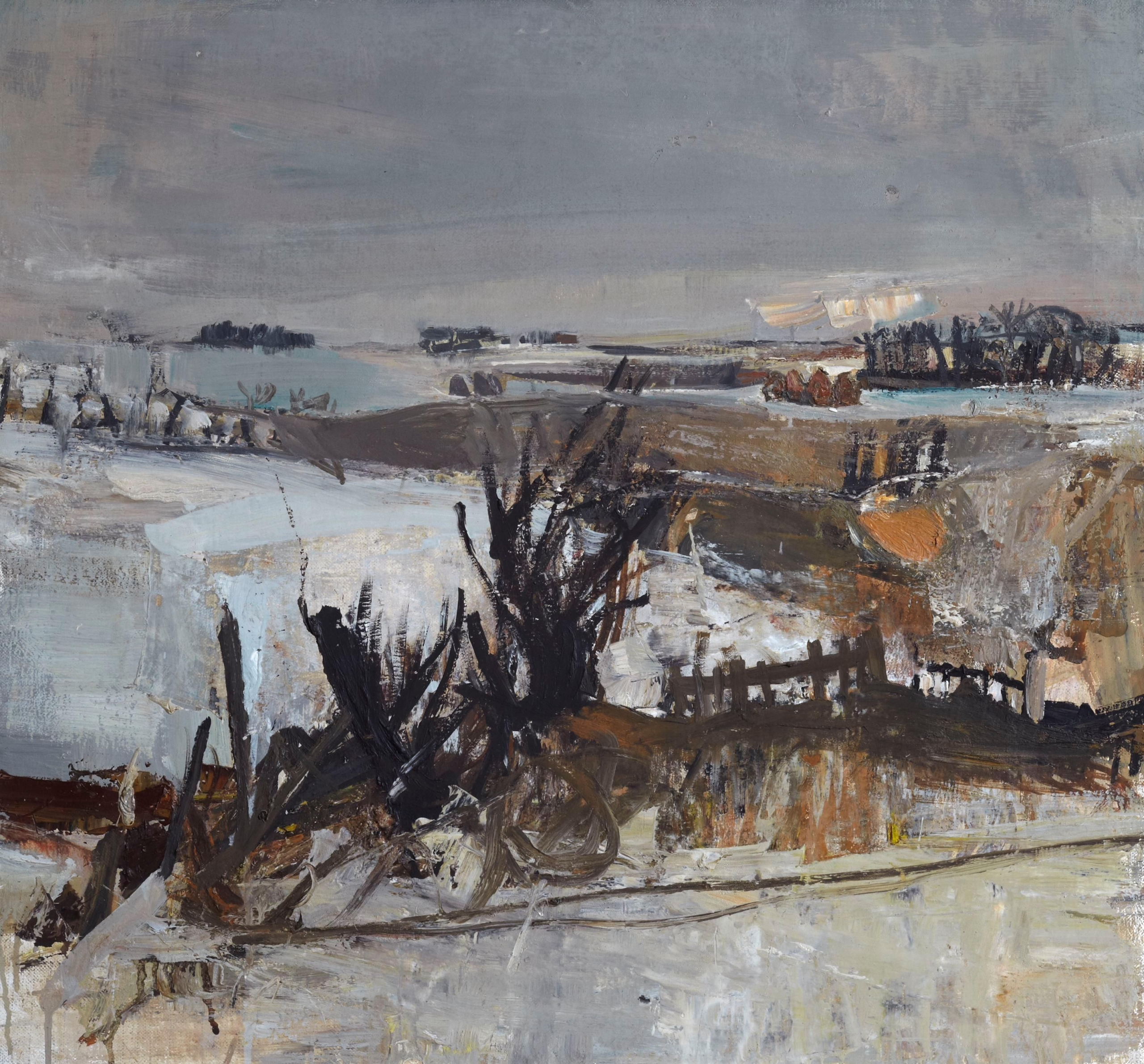
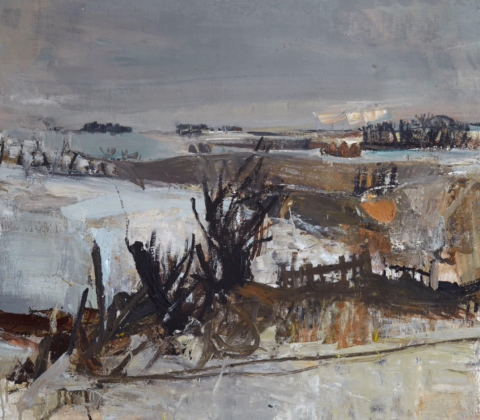
Over the past few months, I have been deeply inspired by the Catterline landscape paintings of Joan Eardley, where the land becomes abstracted, and we are aware of the substance of the paint itself.
Fields Under Snow, 1958
 0
0