The Tragedy of the Weeping Willow: A Shamanic Perspective on Our Relationship with Trees
Can you hear the weeping of the cut willow?
As a Shamanic Practitioner, I understand that Shamanism considers Mother Earth to be alive. A living realm in which plants, animals, stones, rivers, and mountains form an interconnected community of spiritual beings. Relationships extend far beyond the human experience. Within this understanding, a tree is not merely a natural object, but a living presence with its own spirit, its own existence, and its own relationship with the land and the beings who share it.
I believe the way we treat trees reveals the way we relate to the wider natural world. This is why a recent visit to The Heath in Petersfield shook me so deeply.
The Visit
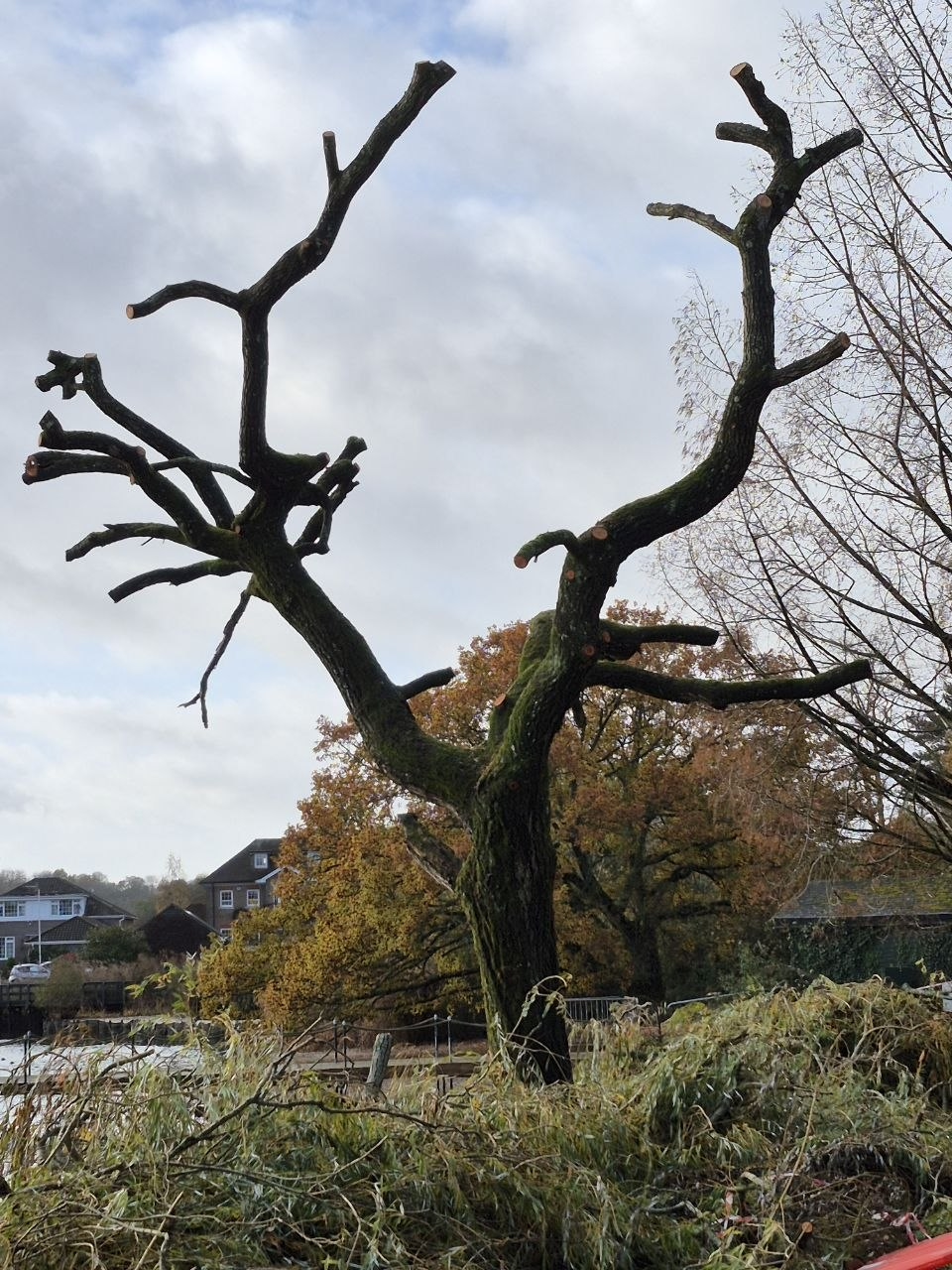
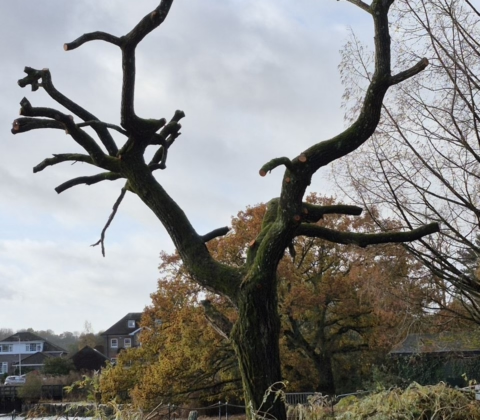
On Tuesday 17 November 2026, I went to The Heath for the first time since the summer. When I reached the Plump Duck Cafe, what I found there left me shaken: the Weeping Willow had been so heavily pruned that it had lost its entire canopy.
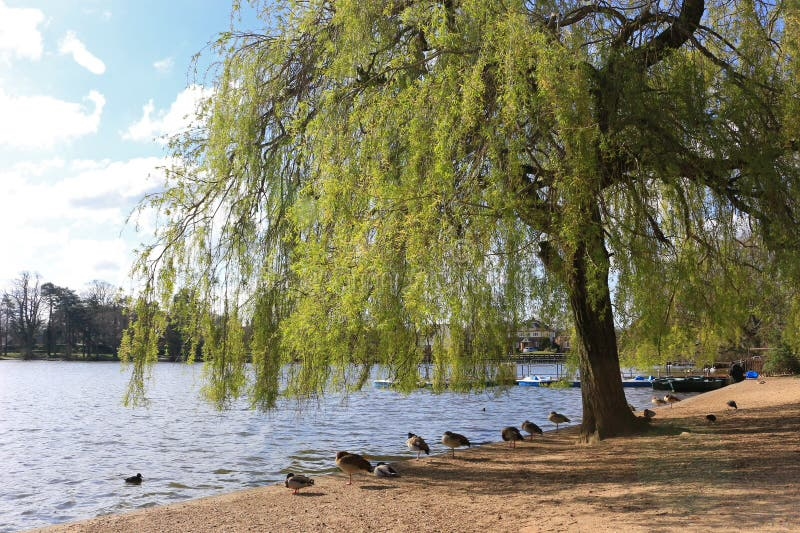
For seven years I had known that willow as a graceful deciduous tree, recognised by the long, slender branches that hang towards the ground and form a curtain of foliage. The name ‘weeping willow’ comes from the way those branches droop to the earth, like falling tears.
Stripped of its beautiful cascading form, the willow stood a stark and sorrowful sight against the autumnal colours of the Heath.
What Was Done to the Tree
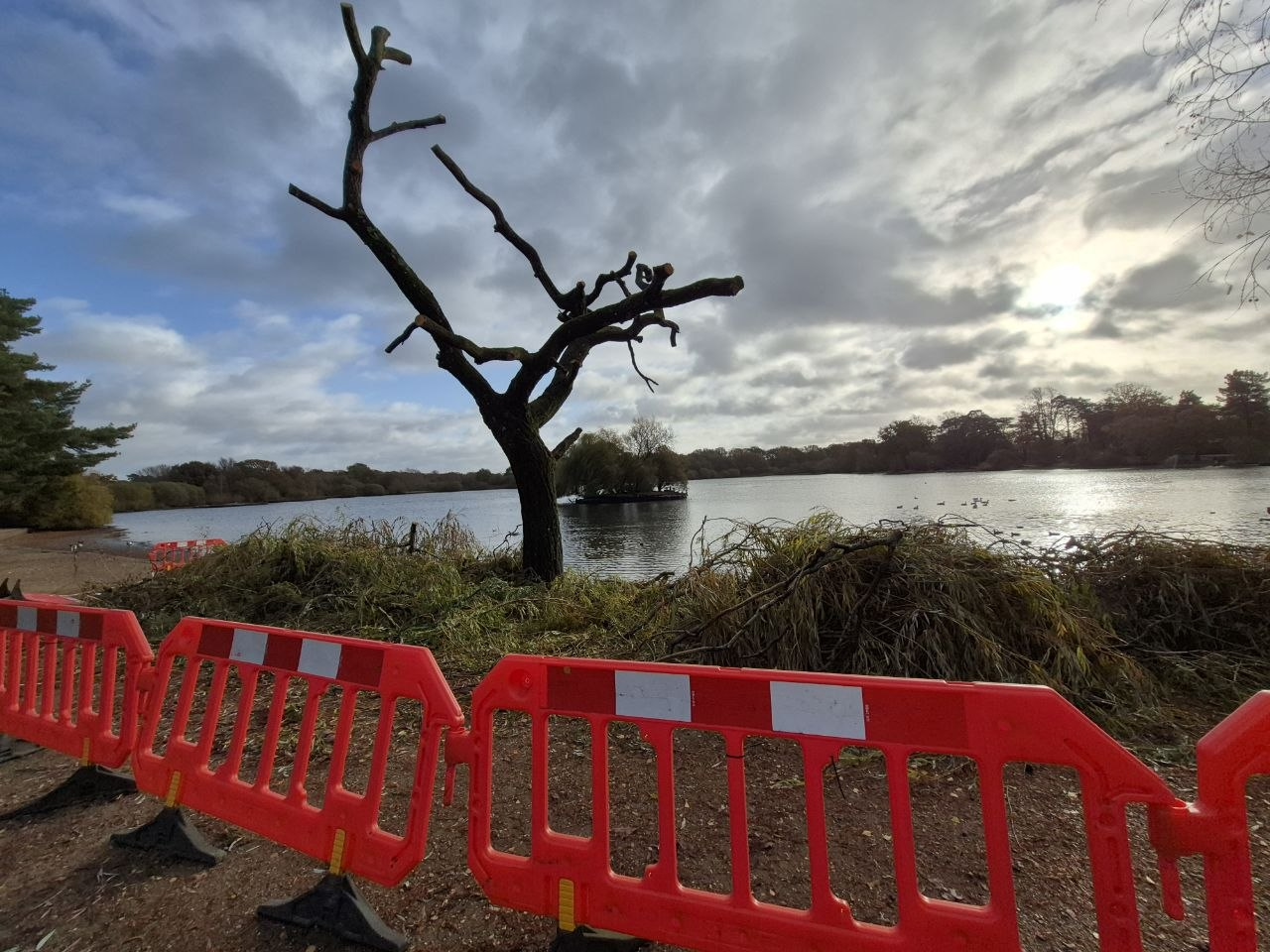
The pruning was extreme. The tree had been reduced to its main trunk and a few substantial branches, several of them cut back to short stumps — an act that appears to have been very heavy crown reduction or pollarding. The result was the removal of the willow’s entire characteristic canopy.
These abrupt cuts have left large exposed wounds. The ground beneath was strewn with substantial quantities of cut branches, which tells me that a great deal of the tree’s structure had been removed.
There are possible long-term consequences:
Physiological stress — the removal of much of the living crown reduces the tree’s photosynthetic capacity and removes some of the energy reserves stored in its branches.
Decay — large pruning wounds can provide entry points for decay fungi.
Weak regrowth — the new shoots that arise around a major cut may become large branches with insecure attachments.
Loss of natural form — the cascading silhouette of a weeping willow may take many years to recover, if it recovers at all.
https://www.rhs.org.uk/plants/types/trees/pollarding
https://www.rhs.org.uk/plants/types/trees/reducing-size-safely
Petersfield Town Council
Petersfield Town Council’s published Five Year Plan of Coppicing around the Heath specifically identifies the weeping willow, describing the proposed work in 2020 as “clip and prune up weeping willow”. https://www.petersfield-tc.gov.uk/projects/work-on-the-heath/
Petersfield Town Council announced on 4 November 2026 that tree surgeons would be undertaking safety work on the Heath and other council-owned green spaces. However, I have found no publicly available explanation of why this particular willow required such drastic intervention. That leaves an important question unanswered: was the total loss of the tree’s characteristic form unavoidable?
A tree may survive for decades and eventually produce new growth, but survival and good arboricultural care are not necessarily the same thing.
Trees as Beings, Not Property
Unconscious societal programming in the West has conditioned us to regard nature as human property; something to be owned, managed, and exploited. Whereas many indigenous cultures hold a different understanding. They see themselves not as owners of the land but as its custodians — participants in the Web of Life, in which the spirits of trees and plants are honoured, and relationships of reciprocity run between people, plants, animals, the land and the wider spiritual world.
The Westerner asks: Is this our tree and are we entitled to cut it?
The animistic question is different. It asks: Why is intervention necessary? What will it mean for the tree? Is there a less destructive way? What is our responsibility to this being, and to the other beings that depend upon it?
An animistic understanding does not require us to believe that a tree thinks as a human being thinks. Rather, it recognises the tree as a being with its own form of awareness, responsiveness and capacity for relationship. A tree can be a teacher, a healer, or a spiritual ally.
One can approach it, offer gratitude, meet its presence, receive guidance, and build an ongoing relationship. Such a relationship need not require formal shamanic trance, though shamanic journeying can deepen it. And it is always reciprocal: to care for a tree is to listen to it, thank it, respect the life that continues in it, and to ask what we can do for it. Communication and care, in the end, are one act.
The Web of Life
In my shamanic understanding, Mother Earth herself is a living being, possessed of her own spirit and consciousness, and all who dwell upon her exist within an interconnected Web of Life. As custodians of that web, humanity carries a responsibility to keep right relationship with it. A tree is at once an individual spirit and a part of a greater living consciousness.
Living in right relationship does not mean never cutting or pruning a tree. Traditional communities have always used wood for shelter, warmth, and tools, and we ourselves are part of nature. The difference lies in how we act: between acting with necessity, awareness, restraint, and gratitude, and acting without any regard for the living being before us.
A Tree That Speaks
Shamanic tradition treats trees as beings capable of communication, guidance, and relationship. To approach a tree is to speak with it — to ask what it needs and to open oneself to its guidance. The practice of asking a plant for permission before taking anything from it is common among indigenous healers, and it is a lesson we can learn: to ask our trees what they need before we act upon them.
Such a relationship has a cost, and the cost is attention. People who have developed close relationships with trees describe sensing the suffering that comes with their cutting and felling.
Shamanic teacher Jonathan Horwitz recounts an experience during a course in a Swedish forest, where participants had spent several days developing relationships with the trees, stones and land. When they subsequently entered an area where trees had been felled, they experienced the scene as a battlefield. Some participants described hearing the trees weeping. Within their shamanic understanding, the suffering of the trees was something they could perceive through the relationships they had established. [1].
Horwitz also describes how a tree can become a counsellor. A person may take a difficult problem to a tree, sit quietly in its presence and seek guidance from its spirit. Through this encounter, they may gain a new understanding of their situation or find that their burden has become lighter.
Learning to Listen
Trees sit at the meeting point of spiritual understanding and lived experience. They can be approached as individual beings, met as teachers and allies in shamanic practice, honoured as part of a sacred place, or understood through cosmological tradition as a link between the different realms of existence. The strongest teaching that runs through all of it is that a spiritual relationship with a tree has three dimensions:
- Listening — to recognise a presence and to receive guidance.
- Relationship — respect, gratitude, permission, and reciprocity.
- Responsibility — care for the tree, the land, and the wider Web of Life.
Together they point to one thing. The purpose of an animistic relationship with trees is not simply to gain knowledge about the spirit world. It is to learn to live inside a world already understood to be alive — consciously, respectfully, and in reciprocity.
What would change if we recognised trees as beings deserving our consideration, rather than as resources to be controlled?
The tragedy of the Weeping Willow is not merely the removal of its beautiful cascading branches. It is that our relationship with the natural world has become so disconnected that a living being can so easily be treated as something whose interests need not be considered.
How differently might we care for trees if we came to them not as things that belong to us, but as living beings who share the Earth with us?
Exercise — Learning the Wisdom of the Weeping Willow
The aim of this exercise is to cultivate respectful attention, offer loving support, and open yourself to a relationship with the tree without forcing a spiritual experience.
- Visit the Weeping Willow at Petersfield Heath.
- Approach the tree quietly and respectfully, asking if you may enter its nematon.
- Place your hands on its bark or lean against it.
- Be still and place your attention upon it.
- Listen, feel, and connect.
- Open your heart to the tree’s presence.
- Offer gratitude to the tree for the beauty of its cascading branches that have graced the Heath for so many years.
- Send feelings of love, compassion, and healing to the tree.
- Ask the tree what it needs, and whether there is anything you can do to support its recovery.
- Remain quietly receptive to whatever you may experience.
- Before leaving, offer your thanks to the tree for allowing you to spend time in its presence.
References
[1] Jonathan Horwitz, an article drawn from an interview by Michael Stone for The Shamanism Global Summit 2015, hosted by The Shift Network; published in connection with Sacred Hoop / Sacred Hoop Magazine (www.sacredhoop.org).
 0
 0

 20